Palace Of Culture And Science
Warsaw, Poland
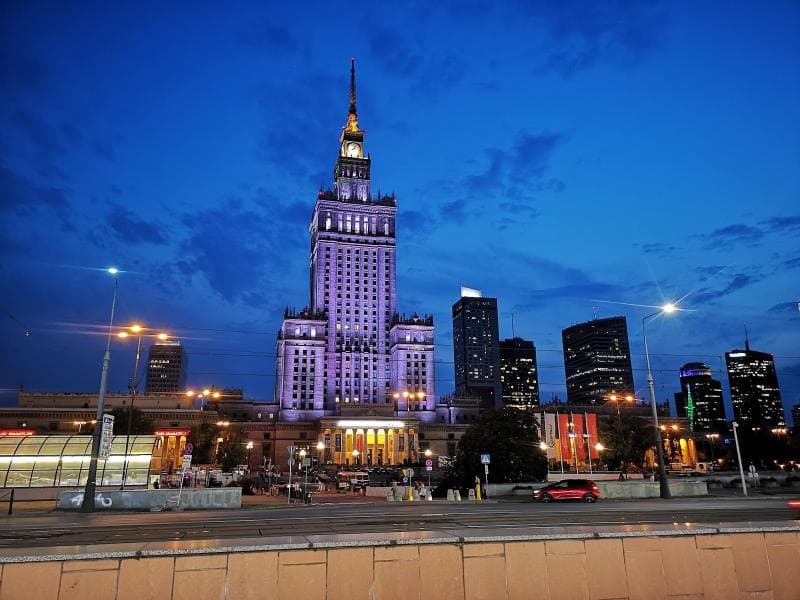
Explore Warsaw's iconic Palace of Culture and Science (PKiN), a colossal landmark with a complex history and stunning views from its 30th-floor observation deck. Discover its unique architecture and cultural offerings in Poland.
Overview
The Palace of Culture and Science (Pałac Kultury i Nauki, or PKiN) stands as an undeniable, colossal presence in the heart of Warsaw, Poland. This monumental high-rise building, reaching 237 meters (778 feet) with its spire, is not merely a structure but a narrative etched into the city's skyline. As the second tallest building in Poland, and among the tallest in Europe, it commands attention both for its sheer scale and its striking architectural style.
Functioning as a vibrant hub of culture, science, and entertainment, the Palace houses an eclectic mix of institutions. Visitors can explore theaters, museums, a multiplex cinema, universities, and even a public swimming pool within its vast interior. It's a place where history, education, and recreation converge, offering a unique glimpse into Warsaw's multifaceted identity.
History & Cultural Background
The story of the Palace of Culture and Science begins in the challenging post-World War II years, when Warsaw was painstakingly rebuilding from devastating destruction. The idea for this immense structure originated from Joseph Stalin, intended as a 'gift from the Soviet people to the Polish nation'. Construction commenced on May 1, 1952, and was completed with remarkable speed by July 21, 1955. The Soviet architect Lev Rudnev, who also designed some of Moscow's 'Seven Sisters' skyscrapers, was responsible for its design. His vision blended elements of Polish historical architecture, American Art Deco high-rises, and the imposing Stalinist style, making it a unique example of Socialist Realism.
Initially named the Joseph Stalin Palace of Culture and Science, the dedication to Stalin was revoked during the de-Stalinization period, and his name removed from the building. The Palace, from its inception, was a complex symbol for Poles. While some saw it as a beacon of hope for a war-torn city, many others viewed it as a stark reminder of Soviet domination and a symbol of imposed political control.
What Makes It Special
Beyond its commanding presence, the Palace of Culture and Science is distinguished by several unique features. Its total height of 237 meters includes an antenna base added in 1994, making it a prominent landmark on the Warsaw skyline. For decades, it stood as the tallest building in Poland, a title it only recently conceded to the Varso Tower.
Architecturally, it's a fascinating study in contrasts. Rudnev's design incorporated details influenced by Polish towns like Kazimierz Dolny and Gdańsk, adding local flavor to its Soviet-inspired grandeur. The building's exterior is adorned with numerous sculptures representing various fields of culture and science, including prominent figures like Nicolaus Copernicus and Adam Mickiewicz. In the year 2000, four large clock faces were installed near the top, making it briefly the tallest clock tower in the world until 2002. Today, the Palace remains a public building, housing an impressive array of cultural and educational institutions, making it a true city within a city.
Stories, Fun Facts & Local Details
The Palace carries a rich tapestry of stories and local anecdotes. It was built by an estimated 3,500 to 5,000 Soviet workers and 4,000 Polish workers, a massive undertaking that saw 16 workers die during its construction. These Soviet workers were housed in a specially built residential complex called Osiedle Przyjaźń, or 'Friendship Neighborhood', in Warsaw's Bemowo district.
For many years, the Palace was often referred to by the ironic nickname 'Pekin' (Polish for Beijing), a playful nod to its imposing Eastern Bloc aesthetic. A common saying among locals was that the best view of Warsaw was from the Palace's observation deck, because it was the only place in the city where you couldn't see the Palace itself. This sentiment reflected the complex feelings many Poles had about the 'gift' that dominated their capital. Despite past resentments, younger generations increasingly see the Palace as an integral part of modern Warsaw, detached from its political past.
Interestingly, the Palace also has its own resident wildlife. At one point, 60 cats were 'employed' to keep rodents at bay, a number now reduced to around eleven. Peregrine falcons and kestrels also nest just under the building's spire, adding an unexpected touch of nature to this urban colossus.
Visitor Perspective
A visit to the Palace of Culture and Science offers a panoramic perspective of Warsaw and a deep dive into its cultural offerings. The most popular attraction is the observation deck on the 30th floor, located 114 meters (374 feet) above ground level. A quick elevator ride whisks visitors up to this vantage point, providing sweeping 360-degree views of the city.
Inside, the Palace offers a wealth of activities. You can explore the Museum of Evolution, the National Museum of Technology, or even the colorful Neon Museum, which moved into the Palace. The building also houses four active theaters. Guided tours are available, offering a chance to explore restricted halls, richly decorated corridors, and even parts of the underground areas, providing a more in-depth understanding of its history and architecture. The grand main hall often sees queues for the viewing terrace, but the experience of seeing Warsaw unfold from this iconic structure is considered a must-do for many travelers.
Coordinates: 21.00581, 52.23179
View on Google Maps💬 How Travelers Describe This Place
Based on community votes
Must See
673Photogenic
336Interesting
219Unique
186Beautiful
80
Traveler Stories
Discover memorable experiences shared by travelers who have visited this place.
No traveler stories yet.
Be the first traveler to share what made this place memorable.
Things to see at Palace Of Culture And Science



Tour
By
Spot
Discover amazing places around the world. Your journey starts here.
Explore
© 2026 TourBySpot. All rights reserved.