Surrounding Square
Warsaw, Poland
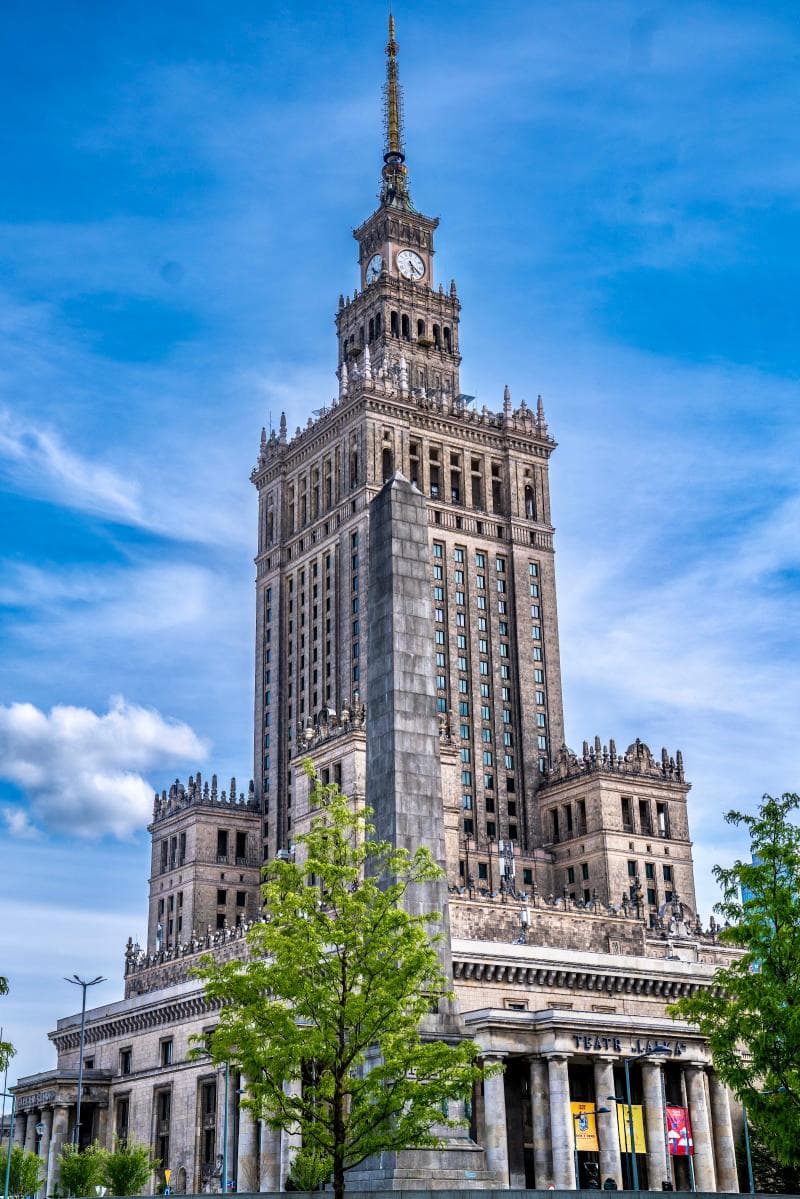
Explore the Surrounding Square (Plac Defilad / Centralny) around the Palace of Culture and Science in Warsaw, Poland. Discover its rich history and modern transformation.
Overview
The area surrounding the iconic Palace of Culture and Science in Warsaw, Poland, commonly referred to as the ‘Surrounding Square’ or historically as Plac Defilad (Parade Square), has undergone a remarkable transformation, now largely known as Plac Centralny (Central Square). This expansive urban space sits at the very heart of Warsaw, directly adjacent to the monumental Palace. Once a vast, austere concrete expanse primarily used for parades and political demonstrations, it has been reimagined as a vibrant, green, and people-friendly public square. Its evolution reflects Warsaw's journey from a post-war, Soviet-influenced city to a modern European capital, making it a pivotal spot for both historical reflection and contemporary urban life.
History & Cultural Background
The history of the Surrounding Square is inextricably linked to that of the Palace of Culture and Science itself. Both were conceived in the early 1950s, a period when Warsaw was still recovering from the devastation of World War II. The Palace, a 'gift' from the Soviet Union, was constructed between 1952 and 1955, and the massive square around it, then known as Plac Defilad, was designed to emphasize its imposing scale and serve as a stage for communist propaganda. It was intentionally oversized, capable of accommodating massive crowds and military equipment for state-sponsored events and parades, symbolizing Soviet dominance over Poland. One of the most significant events in its early history was the 1956 rally, where around 400,000 people gathered to hear Władysław Gomułka condemn Stalinism and announce reforms, marking a pivotal moment in Polish political history. Decades later, in 1987, Pope John Paul II celebrated Mass in the square, a powerful moment for the Catholic nation. After the fall of communism in 1989, Plac Defilad lost its primary function and for many years remained a neglected, oversized parking area, leading to criticism of its uninviting appearance in the city center.
What Makes It Special
What makes the Surrounding Square so special today is its profound layered history and its recent metamorphosis. The transformation into Plac Centralny, officially opened in June 2025, has introduced extensive green spaces, trees, and pedestrian-friendly zones, radically altering its character. The design thoughtfully incorporates elements that acknowledge its past; stone ribbons in the pavement trace the outlines of lost pre-war streets like Zielna and Złota, which existed before the Palace's construction, offering a tactile connection to old Warsaw. Recovered pre-war cobblestones have been reused, and the former communist-era tribune has been repurposed into a grassy amphitheater, blending historical memory with modern utility. This area now stands as a powerful symbol of Warsaw's ability to heal and evolve, integrating its complex past into a forward-looking urban landscape. It represents a shift from an ideological spectacle to a genuine civic space, welcoming residents and visitors alike.
Stories, Fun Facts & Local Details
Locals often share a humorous, yet insightful, saying about the Palace of Culture and Science: 'The best view of Warsaw is from the Palace, because it's the only place you cannot see it.' This reflects the complicated feelings many Poles have about the building, a potent symbol of a difficult past. The square itself has hosted countless events beyond political rallies, from massive New Year's Eve concerts attended by tens of thousands, to international festivals and even temporary ice rinks in winter. In 2000, ahead of the millennium celebrations, four 6.3-meter clock faces were added to the top of the Palace, and a 'Millennium Clock' was unveiled on its 40th floor, which was at the time the largest of its type in Europe. The area continues to be a focal point for large public gatherings, cultural events, and open-air exhibitions, demonstrating its adaptability and enduring role in the city's social fabric. The ongoing development plans around the square, including future museums and skyscrapers, signify Warsaw's commitment to continuously redefine this central space.
Visitor Perspective
For visitors, the Surrounding Square now offers a multifaceted experience. It is no longer just a place to gaze up at the imposing architecture of the Palace of Culture and Science, but a destination in its own right. Travelers can stroll through the newly landscaped green areas, find a quiet spot to observe daily Warsaw life, or attend one of the many cultural events that frequently take place here. The square's transformation provides a unique opportunity to witness Warsaw's dynamic evolution firsthand. It serves as a gateway to understanding the city's resilience and its nuanced relationship with its history. Whether you're interested in architecture, history, or simply soaking in the local atmosphere, the revitalized Central Square around the Palace of Culture and Science is a meaningful stop that connects you to the heart and soul of Warsaw.
Coordinates: 21.00581, 52.23179
View on Google Maps💬 How Travelers Describe This Place
Based on community votes
Unique
639Interesting
526Must See
421Beautiful
366Photogenic
181
Traveler Stories
Discover memorable experiences shared by travelers who have visited this place.
No traveler stories yet.
Be the first traveler to share what made this place memorable.

Tour
By
Spot
Discover amazing places around the world. Your journey starts here.
Explore
© 2026 TourBySpot. All rights reserved.