Main Hall
Warsaw, Poland
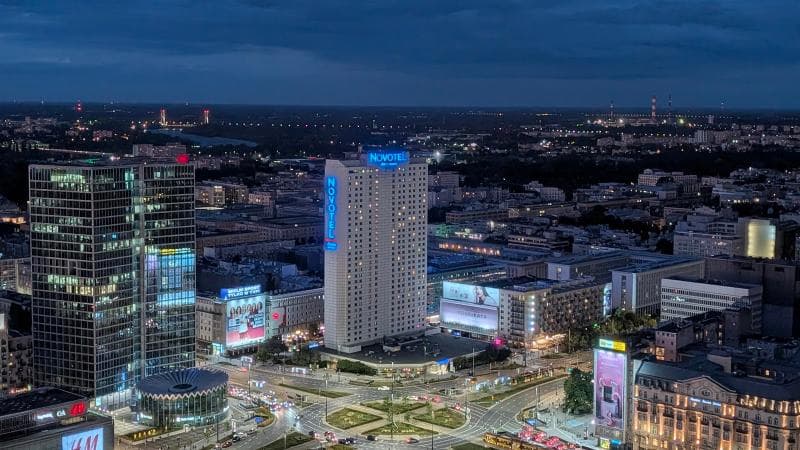
Discover Warsaw's iconic Congress Hall (Sala Kongresowa) within the Palace of Culture and Science. Explore its rich history, unique architecture, and cultural significance in Poland.
Overview
The Congress Hall, or 'Sala Kongresowa' in Polish, stands as a pivotal and grand 'Main Hall' within Warsaw's monumental Palace of Culture and Science. Opened in 1955, it was conceived as a multi-functional auditorium, designed to host significant political gatherings, cultural spectacles, and international conferences. Its impressive scale, with an initial seating capacity of 2,880 on three levels encompassing an amphitheater, boxes, and balconies, established it as one of the largest and most prestigious venues in Poland. Currently, this iconic hall is undergoing an extensive and complex renovation, having been closed since 2014, with its grand reopening anticipated between late 2027 and mid-2028.
History & Cultural Background
The Palace of Culture and Science itself is a towering symbol of post-war Warsaw, gifted by the Soviet Union to Poland and constructed between 1952 and 1955. The Congress Hall, as an integral part of this edifice, immediately became a stage for the political narrative of the Polish People's Republic (PRL). It was the primary venue for congresses of the ruling Polish United Workers' Party (PZPR), effectively serving as a central hub for state-sponsored events. Architecturally, the hall showcases a distinct blend of Socialist Realism, reflecting its Soviet origins, while also incorporating design elements inspired by Polish historical architecture and Art Deco. In a significant move to preserve its unique heritage, the entire Palace, including the Congress Hall's original decor, was officially listed in Poland's Registry of Objects of Cultural Heritage in 2007.
What Makes It Special
Beyond its sheer size, the Congress Hall is distinguished by its opulent and historically preserved interior. Its most striking feature is the gigantic gold and brass rosette adorning its domed ceiling, a testament to the detailed craftsmanship of its era. The hall's design seamlessly integrates an amphitheater, elegant boxes, and expansive balconies, providing excellent sightlines and acoustics, though acoustic simulations are part of the current renovation to further optimize sound performance. Historically, it transcended its political origins to become a celebrated international cultural venue. It has welcomed world-renowned musical artists such as Marlena Dietrich, Patti Smith, Kraftwerk, and Bob Dylan. The hall also played host to the finals of the Miss World 2006 beauty pageant, showcasing its versatility for diverse large-scale events. The ongoing modernization efforts are meticulously balancing the preservation of its historical character with the integration of cutting-edge technology, ensuring its relevance as a premier venue for decades to come.
Stories, Fun Facts & Local Details
Perhaps one of the most famous cultural anecdotes associated with the Congress Hall is the legendary concert by The Rolling Stones in 1967. This event was a groundbreaking moment, marking one of the first times a major Western rock band performed behind the Iron Curtain, a truly unforgettable cultural experience during the Cold War era. The extensive renovation project itself has generated numerous stories. Initially projected for completion within two years when it began in 2014, the project has faced significant delays and ballooning costs. Unforeseen discoveries, such as massive quantities of asbestos, and discrepancies between original documentation and the actual condition of the building, have complicated efforts and pushed the estimated completion date well into 2028. The Palace of Culture and Science, and by extension the Congress Hall, also remains a topic of spirited discussion among Varsovians. While some view it as a painful reminder of Soviet influence, others have come to appreciate its architectural grandeur and its undeniable role in the city's cultural landscape.
Visitor Perspective
As of now, the Congress Hall remains inaccessible to the public due to the ongoing, comprehensive renovation work. However, the anticipation for its reopening is palpable. When it finally welcomes visitors, expected between late 2027 and mid-2028, it promises a remarkable blend of meticulously preserved historical aesthetics and state-of-the-art modern amenities. The hall's iconic red and white color scheme will be maintained, but visitors will experience significantly more comfortable and wider seating, albeit slightly reducing the overall capacity to approximately 2,600. Crucially, the modernization includes a substantial increase in the number of public restrooms and changing rooms, addressing long-standing needs. Furthermore, the revamped hall will be fully adapted to ensure accessibility for people with disabilities, making it a more inclusive and welcoming venue for all. The revitalized Congress Hall is set to reclaim its place as a vibrant cultural and conference hub, inviting a new generation of visitors to experience its unique grandeur.
Coordinates: 21.00639, 52.23167
View on Google Maps💬 How Travelers Describe This Place
Based on community votes
Photogenic
551Interesting
547Unique
336Beautiful
219Must See
186
Traveler Stories
Discover memorable experiences shared by travelers who have visited this place.
No traveler stories yet.
Be the first traveler to share what made this place memorable.

Tour
By
Spot
Discover amazing places around the world. Your journey starts here.
Explore
© 2026 TourBySpot. All rights reserved.