Minor Mosque
Tashkent, Uzbekistan
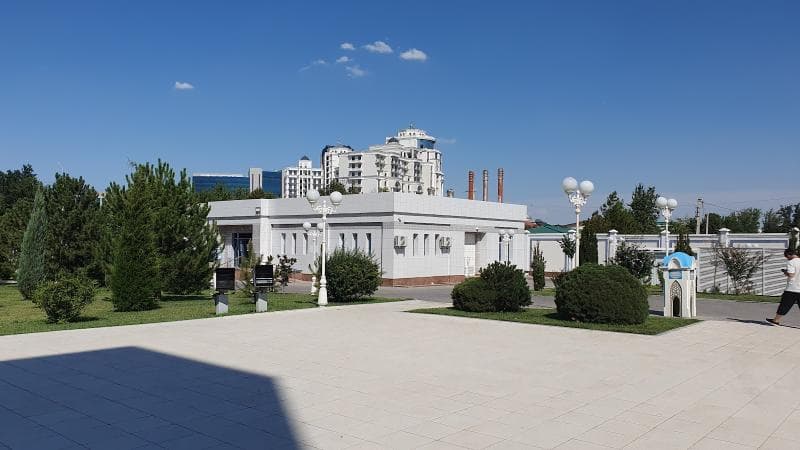
Discover the stunning Minor Mosque in Tashkent, Uzbekistan – often called the 'White Mosque'. Explore its modern design, rich history, and peaceful atmosphere.
Overview
Tashkent's Minor Mosque stands as a luminous symbol of modern Islamic architecture and spiritual tranquility in Uzbekistan's bustling capital. Often affectionately called the 'White Mosque' by locals, its gleaming white marble facade and striking turquoise dome create an unforgettable sight against the Central Asian sky. Situated gracefully along the banks of the Anhor Canal, this relatively new landmark has quickly become a cherished destination for both worshippers and curious travelers.
Despite its recent completion in 2014, the Minor Mosque embodies a harmonious blend of traditional Eastern architectural styles with contemporary design elements, offering a fresh perspective on the rich cultural heritage of Uzbekistan. It is not just a place of worship but also a significant cultural center, reflecting the country's ongoing devotion to its spiritual traditions.
History & Cultural Background
The story of the Minor Mosque begins quite recently, with its construction initiated in the summer of 2013 under a resolution by the then-President of Uzbekistan, Islam Karimov. Remarkably, it was completed and officially inaugurated on October 1, 2014, on the eve of the Muslim holiday Eid al-Adha (Kurban Hayit). This rapid construction timeframe highlights a concerted effort to establish a new, prominent religious and cultural hub for the Muslim community in Tashkent.
The mosque's development was a joint initiative, funded by the State Budget and the Muslim Board of Uzbekistan, emphasizing its importance as a state-supported spiritual project. While many historical mosques in the region are characterized by their traditional brickwork, the Minor Mosque intentionally distinguishes itself with its pristine white marble, setting a modern precedent while adhering to traditional oriental and Uzbek architectural principles.
What Makes It Special
The Minor Mosque's distinctiveness lies primarily in its breathtaking aesthetic and innovative design. Unlike older brick structures, its entire exterior is clad in snow-white marble, which sparkles under the sunlight and glows majestically in the evening illumination. Complementing this pristine facade is a magnificent sky-blue or turquoise dome, which, on a clear day, seems to 'dissolve' into the heavens, creating an ethereal charm.
Flanked by two towering minarets, each reaching 38 meters in height, the mosque presents an imposing yet serene silhouette. The main prayer hall is a spacious, two-storied structure capable of accommodating over 2,400 worshippers, making it one of the largest and most significant spiritual centers in Tashkent and throughout Uzbekistan. Inside, visitors are greeted by intricate decorations in the Naqsh style, featuring elegant Quranic verses and other sacred texts meticulously crafted by renowned calligraphers Habibullo Solikh, Islam Mamatov, and Abdulgofur Haqberdiyev. A particularly striking feature is the gilded mihrab, the prayer niche indicating the direction of Mecca, which is an exact replica of the celebrated mihrab found in Samarkand, underscoring a connection to the rich history of Islamic art in Central Asia.
Stories, Fun Facts & Local Details
A common misconception for English speakers is that the 'Minor' in Minor Mosque refers to its size. However, the name actually derives from the 'Minor' neighborhood where it is located, or potentially from the Uzbek word 'minora' which means 'minaret' or 'lighthouse', symbolizing guidance and hope for believers. Indeed, far from being minor, it is one of the largest mosques in the country.
The mosque has quickly cemented itself as a cherished local spot, particularly popular for evening strolls. Its beautifully landscaped grounds along the Anhor Canal provide a peaceful ambiance, making it a favorite for quiet reflection and enjoying the beauty of the illuminated structure after dusk. Visitors often describe feeling a profound sense of peace and concentration within its walls, a testament to its spiritual atmosphere.
Visitor Perspective
For those planning a visit to the Minor Mosque, it offers a welcoming and serene experience. Entry is free of charge, and the mosque is generally open 24 hours, though early mornings are recommended to avoid crowds. As a place of worship, visitors are kindly requested to observe a modest dress code, which typically involves covering shoulders and knees. Women are also advised to cover their hair, and sometimes headscarves are provided at the entrance.
It is customary to remove shoes before entering the mosque. While the spacious courtyard is open to all, access to the main prayer hall for women may be restricted to a specially designated area or limited to times between prayer services, so it is always respectful to confirm on-site. The mosque is equipped with modern ablution facilities, ensuring comfort for all who visit. Its convenient location in the newer part of Tashkent, near landmarks like the UzExpoCenter, makes it easily accessible, even by public transport with nearby metro stations like Bodomzor or Milliy Bog.
Coordinates: 69.2783, 41.34
View on Google Maps💬 How Travelers Describe This Place
Based on community votes
Beautiful
540Must See
410Interesting
147Unique
114Photogenic
19
Traveler Stories
Discover memorable experiences shared by travelers who have visited this place.
No traveler stories yet.
Be the first traveler to share what made this place memorable.
Things to see at Minor Mosque



Tour
By
Spot
Discover amazing places around the world. Your journey starts here.
Explore
© 2026 TourBySpot. All rights reserved.