Night Illumination
Tashkent, Uzbekistan
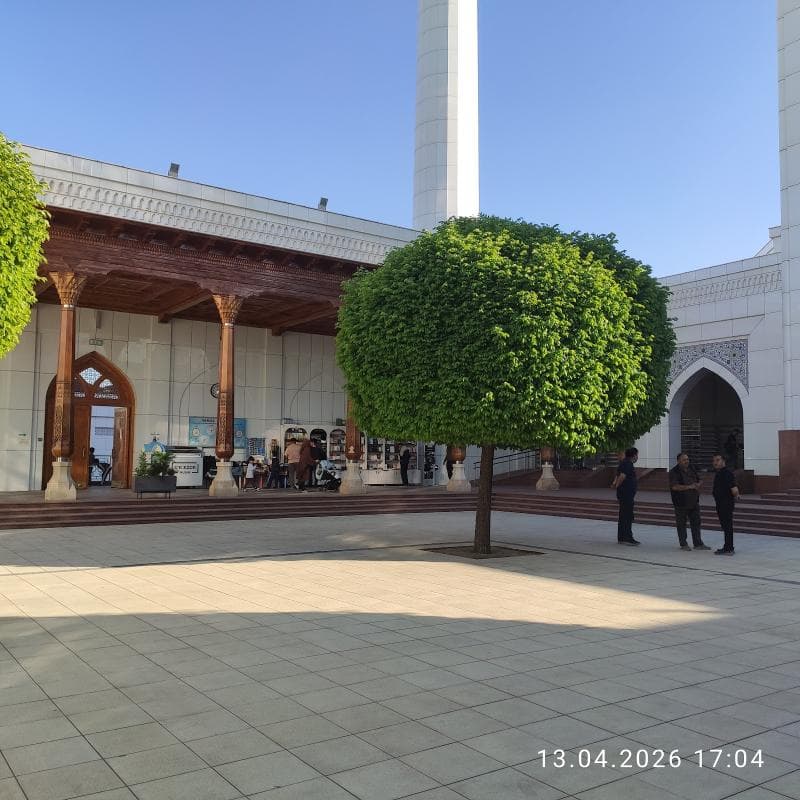
Experience the mesmerizing Night Illumination of Minor Mosque in Tashkent, Uzbekistan. Discover its white marble beauty and serene glow.
Overview
Nestled on the serene banks of the Anhor Canal in Tashkent, Uzbekistan, the Minor Mosque, often affectionately called the 'White Mosque', stands as a striking testament to contemporary Islamic architecture. Inaugurated in 2014, this magnificent structure, crafted entirely from pristine white marble, has rapidly become one of the city's most beloved landmarks. While its daytime grandeur is undeniable, it is after dusk that the Minor Mosque truly captivates visitors with its breathtaking 'Night Illumination'. The mosque transforms into a glowing beacon, its immaculate facade radiating a soft, ethereal light that reflects gracefully on the canal's tranquil waters, offering a profoundly peaceful and visually stunning experience for all who witness it.
History & Cultural Background
The story of the Minor Mosque is a modern one, beginning with its construction in 2013. Its completion in October 2014, on the eve of the Muslim holiday Eid al-Adha, was marked by its inauguration by the then-President of Uzbekistan, Islam Karimov. This relatively new addition to Tashkent's skyline was built with a clear purpose: to restore and promote Islamic architectural traditions in post-Soviet Uzbekistan, serving as a significant spiritual center for the Muslim community. Designed to accommodate over 2,400 worshippers, the mosque reflects a harmonious blend of traditional oriental and Uzbek styles, yet stands apart with its contemporary materials and radiant appearance. Its construction was jointly funded by the State Budget and the Muslim Board of Uzbekistan, signifying its national importance.
What Makes It Special
What sets the Minor Mosque apart is first and foremost its dazzling white marble exterior, a stark and elegant contrast to the ancient brick mosques typically found across Central Asia. On a clear day, the mosque's snow-white walls sparkle, and its magnificent turquoise dome appears to dissolve into the bright blue sky, creating an almost mirage-like effect. Inside, the spacious prayer hall boasts a gilded mihrab – a niche indicating the direction of Mecca – adorned with Quranic texts and decorated in the intricate Naqsh style. However, the true spectacle is its 'Night Illumination'. As twilight descends, soft white floodlights bathe the entire structure, making the intricate carvings and architectural details pop out in sharp relief. This LED system makes the white marble appear almost translucent, transforming the mosque into a luminous jewel visible from kilometers away. The reflection of this brilliant light on the Anhor Canal doubles its splendor, offering a serene and almost otherworldly panorama that draws both locals and travelers.
Stories, Fun Facts & Local Details
The Minor Mosque has quickly cemented itself as a favorite spot for both prayer and peaceful reflection, especially cherished by Tashkent residents for evening strolls along the canal embankment. Locals often refer to it as the 'White Mosque' due to its distinctive marble construction. An interesting linguistic note for travelers is the pronunciation of 'Minor'. Locals pronounce it 'Mee-noor', referring to the neighborhood where it was built, not implying anything about its size, as it is, in fact, one of Tashkent's largest spiritual centers. It has become a popular location for photography, with many visitors keen to capture its striking beauty, particularly as the sun sets and its lights come alive. Young couples can often be seen taking selfies against its glowing backdrop, adding a modern touch to this spiritual landmark.
Visitor Perspective
Visiting the Minor Mosque, particularly during its night illumination, offers a profoundly immersive experience. As darkness falls, the atmosphere becomes exceptionally tranquil, with the mosque radiating a peaceful glow that invites contemplation. Walking along the Anhor Canal, one can admire the mosque's illuminated facade reflecting perfectly in the water, a truly captivating sight. The air is often calm, and the sounds of the city seem to soften, allowing visitors to fully appreciate the serene ambiance. When visiting, it is important to remember that this is an active place of worship. Guests are encouraged to dress modestly, covering shoulders and knees, and women are typically expected to cover their hair when entering the premises. The mosque is generally open 24 hours, though its brilliant illumination typically lasts until around 11 PM, making late evening visits particularly magical.
Coordinates: 69.275035, 41.3353102
View on Google Maps💬 How Travelers Describe This Place
Based on community votes
Interesting
443Must See
414Unique
310Beautiful
277Photogenic
233
Traveler Stories
Discover memorable experiences shared by travelers who have visited this place.
No traveler stories yet.
Be the first traveler to share what made this place memorable.

Tour
By
Spot
Discover amazing places around the world. Your journey starts here.
Explore
© 2026 TourBySpot. All rights reserved.