Courtyard
Tashkent, Uzbekistan
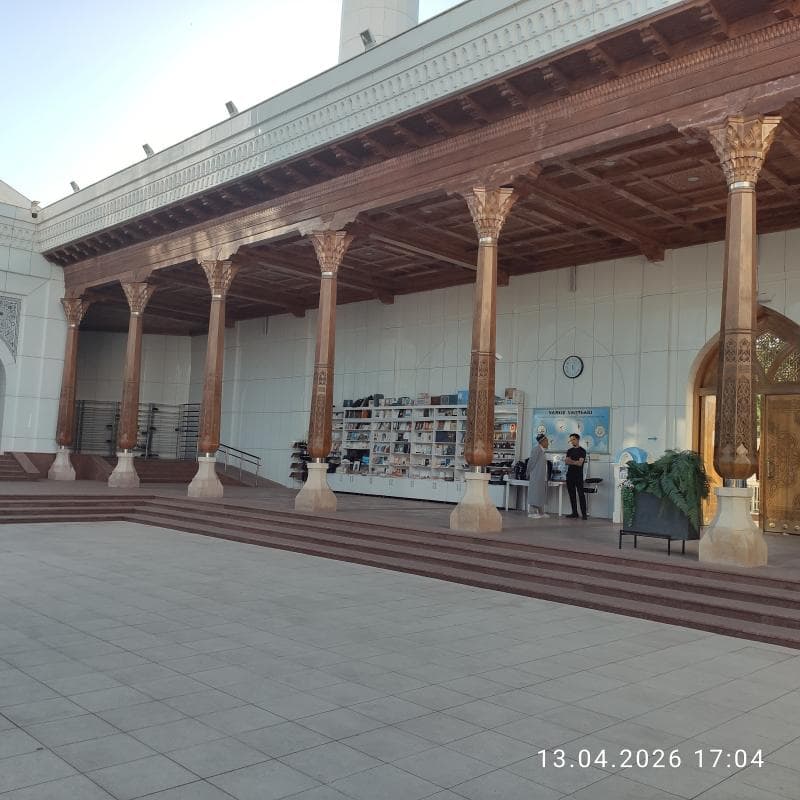
Explore the tranquil Courtyard of Minor Mosque in Tashkent, Uzbekistan. Discover its white marble beauty, serene ambiance, and unique architecture.
Overview
Nestled within the striking Minor Mosque in Tashkent, Uzbekistan, lies a courtyard that serves as a serene and inviting space for both worshipers and visitors alike. Often referred to as 'The White Mosque' due to its gleaming marble facade, the entire complex, including its spacious courtyard, exudes a tranquil and majestic atmosphere. Built in a traditional Uzbek style with modern finishes, the Minor Mosque is a relatively new landmark, completed in 2014, yet it has quickly become a beloved spiritual and cultural center in the capital. The courtyard provides a peaceful respite, offering a blend of elegant architecture and beautifully landscaped surroundings, making it an ideal spot for reflection and photography.
The open-air design of the courtyard, complemented by terraces featuring carved columns, creates a harmonious transition from the outside world into the mosque's sacred interior. It's a place where the grandeur of the mosque's two towering minarets and its distinctive turquoise dome can be fully appreciated. Whether arriving for prayer or simply to admire its beauty, the courtyard sets the tone for an experience that blends spiritual contemplation with architectural admiration, all within the vibrant city of Tashkent.
History & Cultural Background
The Minor Mosque, and consequently its courtyard, does not boast centuries of history like some of Central Asia's ancient religious sites. Its construction began in the summer of 2013 and was impressively completed by October 1, 2014, just before the significant Islamic holiday of Kurban Hayit (Eid al-Adha). This rapid construction was part of a broader initiative to restore and promote Islamic architectural traditions in post-Soviet Uzbekistan, reflecting the country's devotion to preserving its spiritual heritage.
Despite its young age, the Minor Mosque has rapidly established itself as one of Tashkent's largest and most significant spiritual centers. Its creation was funded by the State Budget and the Muslim Board of Uzbekistan, highlighting a concerted effort to provide a modern, grand place of worship for the city's growing Muslim community. Culturally, the courtyard and the mosque represent a modern interpretation of traditional Islamic and Uzbek architectural styles, symbolizing light and hope for believers, as the name 'Minor' can mean 'lighthouse' in some contexts. It has become a landmark that proudly showcases Uzbekistan's rich Islamic identity while seamlessly integrating modern construction techniques and materials.
What Makes It Special
The courtyard of the Minor Mosque stands out primarily due to its striking aesthetic and serene ambiance. Clad entirely in snow-white marble, the mosque and its surrounding courtyard gleam under the sun, earning it the moniker 'The White Mosque.' This pristine white finish creates a captivating contrast with the mosque's massive, sky-blue dome, which appears to dissolve into the heavens on clear days.
The spaciousness of the courtyard, combined with its well-maintained grounds and lush green surroundings, provides an immediate sense of peace and openness. Visitors are often struck by the tranquility that pervades the area, a quietude that encourages reflection. The architectural details, such as the open terraces with their carved columns, lead gracefully to the inner yard, showcasing intricate tilework and geometric patterns characteristic of Central Asian Islamic design. This meticulous craftsmanship, visible even before entering the main prayer hall, makes the courtyard a visual delight and a testament to Uzbek artistry.
Stories, Fun Facts & Local Details
While not steeped in centuries-old legends, the Minor Mosque's courtyard holds its own contemporary stories and unique charm. Locals often frequent the mosque in the evenings, not only for prayer but also for peaceful strolls around the beautifully illuminated complex. The mosque's location on the picturesque embankment of the Anhor Canal makes it a popular spot for evening walks, with the mosque's white facade brilliantly lit against the night sky, creating a magical vista.
Photographers, both amateur and professional, find the marble courtyard particularly appealing, especially during the golden hour. The way light filters through the colonnades and the intense reflection off the white marble can create stunning visual effects. A particularly sought-after photographic spot is the northeastern corner, where the dome's reflection perfectly mirrors in the ablution pool, creating an ethereal image. It's a testament to the mosque's thoughtful design that even its functional elements contribute to its artistic appeal. The sheer scale, accommodating up to 2,400 people, makes it one of Uzbekistan's largest, debunking any literal interpretation of 'Minor' as small, a common misconception among English speakers.
Visitor Perspective
Visiting the courtyard of the Minor Mosque offers a profoundly serene and aesthetically rich experience. Upon entering, travelers are immediately enveloped by a peaceful ambiance that invites quiet contemplation. The absence of an entry fee and its 24-hour accessibility mean that visitors can experience the mosque's exterior and courtyard at any time, with early mornings often recommended for a quieter visit and evenings offering the spectacle of illuminated architecture.
Modest dress is encouraged, with women advised to cover their hair as a sign of respect, though robes are often available for those unprepared. While men are generally permitted into the main prayer hall, women typically explore the courtyard and designated areas. The cool marble underfoot, the intricate details of the facade, and the overall grand yet peaceful environment leave a lasting impression. It's a place not only for spiritual observance but also for appreciating a harmonious blend of traditional artistry and modern architectural vision, truly a must-visit for anyone exploring Tashkent.
Coordinates: 69.2749917, 41.3352104
View on Google Maps💬 How Travelers Describe This Place
Based on community votes
Beautiful
836Unique
797Photogenic
396Interesting
286Must See
255
Traveler Stories
Discover memorable experiences shared by travelers who have visited this place.
No traveler stories yet.
Be the first traveler to share what made this place memorable.

Tour
By
Spot
Discover amazing places around the world. Your journey starts here.
Explore
© 2026 TourBySpot. All rights reserved.