Merdeka Square
Kuala Lumpur, Malaysia
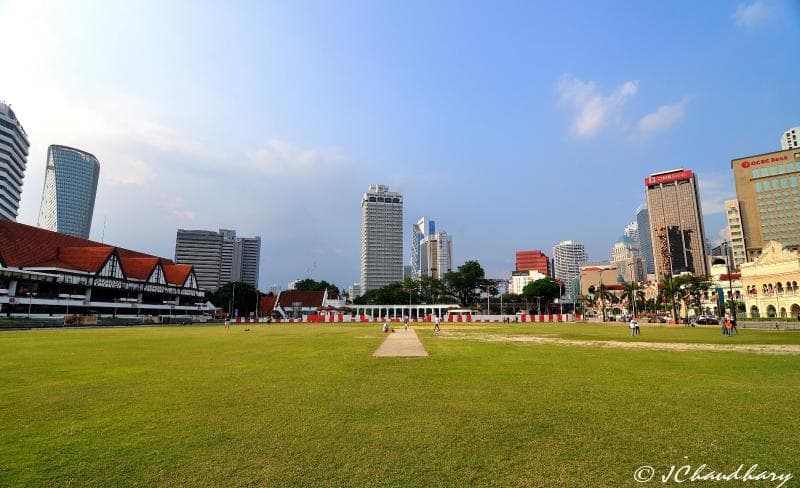
Explore Merdeka Square in Kuala Lumpur, Malaysia, the historical heart where independence was declared. Discover colonial architecture and national pride.
Overview
Merdeka Square, or Dataran Merdeka as it's known locally, stands proudly as the symbolic heart of Malaysian independence in Kuala Lumpur, Malaysia. This expansive green field is not merely a public space; it is a profound historical site, renowned for being the exact location where Malaysia declared its sovereignty. Surrounded by an impressive array of colonial-era buildings, the square offers a captivating glimpse into the nation's past and present. It serves as a focal point for major national celebrations, embodying the spirit and journey of Malaysia.
History & Cultural Background
Before its transformation into a national icon, Merdeka Square was known as the Selangor Club Padang or simply the Parade Ground. For decades, it functioned as a cricket field and recreational area for British colonials, a central gathering spot during the era of British rule. The square's destiny changed dramatically on the stroke of midnight, August 31, 1957. In a momentous ceremony, the British Union Jack was lowered for the final time, and the new Malayan flag (later the Malaysian flag, the Jalur Gemilang) was hoisted, signaling the birth of an independent nation. Malaysia's first Prime Minister, Tunku Abdul Rahman, famously proclaimed 'Merdeka' (meaning 'independence' in Malay) seven times, echoing the nation's newfound freedom. This powerful act cemented the square's name and its enduring significance as the 'birthplace of Malaysia'.
What Makes It Special
The allure of Merdeka Square extends beyond its historical narrative to its striking architectural ensemble. Dominating the eastern side is the majestic Sultan Abdul Samad Building, a masterpiece of Moorish, Indo-Saracenic, or Mughal-Gothic design, completed in 1897. Its distinctive copper domes, elegant arches, and prominent clock tower create a theatrical backdrop to the square. Opposite, the Royal Selangor Club, established in 1884, showcases charming Mock-Tudor architecture with its black-and-white timbering, a nod to its colonial origins as an elite social club. At the southern end of the square stands one of the world's tallest flagpoles, soaring between 95 to 100 meters, marking the exact spot where the Malayan flag was first raised. This towering symbol proudly flies the Jalur Gemilang, a constant reminder of national pride.
Stories, Fun Facts & Local Details
The Sultan Abdul Samad Building holds its own intriguing tales; for its grand opening in 1897, it was the first building in Kuala Lumpur to be illuminated by gas burners, and its clock tower chimed to coincide with Queen Victoria's Jubilee Parade. The Royal Selangor Club, often affectionately referred to as 'The Spotted Dog' (referring to its main clubhouse), played a pivotal role as a social and sporting hub for the British expatriate community. Beneath the manicured lawn of Merdeka Square, a round black marble plaque signifies the precise location of the first flag-raising ceremony. The square is also home to the historic Queen Victoria Fountain, an ornamental feature brought from Britain and assembled in 1897. Every year on August 31st, Merdeka Square transforms into a vibrant spectacle, hosting the annual National Day (Hari Merdeka) celebrations, complete with grand parades and cultural performances that draw immense crowds.
Visitor Perspective
Visiting Merdeka Square is an immersion into Malaysia's rich tapestry of history and culture, offering an experience that is both educational and visually stunning. The square is freely accessible to the public, inviting curious travelers to explore its grounds and surrounding heritage buildings. For the best experience, an early morning visit is highly recommended; the air is cooler, the light is soft and ideal for photography, and the crowds are sparse, allowing for peaceful reflection amidst the grandeur. As dusk settles, the square and its architectural gems become beautifully illuminated, presenting a picturesque scene. Its central location makes it easily reachable, with the Masjid Jamek LRT station being a convenient nearby public transport link. A leisurely stroll here allows one to feel the echoes of history while appreciating the enduring spirit of Malaysia.
Coordinates: 101.6944, 3.1475
View on Google Maps💬 How Travelers Describe This Place
Based on community votes
Must See
673Photogenic
336Interesting
219Unique
186Beautiful
80
Traveler Stories
Discover memorable experiences shared by travelers who have visited this place.
No traveler stories yet.
Be the first traveler to share what made this place memorable.
Things to see at Merdeka Square



Tour
By
Spot
Discover amazing places around the world. Your journey starts here.
Explore
© 2026 TourBySpot. All rights reserved.