Sultan Abdul Samad Building
Kuala Lumpur, Malaysia
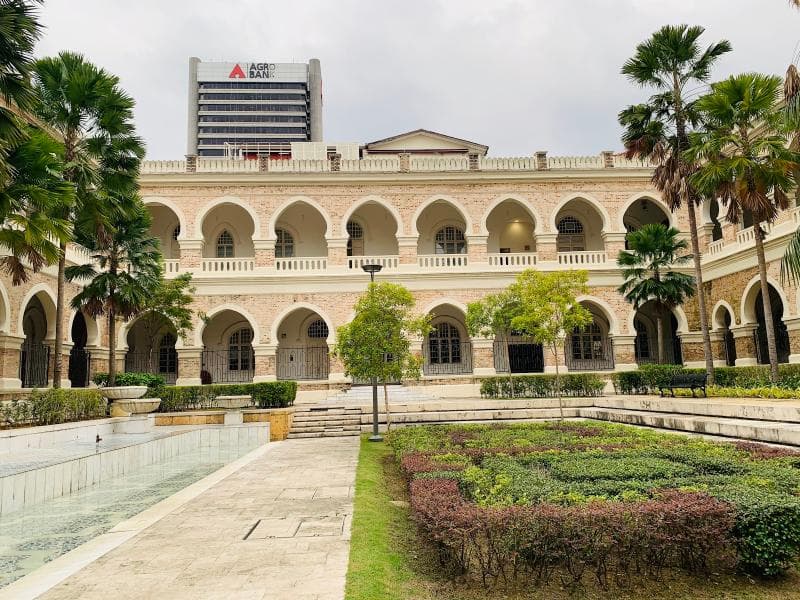
Discover the Sultan Abdul Samad Building in Kuala Lumpur, Malaysia – an iconic colonial masterpiece with Moorish architecture and deep historical significance.
Overview
Standing majestically at the heart of Kuala Lumpur, Malaysia, the Sultan Abdul Samad Building is an iconic landmark that beautifully encapsulates the nation's rich history and diverse architectural influences. Located prominently in front of Dataran Merdeka, or Merdeka Square, this late 19th-century edifice is not merely a building but a silent witness to Malaysia's journey from colonial rule to independence.
Its distinctive Moorish, Indo-Saracenic, and Neo-Mughal architectural style, characterized by striking copper domes, horseshoe arches, and an impressive clock tower, makes it one of the most photographed structures in the city. Originally serving as the administrative heart of British Malaya, it has evolved into a symbol of national pride, now housing various government ministries and recently undergoing a restoration to welcome more visitors.
History & Cultural Background
The story of the Sultan Abdul Samad Building began in 1894 when construction commenced under the British colonial government, reaching completion in 1897. Named after Sultan Abdul Samad, the fourth Sultan of Selangor who reigned from 1857 to 1898, the building was initially known simply as 'Government Offices.' It was designed by British architects Arthur Charles Norman and Alfred R. J. Norman, with significant contributions from R. A. J. Bidwell and A. B. Hubback. While Norman initially conceived a Classical Renaissance design, it was ultimately reworked into the now-famous Indo-Saracenic or Moorish style, reflecting influences from Muslim architecture seen in India.
This architectural blend was intentionally chosen to resonate with the local Malay-Muslim culture while still projecting British imperial authority. The building originally housed key administrative departments of the Federated Malay States, including the Public Works Department, General Post Office, and the Supreme Court. Its significance soared on August 31, 1957, when the Union Jack was lowered, and the Malayan flag was hoisted for the first time at midnight in front of the building in Merdeka Square, marking the country's independence from British rule.
What Makes It Special
What truly sets the Sultan Abdul Samad Building apart is its stunning architectural synthesis. The Indo-Saracenic style, a fusion of Islamic, Moorish, and Neo-Mughal elements with subtle Gothic touches, gives it a distinct fairy-tale appearance. Its facade stretches over 137 meters along Jalan Raja, featuring a harmonious arrangement of red brickwork contrasted with white plaster, horseshoe arches, and a continuous colonnade.
The most iconic feature is the 41-meter-high central clock tower, often likened to London's Big Ben, crowned with a gleaming copper dome. Flanking the clock tower are two smaller circular towers, also topped with copper onion domes, which originally contained staircases. The craftsmanship is evident in the intricate carvings, Islamic calligraphy, and geometric patterns that adorn its interior, while large windows and open spaces were cleverly incorporated for natural ventilation in the tropical climate. The building is a rare example of extensive load-bearing masonry construction from its era in British Malaya, utilizing over 4 million locally sourced bricks.
Stories, Fun Facts & Local Details
An interesting fact about the Sultan Abdul Samad Building is that its clock tower chimed for the very first time to coincide with Queen Victoria's Jubilee Parade in June 1897, and it has continued to chime ever since. The immense cost of its construction, 152,000 Straits Dollars, was a significant sum at the time.
Until the construction of the Petronas Twin Towers, it was the most recognized and photographed landmark in Malaysia. The building's strategic location at the confluence of the Klang and Gombak rivers, where Kuala Lumpur was founded, further intertwines it with the city's origins. A 95-meter flagpole, one of the tallest in the world, stands nearby in Merdeka Square, marking the exact spot where Malaysian independence was declared.
Visitor Perspective
Today, the Sultan Abdul Samad Building remains a vibrant hub, serving as the offices for the Ministry of Communications and Digital, and the Ministry of Tourism, Arts and Culture. While internal access was historically restricted, recent heritage restoration projects have reopened parts of the building to the public, featuring galleries, cafes, and event spaces, allowing visitors to experience its grandeur up close. Exterior viewing is possible 24/7, and exploring its courtyard and surrounding grounds, especially Merdeka Square, is free of charge.
The building is a spectacular sight, particularly at night when its architectural features, including the copper domes and clock tower, are beautifully illuminated with LED lights, creating a magical atmosphere. It's easily accessible via public transport, with Masjid Jamek and Pasar Seni LRT stations being a short walk away. Visitors are encouraged to dress modestly, out of respect for nearby historical and religious sites. The best times to visit are during cooler mornings or late afternoons, or during national celebrations like Merdeka Day on August 31st, when the area comes alive with parades and festivities.
Coordinates: 101.6957, 3.1425
View on Google Maps💬 How Travelers Describe This Place
Based on community votes
Interesting
551Unique
547Beautiful
336Photogenic
298Must See
219
Traveler Stories
Discover memorable experiences shared by travelers who have visited this place.
No traveler stories yet.
Be the first traveler to share what made this place memorable.

Tour
By
Spot
Discover amazing places around the world. Your journey starts here.
Explore
© 2026 TourBySpot. All rights reserved.