Royal Selangor Club
Kuala Lumpur, Malaysia
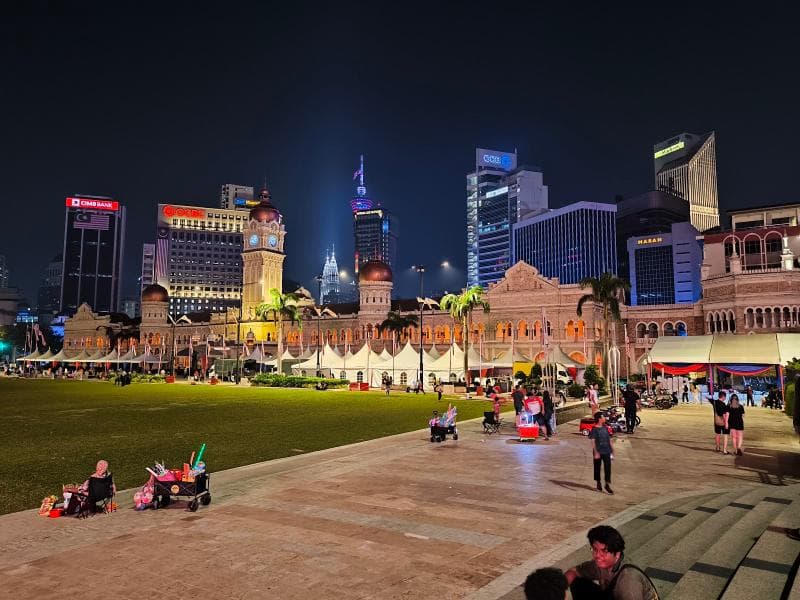
Explore the Royal Selangor Club in Kuala Lumpur, Malaysia – a historic Mock Tudor landmark within Merdeka Square, reflecting colonial charm and national heritage.
Overview
Nestled against the vibrant backdrop of Merdeka Square in Kuala Lumpur, Malaysia, the Royal Selangor Club stands as a poignant architectural and historical landmark. Founded in 1884, this esteemed institution is immediately recognizable by its distinctive Mock Tudor architecture, characterized by black timber framing and whitewashed walls, a style that evokes a sense of old English charm amidst the tropical Malaysian landscape. It began its journey as a social and recreational hub for the British colonial elite, evolving over the decades into a symbol deeply intertwined with the nation's past and present.
Strategically positioned facing the sprawling green expanse of Dataran Merdeka, the club offers a captivating visual contrast to the surrounding modern skyline and the grand Moorish-inspired architecture of the Sultan Abdul Samad Building. While primarily a private members' club, its exterior is a significant draw for any traveler eager to delve into Kuala Lumpur's colonial heritage and understand the city's rich narrative.
History & Cultural Background
The Royal Selangor Club, initially known as the Selangor Club, was established in 1884 by British administrators and expatriates who sought a social haven reminiscent of home in colonial Malaya. Its humble beginnings saw a small wooden building with an attap (thatched) roof serving as the initial clubhouse. The club quickly became the epicenter of colonial social life, a place for relaxation, dining, and discussions among the high-ranking members of British society.
Significant architectural transformations occurred over time. In 1890, a two-storey timber structure replaced the original, and by 1910, the club adopted its iconic Mock Tudor design, attributed to architect Arthur Benison Hubback. This design, with its characteristic timber-and-plaster facade, has been meticulously preserved, even after a devastating fire in 1970 necessitated extensive rebuilding.
Culturally, the club's location in front of what was then 'The Padang' (now Merdeka Square) placed it at the heart of historical events. It was from this vantage point that members witnessed the first hoisting of the Malayan flag on August 30, 1957, marking Malaysia's independence from British rule – a profound moment where colonial leisure gave way to national pride. The club, while maintaining its traditions, transitioned into a Malaysian entity, receiving a royal charter from the Sultan of Selangor in 1984, thus earning its 'Royal' prefix.
What Makes It Special
The Royal Selangor Club's enduring appeal lies in its unique blend of architectural beauty, historical significance, and prime location. Its striking Mock Tudor design stands out vividly in Kuala Lumpur, offering a picturesque glimpse into a bygone era of British influence. The black and white timbered facade, steep gabled roofs, and well-maintained grounds evoke a sense of timeless elegance, a striking contrast to the bustling modern city that surrounds it.
More than just an aesthetically pleasing building, the club is a living testament to Kuala Lumpur's colonial past and its journey to independence. It represents a crucial intersection where the social fabric of British Malaya met the burgeoning aspirations of a new nation. The club's position directly facing Merdeka Square means it has been an eyewitness to, and often a backdrop for, countless pivotal moments in Malaysian history, making it a truly special site for both historical reflection and architectural appreciation.
Stories, Fun Facts & Local Details
One of the most charming and persistent local details associated with the Royal Selangor Club is its affectionate nickname: 'The Spotted Dog'. The origins of this moniker are debated, with popular theories suggesting it either came from the two Dalmatians belonging to the wife of a police commissioner who frequently brought them to the club, or perhaps from an early, poorly drawn emblem of a spotted leopard that was mistaken for a dog. Regardless of its exact origin, 'The Spotted Dog' has become a beloved part of the club's identity.
The club was also a major hub for sports, particularly cricket, with matches regularly played on 'The Padang' (Merdeka Square) in front of the clubhouse. These early matches were among the first recorded cricket games in the region, highlighting the club's role in introducing and fostering British recreational traditions. Furthermore, it is famously the birthplace of the Hash House Harriers, an international running club founded in 1938.
While membership was initially exclusive to British colonial society, it eventually opened to high-ranking Malay community members and civil servants, reflecting an evolution in the social landscape. The club's proximity to the old High Courts also made it a popular gathering spot for the legal fraternity, adding another layer to its rich social history.
Visitor Perspective
While the Royal Selangor Club operates as a private members' institution, its historical and architectural significance ensures it remains a key point of interest for visitors to Kuala Lumpur. Access to the interior is generally restricted to members and their guests, but the beauty and historical weight of the exterior, particularly from Merdeka Square, are fully accessible to the public.
Travelers can immerse themselves in the ambiance of colonial Kuala Lumpur by strolling across Merdeka Square, appreciating the detailed Mock Tudor facade, and imagining the vibrant social life that once unfolded within its walls. The club's low, elongated form provides a compelling visual narrative against the more imposing civic buildings nearby, offering a different perspective on the city's past. Observing the club from the iconic square allows one to connect with a pivotal era in Malaysia's development, understanding how leisure, community, and national identity have converged in this remarkable location.
Coordinates: 101.69306, 3.14925
View on Google Maps💬 How Travelers Describe This Place
Based on community votes
Interesting
685Unique
446Photogenic
399Must See
152Beautiful
33
Traveler Stories
Discover memorable experiences shared by travelers who have visited this place.
No traveler stories yet.
Be the first traveler to share what made this place memorable.

Tour
By
Spot
Discover amazing places around the world. Your journey starts here.
Explore
© 2026 TourBySpot. All rights reserved.