St. Mary's Cathedral
Kuala Lumpur, Malaysia
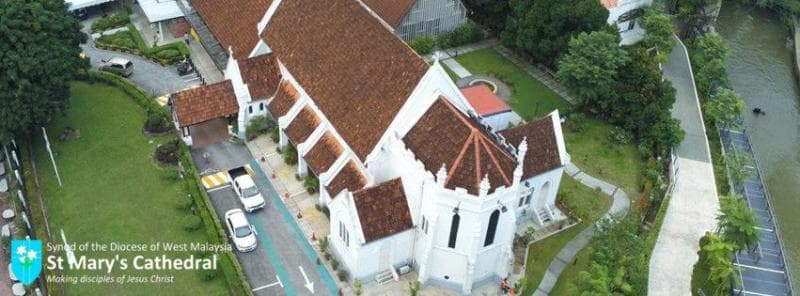
Discover St. Mary's Cathedral in Kuala Lumpur, Malaysia, a historic Anglican church with stunning Early English Gothic Revival architecture and a rich colonial past.
Overview
Nestled beside the historic Merdeka Square in the heart of Kuala Lumpur, Malaysia, St. Mary's Cathedral, officially known as the Cathedral of St. Mary the Virgin, stands as a venerable landmark. This Anglican church is celebrated not only for its spiritual significance as the mother church of the Anglican Diocese of West Malaysia but also for its enduring architectural beauty. Its graceful Early English Gothic Revival style provides a striking contrast to the modern cityscape, offering visitors a serene glimpse into the city's colonial past.
As one of the oldest Anglican churches in the region, St. Mary's Cathedral serves as a peaceful sanctuary, welcoming both worshippers and curious travellers seeking historical and architectural insights.
History & Cultural Background
The story of St. Mary's Cathedral begins in 1887 with a humble wooden structure on Bluff Road, capable of accommodating only about 95 worshippers. As Kuala Lumpur's Anglican community grew, this original church quickly became insufficient. In 1893, a decision was made to construct a larger, more permanent building, and a new site was chosen adjacent to the Padang, now known as Merdeka Square.
The foundation stone for the present brick cathedral was laid on February 3, 1894, by Sir W.H. Treacher, the British Resident of Selangor. The church was consecrated on February 9, 1895, by Bishop G.F. Hose, marking it as the first brick church erected in the native States of the Malay Peninsula. Designed by the government architect A.C. Norman, who also contributed to the design of the nearby Sultan Abdul Samad Building, the cathedral's design drew approval for its Early English Gothic style. It officially attained cathedral status in 1983, a testament to its growing importance in the region.
What Makes It Special
St. Mary's Cathedral is a testament to Early English Gothic Revival architecture, characterized by its elegant simplicity and structural purity. Visitors will notice the pointed arches and tall, narrow windows, typical of this style, though adapted with louvered panels to suit the tropical climate. The interior features a calm, ordered ambiance with a striking wooden beam ceiling made of merbau and seriah wood, drawing the eye upwards. The chancel, paved with tessellated tiles, is illuminated by stained glass windows. A particularly notable feature is the historic pipe organ, built in 1895 by the renowned English organ maker Henry Willis, who also crafted organs for St. Paul's Cathedral in London and the Royal Albert Hall.
The cathedral's strategic location near Merdeka Square means it stands amidst other iconic heritage buildings, creating a historical precinct that transports visitors back to a bygone era.
Stories, Fun Facts & Local Details
The construction of the new St. Mary's Cathedral involved a public design contest, offering a prize of 100 Straits dollars for the best plan, though ultimately, government architect A.C. Norman's proposal was selected. Interestingly, financial contributions for its construction came from various communities, including notable non-Christian philanthropists like Yap Kwan Seng, the fifth Chinese Kapitan of Kuala Lumpur, who generously donated to the building fund.
During World War II, efforts were made to protect the cathedral's original stained glass windows by removing them for safekeeping. However, these priceless pieces were tragically lost and could not be recovered after the war, necessitating the commissioning of new windows. Throughout the cathedral, memorial plaques adorn the walls, offering poignant insights into the lives of early colonial administrators and soldiers who served in Malaya, commemorating their contributions and sacrifices. The cathedral's layout is notably cross-shaped, a traditional design reflecting deep Christian symbolism.
Visitor Perspective
Visiting St. Mary's Cathedral offers a uniquely peaceful experience amidst the hustle and bustle of Kuala Lumpur. The tranquil atmosphere invites quiet reflection and appreciation of its historical and architectural significance. As an active place of worship, visitors are kindly requested to dress modestly and respectfully, reflecting the sanctity of the space. The cathedral is conveniently located within walking distance of the Masjid Jamek LRT station, making it easily accessible via public transport. For those interested in a deeper understanding, guided tours are available, providing fascinating insights into the cathedral's history, architecture, and its connection with Malaysia's past. The cathedral is typically open daily from 9 am to 5 pm, allowing ample time for exploration and contemplation.
Coordinates: 101.6934, 3.150249
View on Google Maps💬 How Travelers Describe This Place
Based on community votes
Photogenic
995Beautiful
989Must See
613Interesting
603Unique
581
Traveler Stories
Discover memorable experiences shared by travelers who have visited this place.
No traveler stories yet.
Be the first traveler to share what made this place memorable.

Tour
By
Spot
Discover amazing places around the world. Your journey starts here.
Explore
© 2026 TourBySpot. All rights reserved.