London Eye
London, United Kingdom
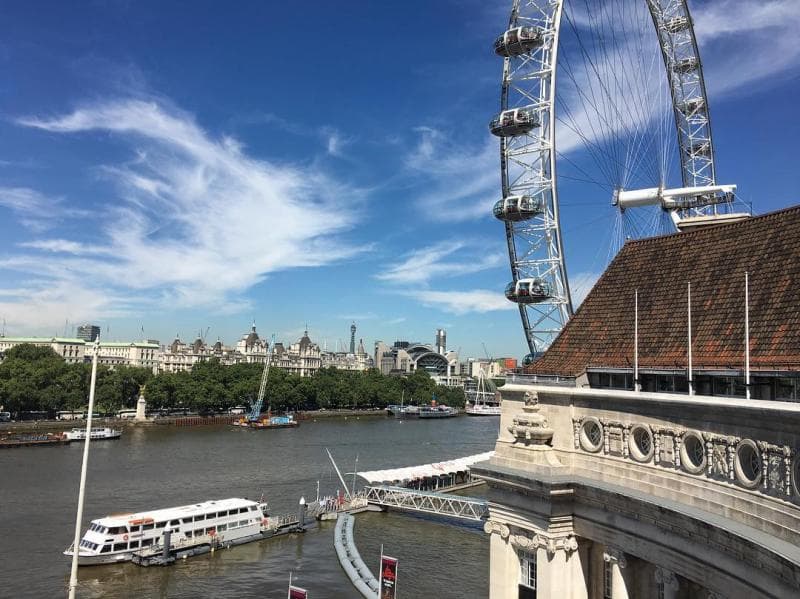
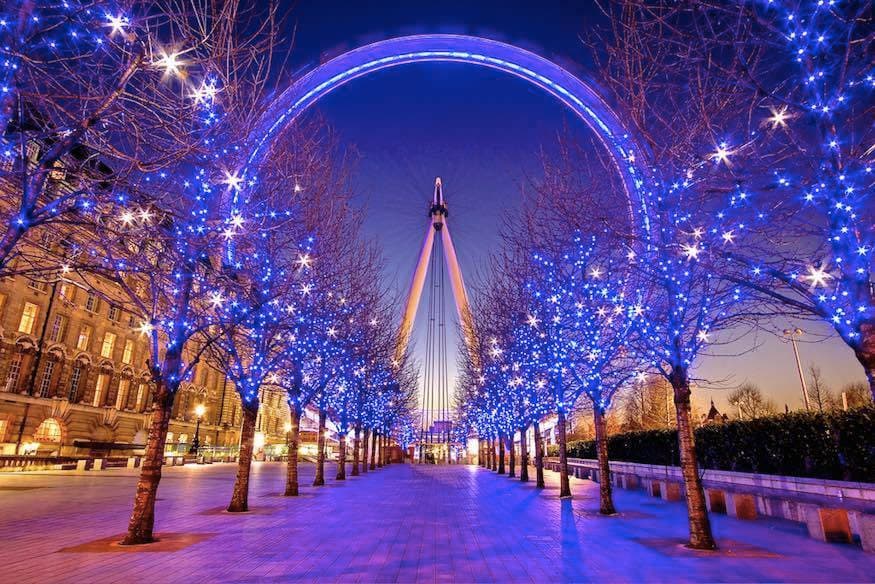
Discover the London Eye in London, United Kingdom – an iconic cantilevered observation wheel offering stunning 360-degree views of the capital's landmarks.
Overview
The London Eye, officially known as the lastminute.com London Eye, stands majestically on the South Bank of the River Thames in London, United Kingdom. This iconic cantilevered observation wheel has become an unmistakable feature of the capital's skyline, offering breathtaking panoramic views of the city and its celebrated landmarks. Standing 135 meters (443 feet) tall with a wheel diameter of 120 meters (394 feet), it held the title of the world's tallest Ferris wheel from its completion in 1999 until 2006. Today, it remains Europe's tallest cantilevered observation wheel and one of the United Kingdom's most popular paid tourist attractions, drawing approximately 3.5 million visitors annually.
A ride on the London Eye typically lasts around 30 minutes, completing a single, slow rotation. Its 32 spacious glass capsules, each capable of accommodating up to 25 passengers, move at a gentle pace of about 26 centimeters per second (0.9 km/h), allowing passengers to board and disembark without the wheel needing to stop, except for those with accessibility needs.
History & Cultural Background
The concept for the London Eye originated in 1993, when architects David Marks and Julia Barfield of Marks Barfield Architects submitted their design to a competition for a new landmark to commemorate the millennium in London. Although no winner was declared, Marks and Barfield pursued the project independently. Construction began in 1998, and the wheel was uniquely assembled horizontally over the River Thames before being slowly pulled upright.
The London Eye was ceremonially opened by Prime Minister Tony Blair on December 31, 1999, to usher in the new millennium, though it welcomed its first paying passengers on March 9, 2000. Interestingly, it was initially intended as a temporary structure with a five-year lease. However, its overwhelming popularity among locals and tourists led to it being granted permanent status in 2002, securing its place as a permanent fixture on London's skyline.
Since its inception, the London Eye has evolved into more than just an attraction; it has become a powerful symbol of modern Britain. Its image has been featured in British passports, on London Underground train seat designs, and it played a prominent role in the closing ceremony of the 2012 Summer Olympics. It also serves as a vibrant centerpiece for the capital's annual New Year's Eve fireworks celebrations, further solidifying its cultural significance.
What Makes It Special
What truly sets the London Eye apart is its unique design as a cantilevered observation wheel, supported on one side rather than centrally, a departure from traditional Ferris wheels. This innovative engineering marvel provides unobstructed 360-degree views, offering an unparalleled perspective of London's urban tapestry. On a clear day, visitors can see up to 40 kilometers (25 miles) in every direction, encompassing renowned landmarks such as the Houses of Parliament, Big Ben, Buckingham Palace, St. Paul's Cathedral, and even the distant Windsor Castle.
Each of the 32 capsules is equipped with interactive touchscreen guides, allowing guests to identify and learn about the numerous sights visible below, enhancing the educational aspect of the experience. The wheel's steady, deliberate movement ensures a comfortable and captivating journey, providing ample time for photography and soaking in the magnificent cityscape.
Stories, Fun Facts & Local Details
- It is said that the 32 capsules symbolically represent the 32 boroughs of London. Notably, the number 13 capsule is often omitted due to traditional superstitions.
- The London Eye has been the setting for over 5,000 marriage proposals and more than 500 weddings, with the first wedding taking place in 2001, making it a truly romantic spot.
- If the entire circumference of the wheel were unrolled, its length of 424 meters would surpass the height of London's current tallest building, The Shard.
- In 2006, a decorative LED lighting system was installed, allowing the wheel to be illuminated in various colors for special events and adding to London's nighttime spectacle.
- The London Eye's construction was a complex European project, with parts manufactured across the continent and floated up the Thames on barges to be assembled.
Visitor Perspective
For many travelers, a ride on the London Eye is considered an essential part of a London itinerary. It provides a unique orientation to the city and allows visitors to appreciate the grandeur and scale of its historic and modern architecture. The slow, continuous rotation makes it accessible and enjoyable for visitors of all ages, offering a relaxed yet exciting way to see the capital from an elevated vantage point. Its central location on the South Bank also places it within easy reach of other major attractions, making it convenient for a day of sightseeing.
Whether viewed by day, revealing intricate architectural details, or by night, sparkling with the city lights, the London Eye offers a memorable experience. The availability of various special experiences, such as Champagne Experiences or private capsule hire, caters to those seeking an extra touch of luxury or a unique celebration. Its enduring popularity and the sheer volume of visitors it attracts annually underscore its status as a beloved and iconic London landmark.
Coordinates: -0.1197, 51.5033
View on Google Maps💬 How Travelers Describe This Place
Based on community votes
Photogenic
996Unique
494Interesting
193Beautiful
125Must See
82
Traveler Stories
Discover memorable experiences shared by travelers who have visited this place.
No traveler stories yet.
Be the first traveler to share what made this place memorable.
Things to see at London Eye



Tour
By
Spot
Discover amazing places around the world. Your journey starts here.
Explore
© 2026 TourBySpot. All rights reserved.