Support A-Frame and Wheel Structure
London, United Kingdom
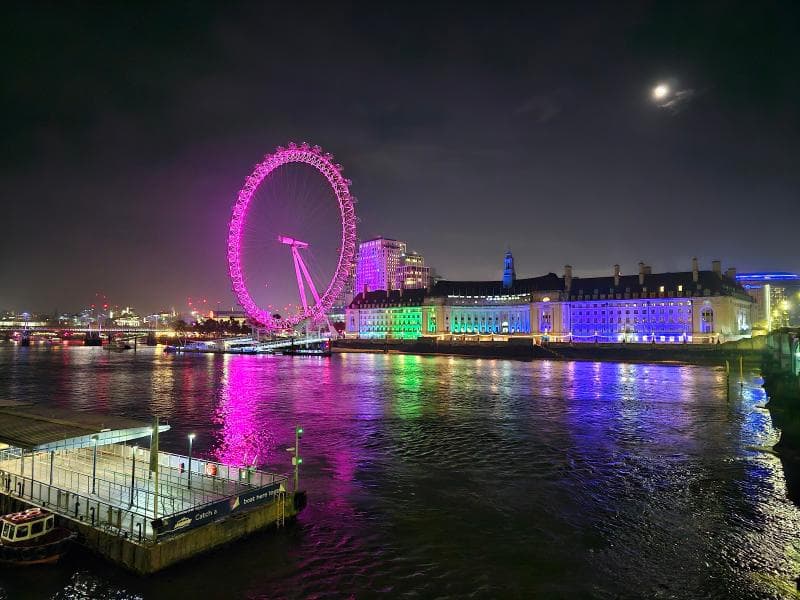

Explore the engineering marvel of the London Eye's A-frame support and wheel structure in London, United Kingdom. Discover its unique cantilevered design and iconic views.
Overview
Standing majestically on the South Bank of the River Thames, the London Eye is more than just a landmark; it's a profound statement of engineering ingenuity. At its core, the 'Support A-Frame and Wheel Structure' is what sets this iconic observation wheel apart from traditional Ferris wheels. Often described as a cantilevered observation wheel, it's anchored by a distinctive A-frame on one side only, making it a truly unique spectacle on London's skyline. This engineering marvel, approximately 135 meters (443 feet) tall, offers unparalleled panoramic views of the city, captivating millions of visitors annually.
History & Cultural Background
The genesis of the London Eye, originally known as the Millennium Wheel, can be traced back to a 1993 competition seeking a landmark to commemorate the new millennium. Architects David Marks and Julia Barfield conceived the ambitious design, though it initially didn't win the competition. Undeterred, the husband-and-wife team pursued their vision, securing funding and bringing together an international team of specialists. Construction began in 1998, a challenging endeavor that saw components fabricated across Europe and transported by barge up the River Thames. The wheel was assembled horizontally on floating platforms and then slowly lifted upright over several days using a sophisticated system of hydraulic jacks. Though ceremonially opened on New Year's Eve 1999, it welcomed its first public passengers in March 2000. Originally intended as a temporary structure for five years, its immense popularity ensured its permanence, solidifying its place as a cherished symbol of modern London.
What Makes It Special
The true genius of the London Eye's 'Support A-Frame and Wheel Structure' lies in its cantilevered design. Unlike conventional Ferris wheels that are supported by an A-frame on both sides, the London Eye proudly stands with its entire weight anchored by a single A-frame on one side. This design choice was pivotal, allowing for its distinctive open appearance and the unobstructed 360-degree views from its capsules. The wheel's rim is supported by tensioned steel cables, reminiscent of a colossal spoked bicycle wheel, with a central hub and spindle weighing an astonishing 330 tons. The main structural load from the rim to the hub is carried by 64 cables, or 'spokes'. The A-frame itself features two robust legs, each over 58 meters (190 feet) long, bending over the river at a 65-degree angle from the horizontal. This intricate structure is held in place by six cable backstays, anchored deep into the riverbank, preventing any tilt. The London Eye's unique engineering has earned it recognition as the world's tallest cantilevered observation wheel, a testament to its innovative structural integrity.
Stories, Fun Facts & Local Details
The London Eye is rich with fascinating stories and details that add to its allure. Its construction involved the meticulous assembly of sections floated on barges along the Thames, a logistical feat that required raising Tower Bridge to allow larger elements to pass. The final lifting into position was a nail-biting process, advancing at just two degrees per hour until it reached 65 degrees, pausing for a week before completing its upright stance. The wheel rotates at a leisurely pace of 26 centimeters per second, or about 0.9 kilometers (0.6 miles) per hour, which is roughly twice the speed of an average tortoise. This slow, continuous motion allows passengers to board and alight without the wheel needing to stop, except for visitors with mobility needs. It features 32 capsules, each weighing 10 tonnes, a number significant as it represents the 32 boroughs of London (though they are numbered 1-12 and 14-33, omitting the unlucky 13). More than 5,000 proposals and over 500 weddings have taken place within its glass capsules, making it a place of countless personal histories. On a clear day, the views from the top can stretch up to 40 kilometers (25 miles) in every direction, reaching Windsor Castle.
Visitor Perspective
For visitors, the 'Support A-Frame and Wheel Structure' of the London Eye provides a unique and unforgettable experience. The ingenious design means there's no central column obstructing views, allowing passengers in the fully enclosed, climate-controlled capsules to enjoy unobstructed 360-degree panoramas of London's iconic cityscape. As the wheel gracefully rotates, the world's most famous landmarks unfold beneath and around you – from Big Ben and the Houses of Parliament to Buckingham Palace and St. Paul's Cathedral. The seamless, slow movement ensures a tranquil journey, offering ample time for sightseeing, photography, and simply soaking in the breathtaking vistas. The capsules are positioned on the outside of the rim, further enhancing the feeling of being suspended above the city, creating a truly immersive and awe-inspiring perspective of London that is both thrilling and serene. This structural brilliance not only ensures safety and stability but fundamentally shapes the emotional and visual impact of every ride.
Coordinates: -0.1197, 51.5033
View on Google Maps💬 How Travelers Describe This Place
Based on community votes
Interesting
872Unique
846Photogenic
684Must See
121Beautiful
87
Traveler Stories
Discover memorable experiences shared by travelers who have visited this place.
No traveler stories yet.
Be the first traveler to share what made this place memorable.

Tour
By
Spot
Discover amazing places around the world. Your journey starts here.
Explore
© 2026 TourBySpot. All rights reserved.