Observation Capsules
London, United Kingdom
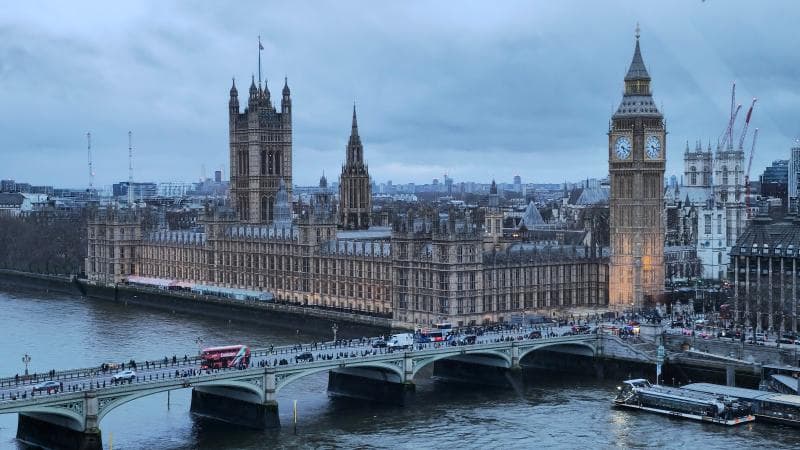

Discover the London Eye's Observation Capsules in London, UK. Soar 135m high for 360-degree views of iconic landmarks in glass-enclosed comfort.
Overview
Perched majestically on the South Bank of the River Thames, the London Eye stands as an iconic symbol of modern London, offering unparalleled panoramic views of the city's sprawling skyline. While often referred to as a Ferris wheel, it is technically a cantilevered observation wheel, a significant engineering marvel supported from one side only. Its distinctive design and prominent location have cemented its status as a must-visit attraction for curious travelers. Since its public opening in March 2000, the London Eye has welcomed millions of visitors annually, establishing itself as the United Kingdom's most popular paid tourist attraction.
At the heart of this soaring structure are its 32 spacious observation capsules. These glass-enclosed pods gently transport passengers on a leisurely 30-minute rotation, rising to a height of 135 meters (443 feet) and providing a unique perspective on London's historic landmarks. Each capsule is a self-contained viewing platform, designed for comfort and offering a truly immersive visual experience above the vibrant cityscape.
History & Cultural Background
The genesis of the London Eye traces back to a 1993 competition seeking a landmark to commemorate the new millennium in London. Architects David Marks and Julia Barfield, a husband-and-wife team, conceived the innovative design. Despite no official winner being declared, they pursued the project independently, eventually bringing their vision to life.
Construction commenced in 1998, and the engineering feat was a truly international collaboration. Components were sourced from across Europe: steelwork from the Netherlands, cables from Italy, bearings from Germany, and the central hub cast in the Czech Republic. The specialized glass capsules themselves were manufactured by Poma in the French Alps, utilizing Italian glass. Many of these massive parts were transported by barge along the River Thames, and the entire wheel was famously assembled horizontally over the river on floating platforms before being pulled upright in a challenging feat of engineering.
The London Eye was ceremonially opened on December 31, 1999, by Prime Minister Tony Blair, though it began admitting paying passengers a few months later, on March 9, 2000. Interestingly, it was initially intended as a temporary attraction with a five-year lease. However, its overwhelming popularity and significant contribution to London's tourism led to its permanent status, making it a beloved fixture on the city's skyline.
What Makes It Special
The observation capsules of the London Eye are extraordinary due to their thoughtful design and placement. Unlike traditional Ferris wheels where cabins hang from the structure, these ovoid, fully enclosed glass pods are mounted externally on the wheel's rim. This allows for entirely unobstructed 360-degree views, ensuring that passengers have clear sightlines to the city below and beyond without any structural interference.
Each of the 32 capsules is equipped with climate control, ensuring a comfortable environment regardless of the weather outside. Furthermore, they are stabilized by a gyroscopic system, maintaining a level floor throughout the rotation, which enhances the feeling of a smooth, effortless glide rather than a jarring ride. The wheel's deliberate slow speed of approximately 0.6 miles per hour (0.9 km/h) allows for a relaxed boarding process where passengers can simply walk on and off without the wheel needing to stop, except to accommodate guests with accessibility needs. This continuous motion contributes to the tranquil and immersive viewing experience.
Stories, Fun Facts & Local Details
The London Eye's capsules hold several intriguing details. For instance, while there are 32 physical capsules, they are numbered from 1 to 33, conspicuously skipping the number 13. This omission is a nod to Western superstition regarding the unlucky nature of the number. Each of the 32 capsules symbolically represents one of London's 32 boroughs, weaving a deeper cultural connection into the experience.
Each capsule is quite substantial, weighing approximately 10 tonnes, yet capable of comfortably holding up to 25 people. This means that a single rotation of the London Eye can accommodate around 800 passengers, a capacity roughly equivalent to eleven traditional London double-decker buses. The Eye has also hosted numerous notable figures, from royalty to celebrities like Kate Moss, Angelina Jolie, and athlete Mo Farah. In 2013, one capsule was even named the 'Coronation Capsule' to mark the 60th anniversary of Queen Elizabeth II's coronation. Beyond individual rides, the capsules have been transformed for unique experiences, including pop-up pubs, West End theatre stages, and garden parties, showcasing the versatility and imaginative potential of this iconic structure.
Visitor Perspective
Stepping into one of the London Eye's observation capsules is an experience of anticipation and wonder. As the capsule slowly ascends, a breathtaking panorama of London unfolds below. Visitors can easily spot famous landmarks such as Big Ben, the Houses of Parliament, St. Paul's Cathedral, and even Buckingham Palace. On exceptionally clear days, the visibility can extend up to 40 kilometers (25 miles), allowing glimpses of distant sights like Windsor Castle.
The gentle, continuous rotation over 30 minutes provides ample time to soak in the views, capture photographs, and appreciate the city from a truly elevated perspective. Passengers are free to move around within the spacious capsules, enjoying different vantage points. The experience is designed to be relaxed and contemplative, making it a perfect activity for families, couples, or solo travelers seeking to grasp the immense scale and beauty of London. It offers a unique blend of modern engineering marvel and historical grandeur, providing a memorable overview of one of the world's most dynamic cities.
Coordinates: -0.119556, 51.503389
View on Google Maps💬 How Travelers Describe This Place
Based on community votes
Interesting
826Beautiful
800Unique
387Photogenic
242Must See
90
Traveler Stories
Discover memorable experiences shared by travelers who have visited this place.
No traveler stories yet.
Be the first traveler to share what made this place memorable.

Tour
By
Spot
Discover amazing places around the world. Your journey starts here.
Explore
© 2026 TourBySpot. All rights reserved.