Kyrgyz National Philharmonic Hall
Bishkek, Kyrgyzstan
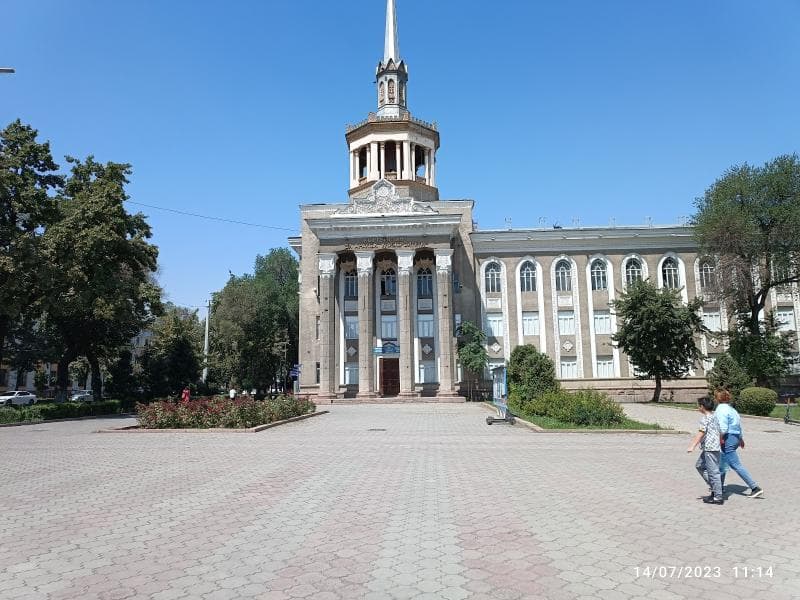
Explore the Kyrgyz National Philharmonic Hall in Bishkek, Kyrgyzstan, a cultural gem featuring Soviet architecture, traditional art, and the iconic Manas statue.
Overview
The Kyrgyz National Philharmonic Hall, officially known as the Toktogul Satylganov Kyrgyz National Philharmonic, stands as a prominent cultural landmark in the heart of Bishkek, Kyrgyzstan. This snow-white architectural marvel, completed in 1980, serves as the country's largest concert venue and a vital center for national artistic expression. Located prominently on Chuy Avenue, it is easily recognizable by its distinctive Soviet-era Brutalist design, softened with traditional Islamic ornamentation, and the grand square it shares with the magnificent Manas statue.
The Philharmonic is dedicated to showcasing a rich tapestry of musical performances, ranging from classical and traditional Kyrgyz music to contemporary genres. It features two main halls: a large concert hall with over a thousand seats and a smaller organ hall, which notably houses Bishkek's only pipe organ. Beyond concerts, it frequently hosts significant republic-scale events, including presidential inaugurations, solidifying its role not just as an entertainment hub but also as a venue for national pride and civic gatherings.
History & Cultural Background
The origins of the Kyrgyz National Philharmonic trace back to October 7, 1936, when the Philharmonic Society was founded based on an orchestra of folk instruments. For many years, the society operated without a dedicated home, staging performances in various halls across Bishkek. It was not until 1980 that the current impressive building, designed by architect A. Pechenkin (also known as Pechonkin), was finally completed, providing a permanent and grand stage for Kyrgyz arts.
The Philharmonic bears the name of Toktogul Satylganov, a revered figure in Kyrgyz culture. Satylganov (1864-1933) was an akyn, an improvising poet and virtuoso musician known for setting his words to music. He is celebrated as one of the most influential figures in traditional Kyrgyz arts and is considered a founder of modern Kyrgyz literature. Naming the national philharmonic after him underscores Kyrgyzstan's deep respect for its nomadic musical traditions and literary heritage.
What Makes It Special
What truly sets the Kyrgyz National Philharmonic Hall apart is its unique blend of architectural styles and its profound cultural resonance. The building itself is a striking example of Soviet Brutalism, characterized by its monumental scale and reinforced concrete structure. However, this sturdy aesthetic is beautifully adorned with elements inspired by traditional Islamic design, such as stalactite cornicing, and clad in native marble and natural stones, giving it a distinct local identity.
Its location is equally significant. Situated opposite the City Hall, the Philharmonic anchors a vibrant public space that is an experience in itself. The square in front features a magnificent statue of Manas, the legendary hero of the Kyrgyz epic poem, often depicted on his horse Ak-Kul slaying a dragon. Surrounding Manas are sculptures of his wife Kanykei, his spiritual advisor Bakai, and busts of renowned manaschi, the storytellers who keep the epic alive. This ensemble creates a powerful visual narrative of Kyrgyz history and folklore, making the Philharmonic much more than just a concert hall; it is a monument to the nation's soul.
Stories, Fun Facts & Local Details
Before the current building's completion in 1980, musical concerts in Bishkek often took place in various venues, and during the warmer months, traditional performances were even held in the open-air theater within Panfilov Park. The construction of the Philharmonic marked a new era for performing arts, consolidating artistic endeavors under one grand roof.
The building's white marble exterior, standing as if on a hill, combined with its multi-colored stained-glass windows and copper engravings, gives it the appearance of an ancient temple, creating a visually inspiring atmosphere for visitors. The square outside is not just a tourist attraction but a beloved gathering place for locals, especially the younger generation, providing a lively urban space complete with fountains. Visitors might still hear renditions of Toktogul Satylganov's popular songs, such as 'Alymkan' and 'Min Kyal,' performed within the Philharmonic's walls, connecting modern audiences to ancient melodies.
Visitor Perspective
For any traveler to Bishkek, the Kyrgyz National Philharmonic Hall offers a compelling insight into the country's rich cultural landscape. Whether attending a performance or simply admiring its architecture and the surrounding square, the experience is deeply enriching. The sheer scale and intricate details of the building, coupled with the heroic narrative of the Manas statue, provide excellent photographic opportunities and a profound sense of place.
While concerts provide the most immersive experience, even a stroll through the Philharmonic Square is worthwhile. It is a place where history, art, and daily life converge, offering a glimpse into the heart of Bishkek's cultural pulse. Observing locals relax by the fountains or children playing near the heroic sculptures adds to the authentic atmosphere, making it a memorable stop on any itinerary in Kyrgyzstan's capital.
Coordinates: 74.587194, 42.877386
View on Google Maps💬 How Travelers Describe This Place
Based on community votes
Beautiful
836Unique
797Photogenic
396Interesting
286Must See
255
Traveler Stories
Discover memorable experiences shared by travelers who have visited this place.
No traveler stories yet.
Be the first traveler to share what made this place memorable.
Things to see at Kyrgyz National Philharmonic Hall



Tour
By
Spot
Discover amazing places around the world. Your journey starts here.
Explore
© 2026 TourBySpot. All rights reserved.