Manas Monument
Bishkek, Kyrgyzstan
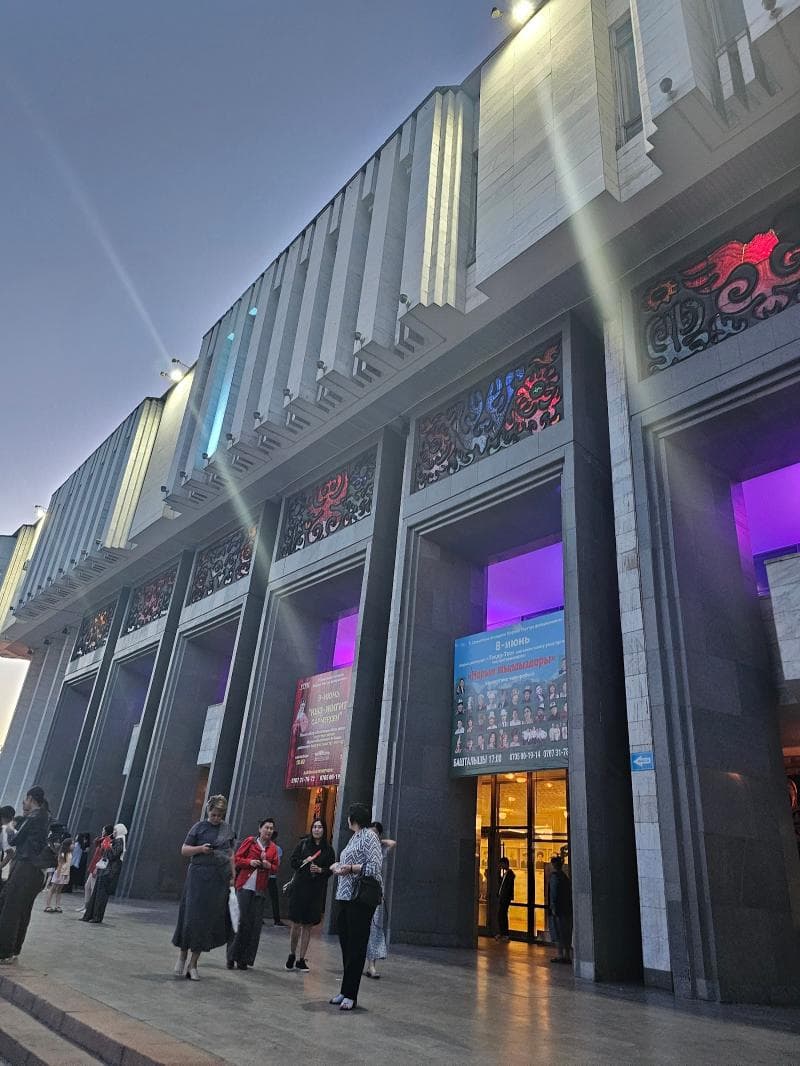
Discover the Manas Monument in Bishkek, Kyrgyzstan, a powerful tribute to the legendary hero of the Kyrgyz national epic, located at the Philharmonic Hall.
Overview
In the vibrant heart of Bishkek, Kyrgyzstan, stands a monumental tribute to the nation's rich heritage: the Manas Monument. This impressive sculptural complex, often referred to as the Manas Sculptural Complex, is majestically situated in front of the Kyrgyz National Philharmonic Hall, a prominent cultural landmark itself. It serves not only as an artistic masterpiece but also as a profound symbol of Kyrgyz identity and history, drawing visitors into the legendary world of the Manas epic.
The monument captures the essence of the national hero, Manas, astride his mythical steed, Ak-Kula, engaged in a heroic struggle. Flanked by other pivotal figures from the epic, the entire composition resonates with stories of courage, unity, and resilience. This site is more than just a collection of statues; it is a cultural nexus where the past echoes powerfully in the present, inviting travelers to explore the depths of Kyrgyz folklore and national spirit.
History & Cultural Background
The Manas Monument, completed in 1981, is dedicated to Manas, the central figure of the Kyrgyz national epic. The epic itself is a cornerstone of Kyrgyz oral tradition, a monumental work of folklore passed down through generations of storytellers, known as *manaschis*. While its oral roots are ancient, predating written records, the oldest known written versions date back to the 18th century. The epic's immense cultural significance was formally recognized by UNESCO in 1995 during its 1,000th anniversary, highlighting its role in preserving the historical memory and traditions of the Kyrgyz people.
The monument's setting, the Kyrgyz National Philharmonic Hall, adds another layer to its historical context. This grand white marble building, constructed in 1980, is the largest concert venue in Kyrgyzstan and is named after Toktogul Satylganov, a revered Kyrgyz composer and musician. The proximity of these two symbols — one celebrating ancient epic heroism and the other showcasing modern artistic expression — creates a compelling dialogue between Kyrgyzstan's enduring past and its vibrant cultural present.
What Makes It Special
What truly sets the Manas Monument apart is its powerful visual narrative and profound symbolic weight. At its core is the towering bronze statue of Manas, captured in a dynamic pose atop his magical steed, Ak-Kula, valiantly confronting a dragon. This depiction embodies the epic's central theme of protecting the homeland and uniting the Kyrgyz tribes against invaders.
Accompanying Manas are two other significant figures from the epic: his wise wife, Kanykei, symbolizing strength and loyalty, and the sagely advisor Bakai, representing wisdom and spiritual guidance. The surrounding square is further adorned with busts of renowned *manaschis*, the traditional epic reciters who have kept the Manas story alive for centuries. These sculptural elements, combined with decorative fountains and red granite paving, transform the space into an open-air gallery celebrating Kyrgyz heroism and artistic tradition. The entire complex is a vivid encapsulation of the values of courage, unity, and historical continuity that are deeply cherished by the Kyrgyz people.
Stories, Fun Facts & Local Details
The Manas epic is not just a story; it is considered one of the longest epic poems in the world, with some versions boasting over 500,000 lines, making it many times longer than the 'Iliad' and the 'Odyssey' combined. It's a sprawling narrative that weaves together myths, legends, and historical accounts, depicting the life and deeds of Manas, who unites 40 tribes to form the Kyrgyz nation.
In Kyrgyzstan, Manas is omnipresent and deeply integrated into daily life. His name graces the main international airport, numerous streets in cities and towns, and is a subject of study in schools and universities. Even the national flag of Kyrgyzstan subtly references the epic, with its 40-rayed sun symbolizing the 40 united tribes of Manas. The *manaschis* are revered figures, capable of reciting vast portions of the epic from memory, often entering trance-like states during their performances. These recitations are not merely entertainment but a living link to the nation's soul, preserving collective memory and cultural identity.
Visitor Perspective
For any traveler to Bishkek, a visit to the Manas Monument is an essential experience that offers a direct connection to the spirit of Kyrgyzstan. Standing in Manas Square, in front of the grand Philharmonic Hall, one can feel the weight of centuries of history and tradition. The monument invites quiet contemplation of the heroism and cultural foundations it represents, providing a tangible link to the epic narratives that define the nation.
It's a place where locals gather, children play around the fountains, and students from nearby universities often meet. This blend of daily life with profound historical symbolism makes the site particularly engaging. Travelers can appreciate the intricate details of the sculptures, reflect on the epic's themes of unity and resilience, and absorb the atmosphere of a nation proud of its heritage. The Manas Monument offers more than just a photo opportunity; it offers a deeper understanding of the Kyrgyz people's enduring connection to their past and their hopes for the future.
Coordinates: 74.587194, 42.877386
View on Google Maps💬 How Travelers Describe This Place
Based on community votes
Beautiful
791Photogenic
613Unique
514Must See
457Interesting
207
Traveler Stories
Discover memorable experiences shared by travelers who have visited this place.
No traveler stories yet.
Be the first traveler to share what made this place memorable.

Tour
By
Spot
Discover amazing places around the world. Your journey starts here.
Explore
© 2026 TourBySpot. All rights reserved.