Cultural Exhibition Areas
Bishkek, Kyrgyzstan
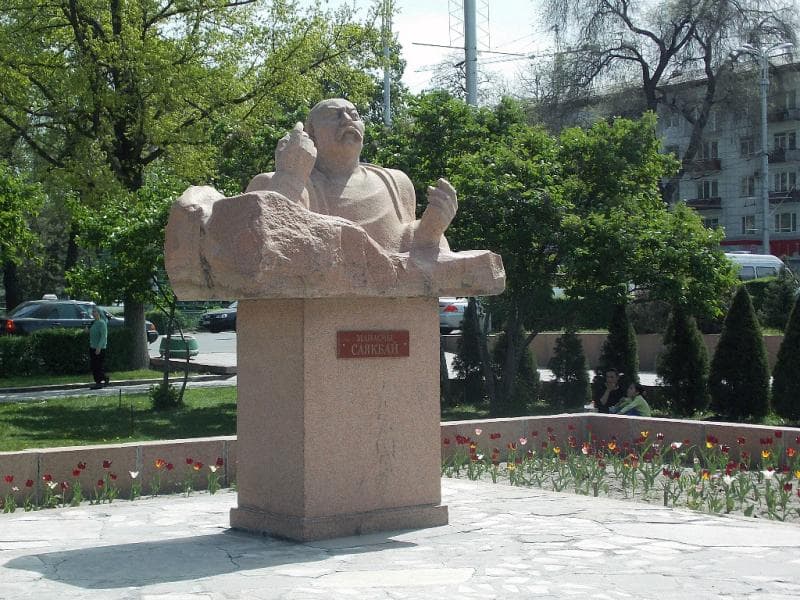
Discover the Toktogul Satylganov Kyrgyz National Philharmonic Hall in Bishkek, Kyrgyzstan, a vibrant cultural hub showcasing national arts, history, and folklore.
Overview
Nestled in the vibrant heart of Bishkek, Kyrgyzstan, the Toktogul Satylganov Kyrgyz National Philharmonic Hall stands as a monumental emblem of the nation's rich cultural heritage and artistic spirit. Far more than just a performance venue, this impressive edifice and its surrounding square serve as a living 'Cultural Exhibition Area,' where the echoes of Kyrgyz history, folklore, and musical traditions resonate. It's a place where visitors can immerse themselves in the deep-rooted identity of Kyrgyzstan, experiencing its art, architecture, and enduring legends firsthand.
The Philharmonic Hall is widely recognized for its striking Soviet-era architecture, prominently featuring a distinctive brutalist style softened by elegant white marble and elements inspired by traditional Central Asian design. Its strategic location at the intersection of Chuy and Manas Avenues makes it an unmissable landmark. The exterior is as significant as the performances within, marked by the iconic Manas Monument, a grand sculptural complex that tells stories of ancient heroes and serves as a powerful visual representation of Kyrgyz national pride.
History & Cultural Background
The journey of the Kyrgyz National Philharmonic began on October 7, 1936, initially established around an orchestra of folk instruments. For many years, the society performed in various temporary locations across Bishkek. The current majestic building, designed by architect A. Pechenkin (also cited as A. Pechonkin), was completed in 1980, providing a permanent and grand home for the arts. It is named in honor of Toktogul Satylganov, a celebrated Kyrgyz akyn, or improvising poet and musician. Satylganov, one of the most influential figures in traditional Kyrgyz arts, is revered as a founder of modern Kyrgyz literature, whose popular songs continue to be heard today.
The Philharmonic's establishment marked a pivotal moment in the preservation and development of Kyrgyz music and performance arts during the Soviet era. It brought together diverse creative collectives, including folk instrument orchestras, national choirs, and dance ensembles, ensuring the continuity and evolution of indigenous art forms alongside classical genres.
What Makes It Special
What sets the Kyrgyz National Philharmonic Hall apart as a cultural exhibition isn't a dedicated museum space, but rather the comprehensive way it embodies Kyrgyz identity through its very existence. The architectural fusion of Soviet brutalism with traditional motifs, such as colorful stained glass and hammered copper ornamentation, creates a unique aesthetic that speaks to the nation's past and present. The building itself, perched on a slight hill, evokes the grandeur of an ancient temple.
Outside, the Philharmonic Square acts as an open-air gallery. The magnificent equestrian statue of Manas, the legendary hero of the Epic of Manas, captures the heart of Kyrgyz storytelling. Surrounding Manas are sculptures of his loyal wife Kanykei, his wise spiritual advisor Bakai, and busts of renowned 'manaschi'—the epic storytellers who orally transmit the vast Epic of Manas. This sculptural complex vividly illustrates a cornerstone of Kyrgyz oral tradition and national consciousness, making it an informal yet powerful cultural display.
Stories, Fun Facts & Local Details
The Epic of Manas is one of the longest epic poems in the world, and its reciters, the 'manaschi,' hold a special place in Kyrgyz culture. The statues outside the Philharmonic pay homage to this profound oral tradition.
Toktogul Satylganov, the hall's namesake, was not only a musician but also a poet who used his art for social commentary, leading to his exile in Siberia before he famously escaped. His compositions, like 'Alymkan' and 'Min Kyal,' are still performed and cherished.
Inside the Philharmonic, among its two concert halls, the smaller upper-floor venue houses the only pipe organ in Bishkek, adding a unique dimension to its musical offerings.
The square fronting the Philharmonic is a beloved gathering spot for locals, including students from nearby universities. It's a place for leisurely strolls amidst fountains and flowerbeds, especially vibrant during evenings when the fountains are illuminated.
Beyond concerts, the hall has hosted significant national events, including four presidential inaugurations, underscoring its central role in Kyrgyz public life.
Visitor Perspective
For a curious traveler, visiting the Kyrgyz National Philharmonic Hall is an immersive cultural experience that goes beyond attending a performance. It's an opportunity to connect with the soul of Kyrgyzstan. Standing before the Manas Monument, one can feel the weight of centuries of nomadic history and epic storytelling. Exploring the architectural nuances of the building, from its imposing facade to its intricate details, reveals layers of Soviet and Central Asian influences.
Whether you secure a ticket to a classical concert, a traditional Kyrgyz music performance, or simply spend time admiring the artistry of the square, the Philharmonic offers a profound glimpse into the nation's artistic identity. It's a testament to how art, history, and public spaces intertwine to create a vibrant, continually evolving cultural narrative in the heart of Bishkek. Expect an atmosphere that is both grand and welcoming, a reflection of Kyrgyz hospitality and pride in their heritage.
Coordinates: 74.587194, 42.877386
View on Google Maps💬 How Travelers Describe This Place
Based on community votes
Beautiful
836Unique
797Photogenic
396Interesting
286Must See
255
Traveler Stories
Discover memorable experiences shared by travelers who have visited this place.
No traveler stories yet.
Be the first traveler to share what made this place memorable.

Tour
By
Spot
Discover amazing places around the world. Your journey starts here.
Explore
© 2026 TourBySpot. All rights reserved.