Krakowskie Przedmieście
Warsaw, Poland
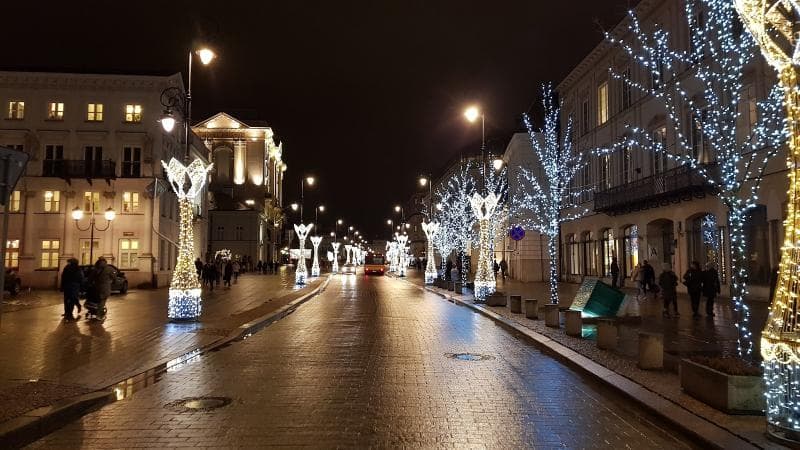
Explore Krakowskie Przedmieście in Warsaw, Poland's historic Royal Route, lined with presidential palaces, significant churches, and monuments. Discover its rich history and cultural landmarks.
Overview
Krakowskie Przedmieście, often translated as 'Kraków Suburb Street,' stands as one of Warsaw, Poland's most iconic and prestigious thoroughfares. It forms the northernmost segment of the historic Royal Route, a picturesque path that once connected the Royal Castle with the 17th-century Wilanów Palace. This elegant street acts as a vibrant artery linking Warsaw's Old Town with a rich tapestry of historical institutions, grand palaces, and revered churches. Its wide pavements, lined with architectural masterpieces, invite visitors to stroll through centuries of Polish history and culture, offering a unique glimpse into the city's enduring spirit.
History & Cultural Background
The origins of Krakowskie Przedmieście trace back to the 15th century, when it emerged as a crucial trade route. Over time, as Warsaw solidified its role as Poland's capital, the street transformed into the city's primary artery, attracting influential noblemen who erected magnificent palaces and manor houses along its length during the 17th century. This development continued through the Baroque and Classical periods, embellishing the street with impressive churches and aristocratic dwellings. Tragically, much of Warsaw's historic district, including parts of Krakowskie Przedmieście, suffered deliberate destruction during World War II, particularly after the 1944 Warsaw Uprising. However, its accurate reconstruction was significantly aided by the meticulous paintings of 18th-century Italian artist Bernardo Bellotto (known as Canaletto), whose detailed cityscapes proved invaluable in restoring the capital's historical appearance.
What Makes It Special
What makes Krakowskie Przedmieście truly special is its unparalleled concentration of historical and cultural landmarks, each telling a piece of Poland's story. It is home to the majestic Presidential Palace, the largest palace in Warsaw, which has witnessed countless significant political and social events. The street also houses the venerable University of Warsaw, established in 1816, with its ornate gates opening onto the boulevard, integrating academic life with historical grandeur. Along this route, visitors encounter the beautiful Church of the Holy Cross, a Baroque masterpiece, and the historic St. Anne's Church, which boasts a neoclassical facade and offers a viewing terrace for panoramic city views.
Stories, Fun Facts & Local Details
Krakowskie Przedmieście is brimming with captivating stories and poignant details. Perhaps the most well-known is the heart of Poland's most famous composer, Frédéric Chopin, which rests within an urn encased in a pillar inside the Church of the Holy Cross. This was Chopin's dying wish, to have his heart returned to his homeland. The street is also adorned with significant monuments, including a statue of Nicolaus Copernicus, the renowned Polish astronomer, and a monument dedicated to the national poet Adam Mickiewicz, whose visionary romantic works kept the spirit of Poland alive during times of occupation. Another impressive statue depicts Prince Józef Poniatowski, a national hero and Marshal of France. The visual richness of the street is further enhanced by angled glass cubes featuring reproductions of Canaletto's 18th-century paintings, allowing passersby to compare the contemporary streetscape with its historical depictions.
Visitor Perspective
Walking along Krakowskie Przedmieście is an immersive journey through time. The street's recent renovations have restored its original splendor, creating a pleasant, often pedestrian-friendly environment with wide pavements and old-fashioned lampposts. It's a place where the echoes of royal processions and grand historical events blend with the everyday rhythm of modern Warsaw. From admiring the architectural diversity of Baroque and Classical buildings to contemplating the legacies of national heroes, the street offers a deeply enriching experience. Cafes and restaurants invite visitors to pause and soak in the atmosphere, perhaps enjoying a moment at a legendary establishment like Cafe Bristol. Whether seeking historical insight, cultural immersion, or simply a charming stroll, Krakowskie Przedmieście provides a memorable and authentically Polish encounter.
Coordinates: 21.017658, 52.238254
View on Google Maps💬 How Travelers Describe This Place
Based on community votes
Interesting
639Photogenic
526Beautiful
421Unique
366Must See
212
Traveler Stories
Discover memorable experiences shared by travelers who have visited this place.
No traveler stories yet.
Be the first traveler to share what made this place memorable.
Things to see at Krakowskie Przedmieście



Tour
By
Spot
Discover amazing places around the world. Your journey starts here.
Explore
© 2026 TourBySpot. All rights reserved.