Presidential Palace
Warsaw, Poland
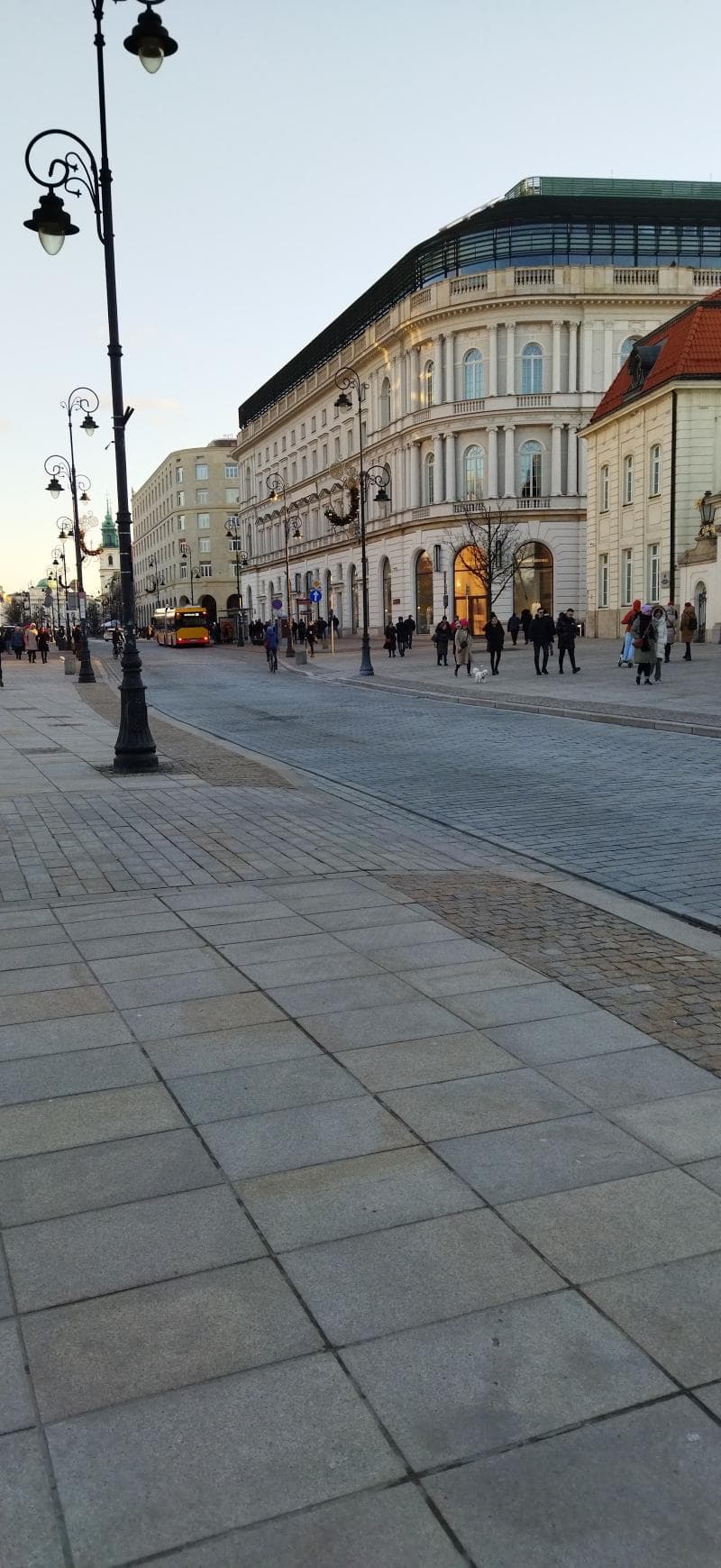
Explore Warsaw's Presidential Palace on Krakowskie Przedmieście, the official residence of Poland's President since 1994. Discover its rich history and neoclassical architecture.
Overview
The Presidential Palace, known in Polish as Pałac Prezydencki, stands proudly on Krakowskie Przedmieście, one of Warsaw, Poland's most historic and prestigious streets. As the official residence and workplace of the President of the Republic of Poland, it is not merely a grand edifice but a vibrant symbol of Polish statehood. This impressive neoclassical structure is widely recognized as the largest palace in Warsaw, commanding attention with its elegant facade and significant position along the Royal Route.
While primarily a working government building, the palace offers a profound connection to the nation's past and present. Its striking exterior, often complemented by ceremonial guards, makes it an essential stop for any traveler exploring the rich heritage of Poland's capital. Visitors can admire its architectural grandeur and the significant monument of Prince Józef Poniatowski situated in its forecourt.
History & Cultural Background
The Presidential Palace boasts a history stretching back almost four centuries. Its construction began in 1643, initiated by Crown Grand Hetman Stanisław Koniecpolski as a lavish aristocratic mansion, then known as the Koniecpolski Palace. Over the centuries, it changed hands numerous times, owned by influential families such as the Lubomirskis and Radziwiłłs, each leaving their mark on its evolving architecture and interiors.
A pivotal transformation occurred in 1818 when the palace underwent a significant neoclassical redesign by architect Chrystian Piotr Aigner, giving it much of its current appearance. From this point, it began its continuous role as a governmental structure, serving first as the seat of the Polish Viceroy of Congress Poland. Throughout the 18th and 19th centuries, it hosted momentous events, including sessions of the Four-Year Sejm and discussions by the advocates of the Constitution of May 3, 1791, Europe's first modern constitution.
During the interwar period, it housed the Council of Ministers. Remarkably, the palace survived World War II largely intact, even serving as a 'Deutsches Haus' for German occupiers, which inadvertently spared it from the widespread destruction suffered by much of Warsaw. After the war, it resumed its function for the Council of Ministers, and famously, the Warsaw Pact was signed within its walls in 1955. Since 1994, it has been the distinguished official seat of the President of the Republic of Poland.
What Makes It Special
The Presidential Palace is special not only for its imposing scale, being the largest palace in Warsaw, but also for its profound historical resilience. Unlike many other significant buildings in the city, it survived the devastation of World War II relatively unscathed, a testament to its unique wartime role. This preservation allows visitors today to witness a structure whose physical form has seen nearly continuous history for hundreds of years.
Its neoclassical architecture, characterized by a four-storey main body flanked by two lower wings and a grand colonnaded portico, projects an aura of formal authority and institutional weight. The palace's enduring function as the heart of Polish statehood, a place where key political decisions are made and diplomatic exchanges occur, sets it apart from many other historical landmarks that now serve purely as museums.
Stories, Fun Facts & Local Details
- Chopin's Debut: An extraordinary piece of history connected to the palace is that an eight-year-old Frédéric Chopin gave his first public concert here in February 1818, captivating an audience at a charity event.
- The Poniatowski Monument: In front of the palace stands a magnificent equestrian statue of Prince Józef Poniatowski, nephew of Poland's last king. The original statue by Danish sculptor Bertel Thorvaldsen was destroyed during World War II, but a replica, gifted by the city of Copenhagen, now proudly stands in its place, symbolizing national resilience.
- Round Table Talks: In more recent history, the palace played a crucial role in Poland's transition from communism. It was the venue for the historic Round Table talks in 1989, which ultimately paved the way for Poland's first partially democratic elections.
- Many Names: Over its long existence, the palace has been known by several names, reflecting its various owners and functions, including Koniecpolski Palace, Radziwiłł Palace, Lubomirski Palace, and Namiestnikowski Palace, before becoming the Presidential Palace.
Visitor Perspective
For the curious traveler, visiting the Presidential Palace is primarily an external experience. As an active government building, its interiors are generally not open for casual, spontaneous visits. However, this does not diminish its allure. Strolling along Krakowskie Przedmieście, you can fully appreciate its grand neoclassical facade, the intricate details of its architecture, and the historical significance of its setting.
The palace is an integral part of the Royal Route, making it a natural and rewarding stop during a walk through Warsaw's historic center. Visitors can observe the changing of the guards and capture photographs of this iconic landmark. While individual interior tours are usually restricted to special 'open days' announced on national holidays or cultural events, organized groups can sometimes arrange guided tours in advance through the Chancellery of the President, though renovations can occasionally suspend this option.
Coordinates: 21.01596, 52.24302
View on Google Maps💬 How Travelers Describe This Place
Based on community votes
Must See
726Beautiful
717Photogenic
449Unique
335Interesting
22
Traveler Stories
Discover memorable experiences shared by travelers who have visited this place.
No traveler stories yet.
Be the first traveler to share what made this place memorable.

Tour
By
Spot
Discover amazing places around the world. Your journey starts here.
Explore
© 2026 TourBySpot. All rights reserved.