Kalemegdan Park
Belgrade, Serbia
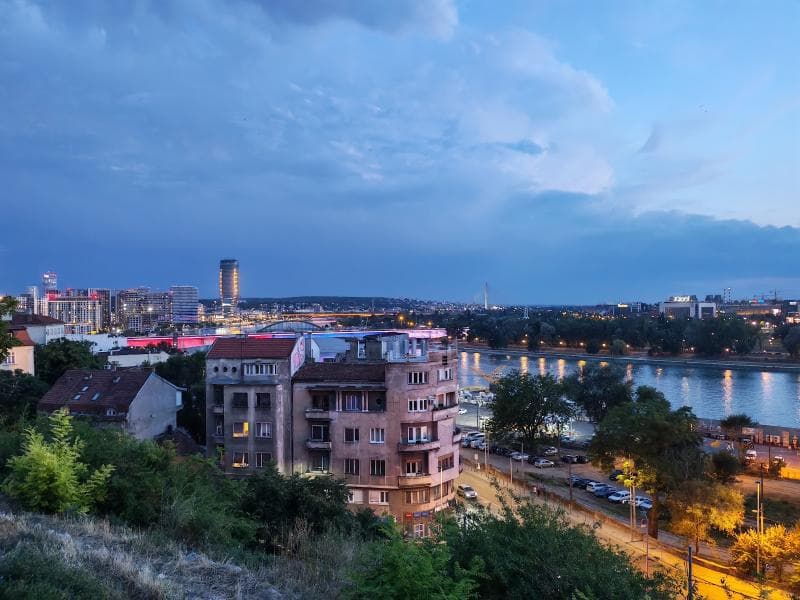
Explore Kalemegdan Park in Belgrade, Serbia, a historic fortress and vibrant green space offering rich history, stunning river views, and cultural landmarks.
Overview
Kalemegdan Park, located in Belgrade, Serbia, is not just the city's largest park but also its most significant historical monument. Perched dramatically on a 125-meter-high cliff, it commands breathtaking views where the Sava and Danube rivers converge, offering a timeless panorama of the surrounding landscape. The name 'Kalemegdan' itself is rooted in Turkish, derived from 'kale' meaning fortress and 'meydan' meaning field or square, a nod to its historical role as an Ottoman military training ground. This sprawling complex forms the core of the Belgrade Fortress, encompassing both its Upper and Lower Towns, and is deeply interwoven with the very identity of the city. Declared a cultural monument of exceptional importance in 1979, Kalemegdan serves as a living museum, a vibrant green space, and a beloved gathering place for both locals and travelers.
History & Cultural Background
The history of Kalemegdan and the Belgrade Fortress stretches back over two millennia, mirroring the turbulent past of Belgrade itself. The earliest settlement, Singidunum, was established by the Celtic tribe of Scordisci in the 3rd century BC. The Romans later fortified this strategic location, constructing a square-shaped castrum, the remnants of which can still be seen today. Following the Roman era, the fortress underwent numerous destructions and reconstructions, notably by Byzantine Emperor Justinian I around 535 AD, and later enduring continuous sieges by Avars and other invaders.
The Slavic name 'Belgrade' or 'Beograd,' meaning 'white town' or 'white fortress,' was first recorded in 878 AD. Over centuries, it changed hands between Byzantines, Bulgarians, Hungarians, and Serbs. The fortress reached a period of significant development under Despot Stefan Lazarević in the early 15th century, becoming the capital of the Serbian state and a vital economic and cultural center. In 1521, the Ottoman Turks conquered Belgrade, maintaining control for centuries, though interspersed with periods of Austrian occupation. During Austrian rule in the 18th century, the fortress was extensively rebuilt and modernized, incorporating Baroque architectural elements. The Turks finally withdrew in 1867, handing over the keys to Prince Mihailo Obrenović. The transformation of the former military field into a park began in 1869, spearheaded by Belgrade's first urban planner, Emilijan Josimović, evolving into the green oasis seen today.
What Makes It Special
Kalemegdan Park is a unique blend of historical grandeur and natural beauty. Its most striking feature is its unparalleled location at the confluence of the Sava and Danube rivers, providing spectacular panoramic views, especially at sunset, that captivate photographers and romantics alike. Within its expansive grounds, visitors can explore the ancient ramparts and gates of the Belgrade Fortress, each stone whispering tales of past empires and battles.
Key landmarks dot the park, including the iconic Victor Monument (Pobednik), a powerful symbol of Serbia's victories, standing proudly at the fortress's highest point. The Military Museum, established in 1878 and housed within the fortress, showcases an impressive collection of military artifacts spanning millennia, from Roman swords to modern weaponry, with an outdoor display of tanks and cannons. Another intriguing site is the so-called Roman Well, an 18th-century structure that was once a dungeon rather than a well. The Monument of Gratitude to France symbolizes enduring friendship, while the Cvijeta Zuzorić Art Pavilion offers a cultural counterpoint with its exhibitions. The park also features elegant architectural elements like the Great Staircase and the Small Staircase, the latter designed by Serbia's first female architect, Jelisaveta Načić.
Stories, Fun Facts & Local Details
The name Kalemegdan literally translates to 'fortress field,' a term given by the Ottoman Turks who used this vast space as a training ground and staging area before battles. Prior to its transformation into a park, writer Siegfried Kapper described Kalemegdan in 1850 as a rugged, stony meadow scattered with animal bones, a far cry from its current lush appearance. One of the most beloved attractions within the park is the Belgrade Zoo, affectionately known as the 'Garden of Good Hope,' which opened in 1936. It is renowned for its collection of white animals, a tribute to Belgrade's name, which means 'White City.' The zoo was once home to Sami, an escape artist chimpanzee who became a local legend and even has a monument dedicated to him. Another heartwarming tale involves Gabi, a brave guard dog who once fought off an escaped jaguar, saving a night watchman. The mysterious 'Roman Well' is a misnomer; it's neither Roman nor a well, but an underground dungeon dating back to the Middle Ages, adding to the fortress's enigmatic allure. In winter, Kalemegdan's slopes near the zoo become popular spots for skiing and sleigh riding, transforming the historic site into a recreational haven for locals.
Visitor Perspective
Kalemegdan Park offers a multifaceted experience, appealing to history buffs, nature lovers, and families alike. As Belgrade's most visited attraction, it welcomes over two million visitors annually, with free admission to the vast park and fortress grounds. Travelers can easily spend an entire day wandering its numerous winding paths, enjoying shady benches, and discovering hidden corners. The park is equipped with playgrounds for children and even chess boards for the elderly, fostering a strong sense of community and leisure. Cultural events and art exhibitions are frequently held within the park's various venues, ensuring there is always something new to experience. The confluence viewpoint is an undeniable highlight, offering spectacular vistas for contemplation and photography, especially during sunrise and sunset. Whether exploring ancient battlements, delving into military history, observing exotic animals at the zoo, or simply enjoying a peaceful stroll, Kalemegdan provides a rich and memorable journey through Belgrade's heart.
Coordinates: 20.45028, 44.82333
View on Google Maps💬 How Travelers Describe This Place
Based on community votes
Unique
872Beautiful
846Interesting
684Photogenic
363Must See
87
Traveler Stories
Discover memorable experiences shared by travelers who have visited this place.
No traveler stories yet.
Be the first traveler to share what made this place memorable.
Things to see at Kalemegdan Park



Tour
By
Spot
Discover amazing places around the world. Your journey starts here.
Explore
© 2026 TourBySpot. All rights reserved.