Hungarian Parliament Building
Budapest, Hungary
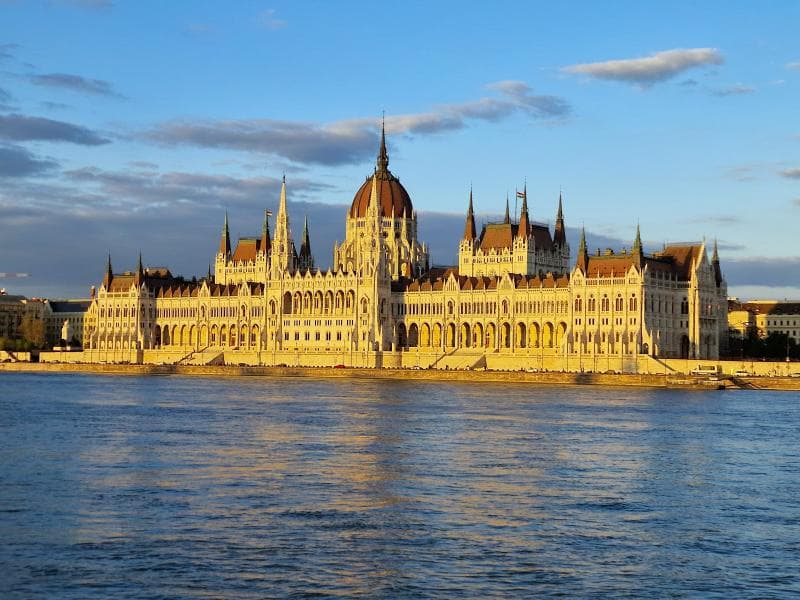
Explore the Hungarian Parliament Building in Budapest, Hungary. Discover its stunning Neo-Gothic architecture, rich history, and the sacred Holy Crown.
Overview
Perched majestically on the eastern bank of the Danube River in Budapest, Hungary, the Hungarian Parliament Building, known locally as Országház, stands as an enduring symbol of national pride and architectural grandeur. Since its completion, it has been the largest building in Hungary and one of the tallest in Budapest, alongside St. Stephen's Basilica, both reaching a symbolic height of 96 meters [3, 16]. This iconic landmark serves as the seat of the National Assembly of Hungary and is a captivating blend of Neo-Gothic, Renaissance, and Baroque architectural styles [3, 6, 15]. Its striking silhouette, with soaring spires and a grand central dome, dominates the city's skyline and offers breathtaking views, particularly when illuminated at night [4, 5].
History & Cultural Background
The vision for a new, grand parliamentary building emerged following the Austro-Hungarian Compromise of 1867, which granted Hungary greater autonomy within the empire [4, 14]. This period of newfound national assertion called for a structure that would embody the country's independence, identity, and commitment to constitutional governance [13, 14]. A nationwide design competition was launched in 1880, and the winning design by Hungarian architect Imre Steindl was selected [4, 11]. Construction began in 1885, a monumental undertaking that involved nearly 100,000 workers and spanned 17 years [9, 17, 18]. Though it was officially inaugurated in 1896 to commemorate Hungary's millennium, marking 1,000 years since the Magyar conquest of the Carpathian Basin, the building was not fully completed until 1904 [4, 11, 14]. Steindl's design drew inspiration in part from the Gothic Vienna City Hall and the British Houses of Parliament, aiming to symbolize Hungary's commitment to Western European ideals [3, 4, 14].
What Makes It Special
The Hungarian Parliament Building is a marvel of engineering and artistry. Its Neo-Gothic facade, with a central Renaissance Revival dome, creates a distinctive and harmonious aesthetic [3, 5, 9]. The building is remarkably symmetrical, with two identical legislative halls flanking the central dome, originally intended for the Upper and Lower Houses [4, 5]. Only one of these halls is currently used for sessions of the National Assembly; the other is reserved for ceremonies and tours [3, 4]. The exterior and interior are adorned with a staggering 242 statues, depicting Hungarian rulers, Transylvanian leaders, and military figures [3, 6, 18]. The project prioritized Hungarian materials, craftsmen, and manufacturers, with even the decorative elements inspired by the flora of the Carpathian Basin [19]. This commitment ensured that the building was not just a seat of government but a comprehensive showcase of national talent and resources [19]. Its grandeur and historical significance have earned it a place as a UNESCO World Heritage Site since 2011, alongside the banks of the Danube, the Buda Castle Quarter, and Andrássy Avenue [15, 19].
Stories, Fun Facts & Local Details
One poignant detail of its construction involves its visionary architect, Imre Steindl. Tragically, he suffered from deteriorating eyesight and went blind before his masterpiece was completed in 1904, never seeing his full design come to fruition [5, 6, 17]. Another fascinating aspect is the symbolic importance of the number 96. Not only does the central dome reach a height of 96 meters, but there are also 96 steps leading to it, a direct nod to the year 896 AD, the presumed date of Hungary's founding [4, 5, 16]. The building's construction was immense, utilizing approximately 40 million bricks, half a million precious stones, and 40 kilograms of 22-23 carat gold for its lavish decorations [6, 9, 12, 17, 19]. Within the magnificent Dome Hall, visitors can behold the revered Holy Crown of Hungary, a significant national treasure with a rich history [4, 5, 11]. This coronation crown, part of the Hungarian Crown Jewels, was famously safeguarded in Fort Knox, Kentucky, during the Cold War to prevent it from falling into Soviet hands, before being returned to Hungary by President Jimmy Carter in 1978 [5, 11, 12]. The building is particularly enchanting at dusk, as its intricate details are illuminated, casting a golden glow upon the Danube [4, 5].
Visitor Perspective
The Hungarian Parliament Building is not merely a government edifice but a living museum, welcoming countless visitors each year. Guided tours, available in multiple languages, offer an immersive journey through its opulent interiors, including the impressive Grand Stairway with its regal red carpet and stunning ceiling frescoes, and the Dome Hall where the Holy Crown is displayed [4, 5, 20]. It's advisable to book tickets in advance, especially during peak tourist seasons, as tours can sell out quickly [5, 22]. The building is easily accessible via public transport, with the Kossuth Lajos Square metro and tram stations conveniently located nearby [3, 5]. A dedicated Visitor Centre provides educational experiences and comfortable waiting areas, ensuring a pleasant and informative visit to this extraordinary landmark [25].
Coordinates: 19.045669, 47.507085
View on Google Maps💬 How Travelers Describe This Place
Based on community votes
Beautiful
1.0kPhotogenic
563Must See
309Unique
100Interesting
63
Traveler Stories
Discover memorable experiences shared by travelers who have visited this place.
No traveler stories yet.
Be the first traveler to share what made this place memorable.
Things to see at Hungarian Parliament Building



Tour
By
Spot
Discover amazing places around the world. Your journey starts here.
Explore
© 2026 TourBySpot. All rights reserved.