Crown Jewels Room
Budapest, Hungary
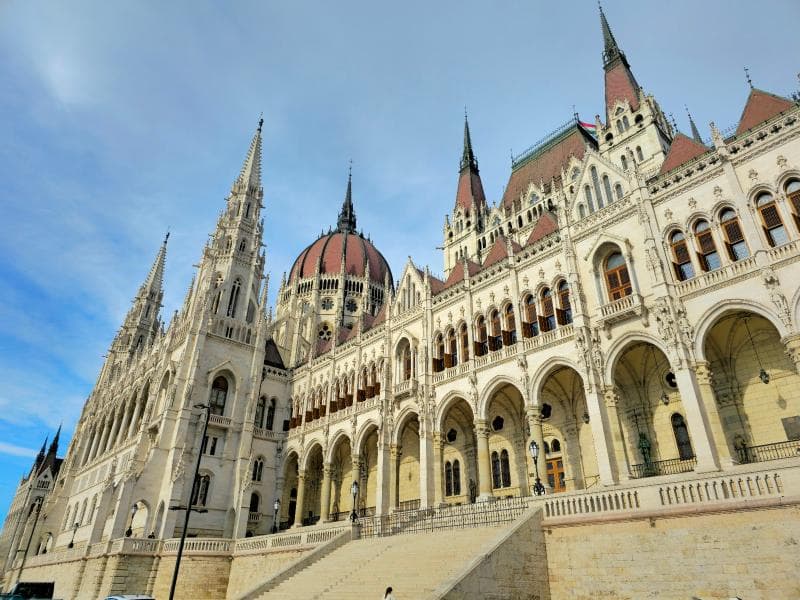
Discover the Hungarian Crown Jewels, including the Holy Crown, within the magnificent Dome Hall of the Parliament Building in Budapest, Hungary.
Overview
Deep within the resplendent Hungarian Parliament Building in Budapest, Hungary, lies a chamber of profound historical and cultural significance: the Crown Jewels Room. More accurately known as the central Dome Hall, this sacred space serves as the revered home for Hungary's most cherished national treasures – the Hungarian Crown Jewels. Here, under the watchful eyes of ceremonial guards, visitors can witness the exquisite Holy Crown of Hungary, alongside other significant coronation regalia. This display offers a unique glimpse into over a millennium of Hungarian statehood, sovereignty, and tradition, making it an indispensable stop for any traveler seeking to understand the heart of the nation.
History & Cultural Background
The story of the Hungarian Crown Jewels is as rich and complex as Hungary's own history, mirroring the nation's trials and triumphs. The centerpiece, the Holy Crown, also known as the Crown of Saint Stephen, is steeped in legend and historical fact. It is widely believed that Pope Sylvester II sent the original crown to King Stephen I of Hungary for his coronation around 1000 AD, marking the inception of Hungarian statehood. However, the current crown is a composite, with its lower Byzantine-influenced part (corona graeca) dating from the 1070s and an upper, Latin section (corona latina) likely added in the 12th century, showcasing a unique blend of Eastern and Western craftsmanship.
For centuries, the Holy Crown was more than just a symbol; it was the embodiment of Hungarian royal power and legitimacy. Over 50 Hungarian monarchs were crowned with it, cementing its status as an unparalleled emblem of national identity. The complete set of regalia includes the Holy Crown, the scepter, the orb, and the coronation sword. The intricate orb, for instance, features the coat of arms of King Charles I (1310-1342) and signifies the monarch's divine authority. The coronation mantle, another vital piece, is preserved separately at the Hungarian National Museum due to its delicate condition.
The jewels have endured a tumultuous past, facing numerous threats of loss, theft, and political upheaval. They were hidden and recovered multiple times throughout history to protect them from invaders and conflicts. A particularly dramatic chapter saw the jewels entrusted to American forces after World War II to prevent them from falling into Soviet hands. They were safeguarded at Fort Knox, Kentucky, from 1953 until 1978, when President Jimmy Carter repatriated them to Hungary. Since January 1, 2000, the Holy Crown and other regalia have been proudly displayed in the Dome Hall of the Hungarian Parliament Building, housed in a special glass case and continuously guarded.
What Makes It Special
The Crown Jewels Room, specifically the Dome Hall, is truly special due to the unparalleled significance of its contents. The Holy Crown is not merely an ancient artifact; it is one of Europe's most revered royal insignias, a tangible link to a thousand years of Hungarian history. Its dual Byzantine and Western origins are a testament to Hungary's historical role as a bridge between cultures. One of its most distinctive features is the slightly bent cross atop the crown, a historical anomaly whose exact cause remains a subject of historical debate and intrigue.
The Hungarian Crown Jewels are considered among the oldest preserved sets of coronation insignia in the world, making their continued existence and public display a remarkable historical phenomenon. The very act of a Hungarian monarch's legitimacy historically hinged on being crowned with this specific crown, illustrating its profound spiritual and political power. The setting itself within the Parliament's magnificent Neo-Gothic Dome Hall, surrounded by 16 statues of Hungarian kings and national heroes, enhances the awe-inspiring experience, creating an atmosphere of profound respect and national pride.
Stories, Fun Facts & Local Details
The journey of the Holy Crown to Fort Knox, Kentucky, and its subsequent return by President Jimmy Carter in 1978 is a captivating tale of international diplomacy and cultural preservation. This episode highlights the immense value and symbolic importance placed upon these jewels, even by foreign nations. Another fascinating detail is the ongoing mystery surrounding the bent cross on the Holy Crown. While theories abound, from accidental damage during its turbulent history to symbolic interpretations, its true origin adds an enigmatic layer to the crown's allure.
Locally, the Crown is often referred to with deep reverence. Crown Guard Péter Révay famously articulated its significance, stating that 'the Holy Crown is for the Hungarians what the Lost Ark is for the Jewish people,' underscoring its almost sacred status. The solemn duty of guarding the Crown Jewels falls to the Hungarian Armed Forces, whose soldiers stand vigil in ceremonial dress, a tradition that adds to the room's formal and respectful ambiance. On specific national holidays, such as August 20th (Saint Stephen's Day), the Parliament building opens its doors for free public viewing of the Crown Jewels, an event that draws large crowds and long queues, demonstrating the enduring connection Hungarians feel to these symbols of their heritage.
Visitor Perspective
Visiting the Crown Jewels Room inside the Hungarian Parliament Building is an immersive experience that transports travelers through centuries of Hungarian history. Access to this hallowed chamber is exclusively via guided tours, ensuring a structured and informative journey. Tours are available in multiple languages, making the rich narratives accessible to a global audience. Due to the Parliament Building's immense popularity, securing tickets in advance is highly recommended to avoid disappointment, as tours frequently sell out. Visitors should also be prepared for a security screening similar to airport procedures.
While photography is permitted in many parts of the Parliament, it is strictly prohibited within the Dome Hall where the Crown Jewels are displayed, allowing for a moment of undisturbed contemplation and respect for these priceless artifacts. The entire guided tour typically lasts about 45 minutes, a concise yet comprehensive exploration of the building's grandeur and its most precious treasures. Witnessing the Holy Crown and other regalia firsthand, housed within such an iconic architectural masterpiece, offers a powerful and memorable connection to Hungary's enduring legacy.
Coordinates: 19.0438, 47.5064
View on Google Maps💬 How Travelers Describe This Place
Based on community votes
Interesting
639Photogenic
526Beautiful
421Unique
366Must See
212
Traveler Stories
Discover memorable experiences shared by travelers who have visited this place.
No traveler stories yet.
Be the first traveler to share what made this place memorable.

Tour
By
Spot
Discover amazing places around the world. Your journey starts here.
Explore
© 2026 TourBySpot. All rights reserved.