Hazret Sultan Mosque
Astana, Kazakhstan
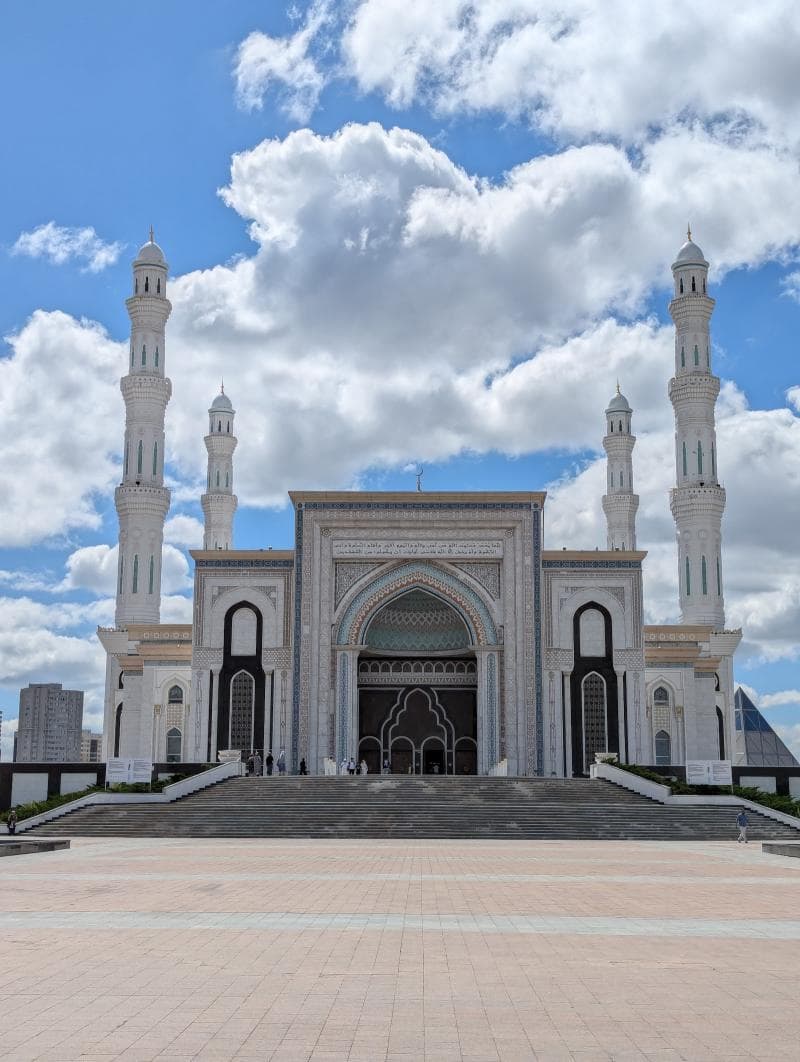
Discover the Hazret Sultan Mosque in Astana, Kazakhstan, a magnificent white marble architectural wonder blending Islamic and Kazakh design. Explore its history, unique features, and cultural significance.
Overview
The Hazret Sultan Mosque, a stunning architectural marvel in Astana, Kazakhstan, stands as a prominent symbol of the nation's spiritual and cultural heritage. Situated gracefully on the right bank of the Yesil River, it forms part of a significant ensemble of landmarks alongside the Palace of Peace and Reconciliation, the 'Kazakh Eli' monument, and Independence Square.
Often referred to as the 'White Mosque' due to its gleaming white marble facade, the Hazret Sultan Mosque presents a breathtaking sight, especially when illuminated at night. It is recognized as one of the largest mosques in Central Asia, capable of accommodating up to 5,000 worshippers on regular days, and expanding its capacity to as many as 10,000 people during significant religious holidays.
The sprawling mosque complex covers an area of over 11 hectares, with the main building itself spanning approximately 17,700 square meters. Its design is a harmonious blend of classical Islamic architectural traditions adorned with rich, traditional Kazakh ornaments, creating a unique aesthetic that is both grand and deeply rooted in local culture.
History & Cultural Background
The construction of the Hazret Sultan Mosque commenced in June 2009, following a suggestion from Kazakhstan's first president, Nursultan Nazarbayev. The project involved a substantial workforce, with between 1,000 and 1,500 builders and masters contributing to its creation over three years. The mosque was officially inaugurated on July 6, 2012, marking a significant event for the capital and the nation.
Its name, 'Hazret Sultan,' which translates to 'Holy Sultan' or 'Saintly Sultan,' carries profound cultural and spiritual weight. It is named in honor of Khoja Ahmed Yasawi, a revered 12th-century Sufi sheikh, poet, and philosopher, whose mausoleum is a significant pilgrimage site located in Turkestan. The mosque embodies Kazakhstan's spiritual revival, reflecting a strong connection to its Islamic heritage and identity.
What Makes It Special
The Hazret Sultan Mosque is an architectural marvel, distinguished by several impressive features. It boasts the largest dome in Kazakhstan, soaring to a height of 51 meters with a diameter of 28.1 meters at its base. This central dome is gracefully surrounded by eight smaller domes, further enhancing its majestic silhouette. Dominating the corners of the mosque are four elegant minarets, each reaching a height of 77 meters.
The interior of the mosque is equally captivating, primarily featuring a serene white color scheme accented with subtle shades of blue and delicate gold detailing. Walls are adorned with intricate Kazakh motifs and calligraphy, notably displaying the names of 25 Islamic prophets – a unique feature within the world's mosques. The main prayer hall beneath the grand dome is supported by massive white columns and illuminated by a colossal three-ton chandelier, creating an atmosphere of awe and tranquility.
Beyond its aesthetic grandeur, the mosque is a fully functional religious and educational center. It includes various essential facilities such as halls for ablution rituals, rooms dedicated to Quran reading, classrooms for religious study, and even a wedding hall for Islamic ceremonies.
Stories, Fun Facts & Local Details
Within the Hazret Sultan Mosque, visitors can discover priceless historical artifacts that enrich its cultural narrative. Among its most cherished possessions is an original handwritten Quran from the 12th century, weighing a remarkable 40 kilograms. This ancient manuscript is believed to have been brought to Kazakhstan by Timur (Tamerlane) in the 14th century and is displayed under glass in the main hall. Another notable relic is a silver Quran, an exact replica of the Uthman manuscript, composed of 162 pages crafted from 999 fineness silver.
Local beliefs and legends add to the mosque's mystique. There's a widely held belief that the Hazret Sultan Mosque possesses a special protective power. An incident during a 2012 fire, where sacred books within the mosque remained untouched by the flames, was regarded by many as a divine sign. Furthermore, locals believe that the light emanating from the main dome in the pre-dawn hours points the way to those seeking truth. The seamless integration of classical Islamic design with Kazakh 'koshkar-muyiz' (ram's horn) ornaments on its white marble facade beautifully reflects Kazakhstan's distinct cultural identity.
Visitor Perspective
For those planning a visit to the Hazret Sultan Mosque, it offers a profoundly spiritual and culturally enriching experience. The mosque welcomes visitors 24 hours a day, providing a peaceful retreat at any time. To ensure a respectful visit, appropriate modest attire is required; shoulders and knees should be covered for both men and women. Women are also asked to cover their hair, and scarves are typically available if needed.
Before entering the main prayer halls, visitors are kindly requested to remove their shoes. While photography is generally permitted, it is essential to maintain a quiet demeanor and avoid disturbing worshippers, especially during prayer times. For a serene experience and optimal lighting for photography, visiting during early morning or late afternoon is recommended. Spring and autumn offer mild temperatures and fewer crowds, making them ideal seasons. The mosque is accessible to individuals with mobility concerns, featuring ramps and elevators. Amenities such as a souvenir shop and a halal cafe are also available on-site, offering a complete visitor experience.
Coordinates: 71.4725, 51.125556
View on Google Maps💬 How Travelers Describe This Place
Based on community votes
Unique
685Photogenic
472Beautiful
446Interesting
399Must See
33
Traveler Stories
Discover memorable experiences shared by travelers who have visited this place.
No traveler stories yet.
Be the first traveler to share what made this place memorable.
Things to see at Hazret Sultan Mosque



Tour
By
Spot
Discover amazing places around the world. Your journey starts here.
Explore
© 2026 TourBySpot. All rights reserved.