Dome Complex
Astana, Kazakhstan
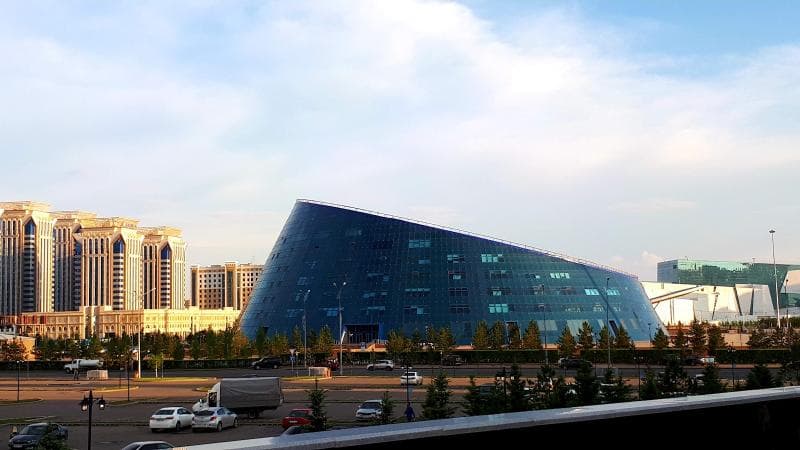
Explore the majestic Dome Complex of Hazret Sultan Mosque in Astana, Kazakhstan, an architectural marvel and spiritual heart.
Overview
The Dome Complex of the Hazret Sultan Mosque in Astana, Kazakhstan, stands as a breathtaking architectural masterpiece, forming the spiritual heart of the nation's capital. This 'snow-white pearl', as it's often called, is not merely a place of worship but a profound symbol of Kazakhstan's spiritual revival, unity, and deep-rooted Islamic heritage. The mosque is an impressive sight, particularly its distinctive dome complex which defines its silhouette against the Astana skyline. Its classical Islamic design, interwoven with traditional Kazakh ornamentation, creates an ethereal palace-like appearance that seems to blend seamlessly with the sky, especially when illuminated at night.
Completed in 2012, the Hazret Sultan Mosque is recognized as one of the largest mosques in Central Asia, capable of accommodating thousands of worshippers. The central dome is a truly magnificent spectacle, towering above a cluster of smaller domes, creating a harmonious and inspiring visual composition. This complex serves as the focal point of the mosque's expansive structure, inviting both contemplation and admiration.
History & Cultural Background
The construction of the Hazret Sultan Mosque was a monumental undertaking, beginning in June 2009 and culminating in its grand opening on July 6, 2012. The project involved approximately 1,000 to 1,500 skilled workers and masters, who meticulously crafted this landmark over three years. Its name, 'Hazret Sultan', translates to 'Holy Sultan' or 'Apostolic Sultan', and is a revered epithet for Khoja Ahmed Yasawi, a highly influential 12th-century Sufi poet, philosopher, and saint whose mausoleum is located in Turkestan. This naming decision deliberately links the mosque to the ancient and rich Islamic traditions of Kazakhstan, anchoring it within a profound spiritual legacy.
The mosque's placement in Astana, the modern capital, underscores its role in expressing the nation's identity and its commitment to Islamic faith. It reflects Kazakhstan's unique synthesis of Islamic architectural tradition with local artistic vocabulary, moving beyond generic designs to embrace a distinct Kazakh identity. The mosque embodies a narrative of transformation and the layered cultural influences that have shaped the region.
What Makes It Special
The Dome Complex of the Hazret Sultan Mosque is renowned for its impressive scale and intricate design. The majestic central dome, the largest in Kazakhstan, rises to a height of 51 meters and boasts a diameter of 28.1 meters. Surrounding this grand central dome are eight smaller domes, contributing to the complex's elegant silhouette. These smaller domes vary in size, with diameters of 10.45 meters and 7.6 meters, and heights of 33.46 meters and 25.25 meters respectively.
Beyond its external grandeur, the interior beneath the domes is equally captivating. The main prayer hall, situated directly beneath the colossal central dome, is supported by massive white columns, creating a sense of monumentality and openness. The interior design features a predominantly white color scheme, accented with soft blues and delicate gold touches, adorned with intricate Kazakh motifs and elegant Arabic calligraphy. Among the mosque's most precious artifacts housed within is a silver Quran and an original handwritten Quran from the 12th century, adding to its unique allure. A colossal three-ton chandelier further enhances the beauty of this sacred space, bathing it in a warm glow.
Stories, Fun Facts & Local Details
Locals imbue the Hazret Sultan Mosque with a sense of profound spiritual significance. There's a belief that the mosque possesses a special protective power; some recount a story from a 2012 fire where flames reportedly did not touch the sacred books, which many consider a divine sign. It is said that praying within its walls can bring enlightenment, and the light emanating from the main dome in the pre-dawn hours is thought to guide those seeking truth. The mosque is also unique for having the names of all 25 prophets mentioned in the Quran inscribed on its walls, a feature not commonly found elsewhere.
The architectural style of the mosque itself, a blend of classical Islamic canons with Kazakh ornamentation like the 'koshkar-muyiz' (ram's horn) ornament, tells a story of cultural synthesis. This design choice connects the mosque directly to ancient Kazakh material culture, reflecting a deliberate integration of local artistic heritage with Islamic tradition. The careful illumination of the domes and minarets at night transforms the mosque into a beacon, truly a 'Jewel of Astana'.
Visitor Perspective
Stepping into the Hazret Sultan Mosque offers a profound experience, regardless of one's background. The sheer scale and bright, serene atmosphere beneath the vast domes leave a lasting impression. The interior's elegant design, with its calming white palette, intricate patterns, and the grandeur of the prayer hall, invites a sense of peace and reverence. Visitors can marvel at the craftsmanship, from the delicate calligraphy to the impressive columns and the sparkling chandelier.
The mosque is designed to be accessible and welcoming, with facilities such as a wedding hall, ablution rooms, Quran reading rooms, and classrooms. It functions not only as a spiritual center but also as a cultural and educational institution. The surrounding complex, with its four towering 77-meter minarets and landscaped grounds, offers a complete experience, encouraging visitors to explore and appreciate the blend of history, culture, and faith that defines this magnificent landmark in Astana.
Coordinates: 71.47219, 51.12543
View on Google Maps💬 How Travelers Describe This Place
Based on community votes
Photogenic
791Interesting
457Unique
252Must See
147Beautiful
19
Traveler Stories
Discover memorable experiences shared by travelers who have visited this place.
No traveler stories yet.
Be the first traveler to share what made this place memorable.

Tour
By
Spot
Discover amazing places around the world. Your journey starts here.
Explore
© 2026 TourBySpot. All rights reserved.