Minarets
Astana, Kazakhstan
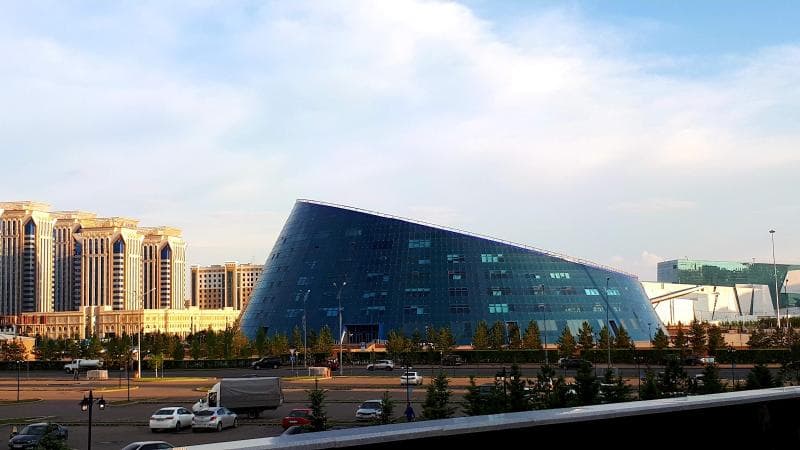
Explore the majestic minarets of Hazret Sultan Mosque in Astana, Kazakhstan, blending Islamic tradition with Kazakh artistry. Discover its history and visitor insights.
Overview
Soaring majestically into the Astana skyline, the minarets of the Hazret Sultan Mosque stand as iconic beacons of faith and architectural brilliance in Kazakhstan's capital. This grand Friday mosque, one of Central Asia's largest, is often described as a 'snow-white oriental palace' due to its gleaming marble facade. Its four elegant minarets, each reaching an impressive height of 77 meters, are an integral part of its distinctive silhouette, beautifully framing the mosque's enormous central dome. Completed in 2012, the Hazret Sultan Mosque complex is not just a place of worship but a significant cultural landmark, harmoniously blending classical Islamic architectural traditions with unique Kazakh ornamentation.
History & Cultural Background
The Hazret Sultan Mosque, meaning 'Holy Sultan,' draws its name from the revered 12th-century Sufi sheikh Khoja Ahmed Yasawi, whose spiritual legacy resonates deeply throughout Central Asia. The decision to name it after such a significant historical figure underscores Kazakhstan's rich Islamic heritage and its commitment to preserving centuries of spiritual tradition. Construction of this architectural marvel began in June 2009 and culminated in its grand opening on July 6, 2012, a mere three years later. The project was a monumental undertaking, employing between 1,000 and 1,500 skilled workers, including architects, artists, and engineers, who collectively brought this vision to life. Situated on the right bank of the Ishim (Yesil) River, the mosque is strategically located amidst other significant national landmarks, including the Palace of Independence and the 'Kazakh Eli' monument, symbolizing its central role in the nation's identity.
What Makes It Special
The minarets of the Hazret Sultan Mosque are more than just tall structures; they are masterpieces of design that contribute immensely to the mosque's striking aesthetic. Rising to 77 meters, they are a constant presence against the sky, visible from many parts of central Astana and serving as clear markers of the mosque's location. Their pure white stone complements the mosque's overall brilliant facade, creating a dazzling effect, especially when bathed in sunlight or illuminated at night. The design ingeniously weaves canonical Islamic forms with elegant traditional Kazakh ornaments, evident in the subtle patterns that adorn not just the main building but also the elegant minarets. This fusion is a powerful statement, showcasing how Kazakhstan integrates its national identity into its spiritual architecture. The minarets, along with the mosque's 51-meter-high main dome, create a breathtaking verticality that commands attention and instills a sense of awe and tranquility.
Stories, Fun Facts & Local Details
The sheer scale and beauty of the Hazret Sultan Mosque and its minarets have generated several fascinating stories and facts. For a decade following its completion, the mosque held the distinction of being the largest mosque in Central Asia, a testament to its ambitious design and construction. While its capacity to accommodate up to 10,000 worshippers during holidays is remarkable, it was briefly surpassed in size by another mosque in Astana built in 2022, a sign of the city's continuous growth and development. The mosque houses invaluable relics, including a rare silver Quran and an original 12th-century Quran manuscript believed to have been brought to Kazakhstan by Tamerlane himself, connecting this modern edifice to deep historical roots. Beyond their architectural grandeur, the minarets play a traditional role in broadcasting the call to prayer, echoing across the city and inviting the faithful to congregation. The mosque complex also features various facilities, including areas for ablution, wedding ceremonies, Quran reading halls, and educational spaces, making it a vibrant center of community life.
Visitor Perspective
For visitors exploring Astana, the minarets of the Hazret Sultan Mosque offer a captivating visual introduction to this spiritual landmark. Non-Muslim visitors are warmly welcomed to explore the mosque, often comparing its interior to a royal palace. To ensure a respectful visit, guests are kindly requested to adhere to a modest dress code, covering shoulders and knees. Women may also be asked to cover their heads when entering prayer areas. It is customary to remove shoes before stepping into the main prayer halls. The mosque is generally open throughout the day, though it is advisable to avoid peak prayer times, especially on Fridays, for a more serene experience. Photography is usually permitted in most areas, but discretion and respect for worshippers are paramount. Capturing the white minarets against the steppe sky, particularly during the golden hours of early morning or late afternoon, offers spectacular photo opportunities. A visit to the Hazret Sultan Mosque, with its majestic minarets symbolizing a bridge between past and present, offers a profound cultural and architectural experience in the heart of Kazakhstan.
Coordinates: 71.4722, 51.125
View on Google Maps💬 How Travelers Describe This Place
Based on community votes
Beautiful
791Photogenic
613Unique
514Must See
457Interesting
207
Traveler Stories
Discover memorable experiences shared by travelers who have visited this place.
No traveler stories yet.
Be the first traveler to share what made this place memorable.

Tour
By
Spot
Discover amazing places around the world. Your journey starts here.
Explore
© 2026 TourBySpot. All rights reserved.