Glacier Garden
Lucerne, Switzerland
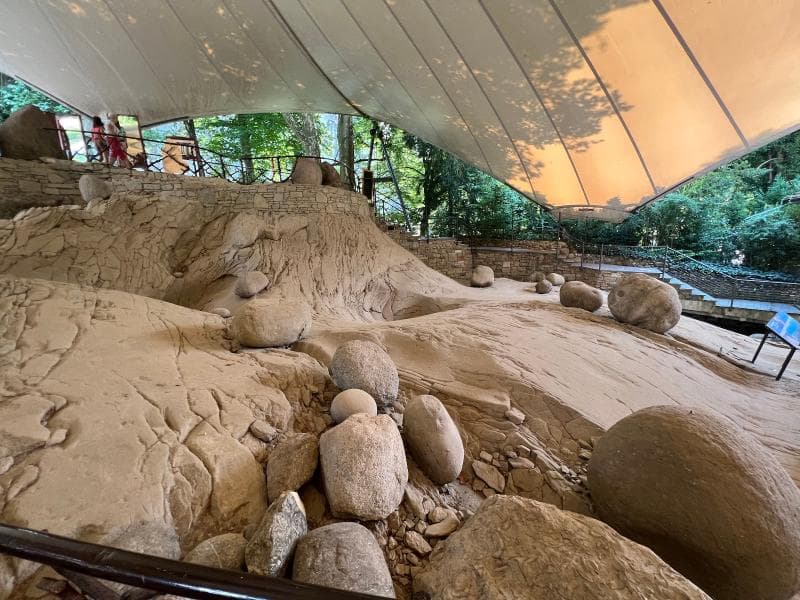
Explore Lucerne's Glacier Garden in Switzerland, a unique geological and historical museum. Discover Ice Age potholes, a mirror maze, and ancient fossils.
Overview
The Glacier Garden in Lucerne, Switzerland, offers a captivating journey through millions of years of Earth's history, revealing the dramatic geological transformations of this region. Nestled right beside the famous Lion Monument, it is easily accessible from Lucerne's train station and Old Town, making it a prominent cultural and natural attraction. This unique site combines an outdoor natural monument with an engaging indoor museum, a fascinating mirror labyrinth, and an observation tower, providing a comprehensive experience for curious travelers.
At its heart are the remarkable glacier potholes, sculpted by the immense power of ice during the last Ice Age. However, the garden also presents evidence of a much earlier, subtropical past, with fossilized shells and palm leaves telling a tale of ancient seas. As a geotope of national importance, the Glacier Garden is not merely a collection of exhibits but a living testament to geological processes that shaped Central Switzerland.
History & Cultural Background
The story of the Glacier Garden began serendipitously in 1872. While construction was underway for a new wine cellar, workers unearthed what would become the site's most significant discovery: a series of perfectly preserved glacier potholes. These natural formations, remnants of the Ice Age, sparked immediate interest, leading to the rapid transformation of the planned cellar into a public attraction.
These potholes were carved some 20,000 years ago when vast glaciers, potentially 2,000 to 3,000 meters thick, covered the Lucerne area. Meltwater, laden with stones and gravel, swirled under immense pressure, grinding out the smooth, cylindrical depressions seen today. Yet, the geological narrative stretches back even further. Evidence within the garden, such as fossilized shells and palm leaves, indicates that 20 million years ago, the very ground beneath Lucerne was a warm, subtropical sea.
The Glacier Garden was developed by the Amrein family, whose residence, the 'Schweizerhaus', became part of the museum. Their diverse collections from the 19th century, encompassing minerals, historical maps, and the world's oldest mountain relief, showcase their profound interest in geology and archaeology, contributing significantly to the cultural fabric of the site.
What Makes It Special
What truly sets the Glacier Garden apart is its multi-layered journey through time, combining dramatic natural phenomena with intriguing human innovation. The 16 glacier potholes themselves are a stark and powerful reminder of the Ice Age's colossal forces, protected today under a tent roof to preserve their integrity.
Beyond the geological marvels, the garden houses the Felsenwelt, or 'Rock World', an immersive experience that transports visitors from a primordial sea to the Ice Age through projections and animations. This subterranean adventure, leading past an underground lake to the scenic Sommerau, offers a unique perspective on earth's ancient past.
Another distinctive feature is the historic Mirror Labyrinth, an 'Alhambra'-inspired maze constructed in 1896. With its 90 mirrors, it creates an amusing and disorienting illusion of endless corridors, blending education with entertainment in a whimsical fashion. Visitors can also ascend the oldest wooden observation tower in Switzerland, offering panoramic views of Lucerne and the majestic Alps, providing a breathtaking contemporary perspective after their historical explorations.
Stories, Fun Facts & Local Details
Imagine the surprise of the workers in 1872, digging for a wine cellar only to uncover such profound geological secrets! Their unexpected find transformed a practical construction project into a site of immense scientific and public interest, making the Glacier Garden Lucerne's oldest attraction.
A notable exhibit within the museum is the Pfyffer Relief, crafted between 1762 and 1786. It is celebrated as the world's oldest mountain relief, providing an unparalleled glimpse into how Switzerland, specifically the region around Lake Lucerne, appeared centuries ago. It's a testament to early cartography and artistic dedication.
The Alpine Park within the garden, developed in the late 19th century, is home to over 4,000 plant species, including magnolias and even a sequoia tree, offering a diverse botanical experience. For families, the 'Lily & Börni' quest game provides an interactive and playful way for children to discover the garden's wonders, fostering a connection with its natural and historical elements.
Visitor Perspective
Visiting the Glacier Garden is an immersive experience that caters to all ages and interests. The seamless blend of outdoor geological formations with indoor museum exhibits means there's always something new to discover. You can wander at your own pace through the ancient potholes, feeling the immense scale of time, then step into the museum to see the fascinating collections of the Amrein family.
The 'Felsenwelt' is a particular highlight, offering a sensory journey through geological eras, while the Mirror Labyrinth promises lighthearted fun and laughter, a delightful contrast to the deeper historical lessons. Climbing the observation tower rewards you with sweeping vistas that connect the ancient past to the vibrant present of Lucerne and the surrounding Swiss Alps.
The site is designed with accessibility in mind, offering wheelchair-friendly routes in many areas, including lifts and accessible toilets, ensuring a pleasant visit for everyone. Audio guides are available to enrich the experience, providing detailed narratives as you explore. Whether you're a geology enthusiast, a history buff, or simply seeking a unique family outing, the Glacier Garden offers a rich, educational, and entertaining adventure.
Coordinates: 8.31069, 47.05886
View on Google Maps💬 How Travelers Describe This Place
Based on community votes
Interesting
886Photogenic
564Beautiful
443Must See
310Unique
233
Traveler Stories
Discover memorable experiences shared by travelers who have visited this place.
No traveler stories yet.
Be the first traveler to share what made this place memorable.
Things to see at Glacier Garden



Tour
By
Spot
Discover amazing places around the world. Your journey starts here.
Explore
© 2026 TourBySpot. All rights reserved.