Fossil Displays
Lucerne, Switzerland
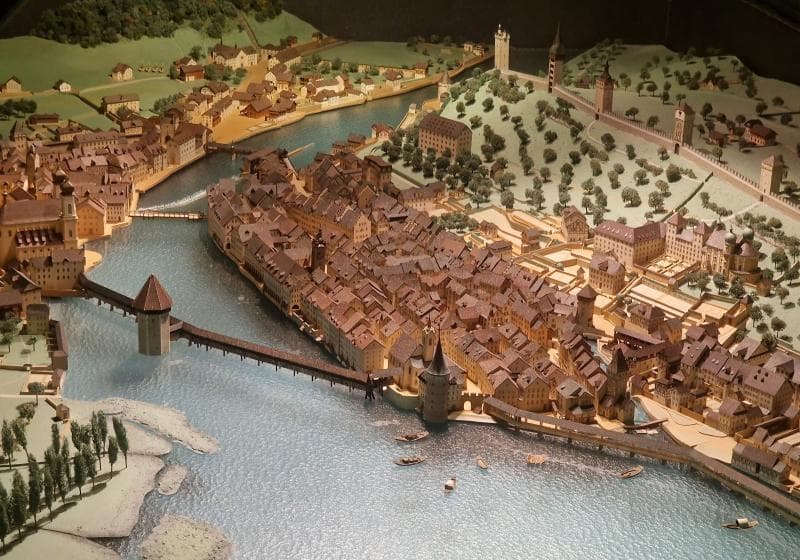
Explore the Fossil Displays at Glacier Garden in Lucerne, Switzerland, revealing a subtropical past with ancient shells and palm leaves.
Overview
Deep within the heart of Lucerne, Switzerland, lies the remarkable Glacier Garden, a unique natural monument that offers a captivating journey through millions of years of Earth's history. While renowned for its impressive glacial potholes, the Glacier Garden also hosts fascinating Fossil Displays, primarily within its 'Felsenwelt' (Rock World) exhibit. These displays unveil a startling past: evidence that this alpine region was once a subtropical seashore, teeming with marine life. Fossilized shells and palm leaves stand as tangible proof of a radically different climate around 20 million years ago, providing a profound contrast to the more recent Ice Age formations.
The Fossil Displays serve as a pivotal part of the Glacier Garden's narrative, illustrating the dramatic geological shifts that shaped central Switzerland. Visitors can immerse themselves in this ancient history, tracing the evolution of the landscape from a primordial sea to its modern-day alpine character. The curated exhibits, particularly in the Felsenwelt, bring this deep time to life through engaging presentations, offering clear explanations and rich historical context.
History & Cultural Background
The Glacier Garden's origins trace back to 1872, when Josef Wilhelm Amrein-Troller, while excavating for a wine cellar, stumbled upon astonishing glacial potholes. This accidental discovery quickly led to the establishment of a public attraction. Soon after, further geological investigations revealed fossilized shells and palm leaves within the sandstone rock strata, adding an even more ancient layer to the site's historical significance.
The Amrein family, pioneers in preserving and presenting these natural wonders, played a crucial role in developing the Glacier Garden into the comprehensive geological and cultural institution it is today. Their former home, the 'Schweizerhaus' (Swiss House), now serves as a museum, showcasing not only geological finds but also historical maps and collections from the 19th century. The integration of the fossil discoveries into the Glacier Garden's narrative underscored the immense and diverse geological past of the Lucerne region, highlighting its transformation from a warm marine environment to an ice-covered landscape.
What Makes It Special
The Fossil Displays are predominantly housed within the 'Felsenwelt,' an underground rock world that guides visitors through the compelling history of Lucerne's sandstone. This subterranean experience is designed to be deeply immersive, utilizing elaborate animations, projections, lighting, soundscapes, and even tactile elements to illustrate geological development.
As you traverse dark passages and venture past an underground lake, the Felsenwelt unfolds the story from a primordial sea, where subtropical conditions fostered the life that left behind the fossilized shells and palm leaves, to the dramatic folding of the Alps and the more recent Ice Ages. This multisensory journey through millions of years vividly demonstrates how Lucerne, once a warm coastal area, transformed into the landscape we know today. The exhibits expertly highlight the distinct characteristics of the Lucerne sandstone, revealing how it once formed part of a subtropical beach.
Stories, Fun Facts & Local Details
One of the most captivating stories told by the Fossil Displays is the extraordinary revelation that Lucerne, a city synonymous with majestic mountains and pristine lakes, was once covered by a subtropical sea. The presence of fossilized shells, mussels, and palm leaves serves as undeniable evidence of this ancient, warm marine environment, dating back approximately 20 million years.
This striking contrast with the area's later glacial history provides a compelling narrative of Earth's dynamic processes. The 'Million Year Show' and other multimedia presentations within the museum further animate this history, allowing visitors to visualize the vast timescales and dramatic environmental shifts. The fossils, alongside the glacial potholes, offer a tangible link to deep time, making the abstract concept of geological evolution remarkably concrete and engaging.
Visitor Perspective
For the curious traveler, exploring the Fossil Displays at the Glacier Garden is an experience that extends beyond mere observation; it's an immersive journey into Earth's ancient past. The Felsenwelt, with its intelligently designed interactive elements, ensures that the geological narrative is not only understood but felt. Moving through the rock chambers, one can almost sense the layers of time, from the warm primeval sea to the cold grip of glaciers.
The displays are thoughtfully integrated with the Glacier Garden's other attractions, such as the impressive glacial potholes and the historical museum collections. Audio guides, available in multiple languages, enrich the experience, providing detailed insights and contextual information that deepen appreciation for these remarkable natural phenomena. The Fossil Displays offer a profound sense of connection to the planet's enduring history, leaving visitors with a heightened understanding of the incredible forces that have shaped our world.
Coordinates: 8.31069, 47.05886
View on Google Maps💬 How Travelers Describe This Place
Based on community votes
Interesting
748Unique
499Photogenic
427Must See
337Beautiful
94
Traveler Stories
Discover memorable experiences shared by travelers who have visited this place.
No traveler stories yet.
Be the first traveler to share what made this place memorable.

Tour
By
Spot
Discover amazing places around the world. Your journey starts here.
Explore
© 2026 TourBySpot. All rights reserved.