Genghis Khan Statue Complex
Ulaanbaatar, Mongolia
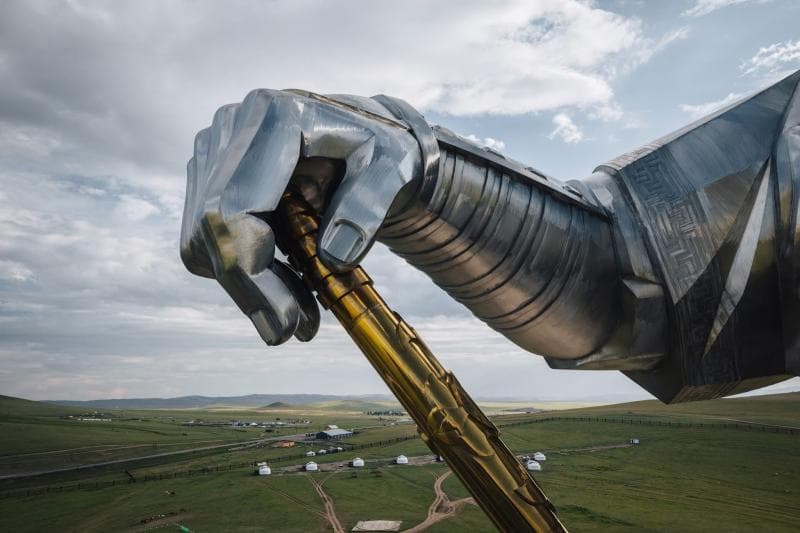
Explore the Genghis Khan Statue Complex in Ulaanbaatar, Mongolia – the world's tallest equestrian statue honoring the legendary leader and empire.
Overview
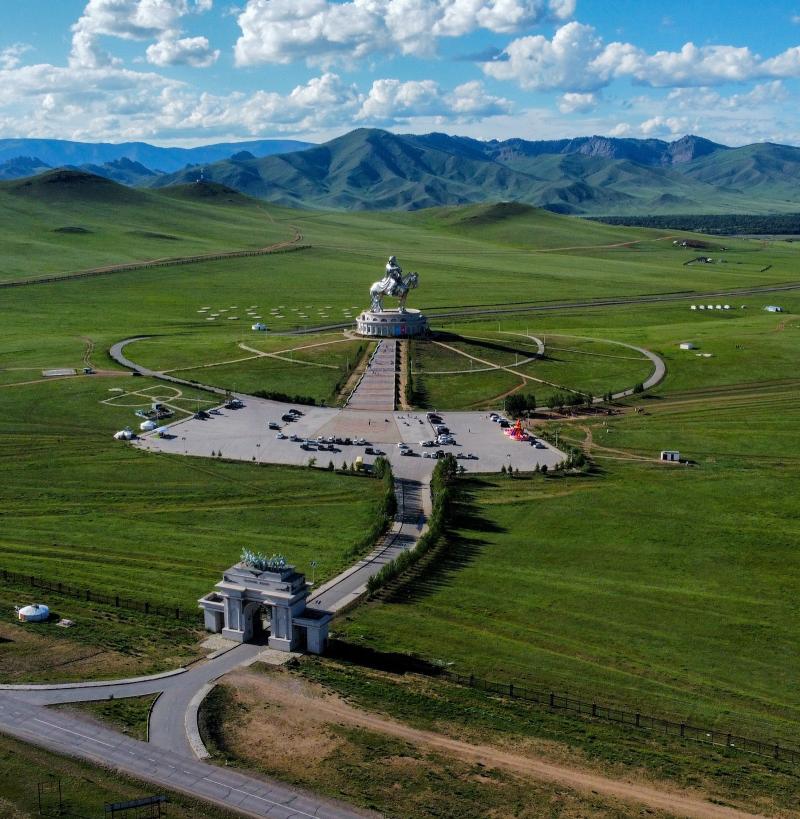
Rising majestically from the rolling steppes of Tsonjin Boldog, approximately 54 kilometers east of Ulaanbaatar, Mongolia, stands the colossal Genghis Khan Statue Complex. This monumental tribute to Mongolia's revered founding father, Genghis Khan, is not merely a statue but an immersive cultural experience designed to captivate and educate. Dominating the landscape, the stainless steel equestrian statue itself soars 40 meters (131 feet) high, making it the tallest of its kind in the world. It rests upon a 10-meter-tall circular visitor center, bringing the total height of the structure to an imposing 50 meters (164 feet). [4, 6, 7, 15]
The complex is an essential pilgrimage for anyone seeking to understand the enduring legacy of Genghis Khan and the rich history of the Mongol Empire. Visitors can explore a museum housed within the base, delve into archaeological exhibits, and even ascend through the horse's body to an observation deck located in its head, offering breathtaking panoramic views of the vast Mongolian plains. [4, 7, 9, 15, 20]
History & Cultural Background
The Genghis Khan Statue Complex was unveiled in 2008, a significant year marking the 800th anniversary of the founding of the Mongol Empire by Genghis Khan. This ambitious project was envisioned to honor the historical figure who united disparate Mongol tribes and forged one of the largest contiguous land empires in history. [6, 10, 15, 18, 20] The location, Tsonjin Boldog, holds particular historical resonance, as local legends claim it is the very spot where the young Temujin (Genghis Khan's birth name) found a golden whip. This discovery was widely interpreted as an auspicious omen, foretelling his destiny to become a great leader. [6, 7, 15, 19]
Designed by sculptor D. Erdenebileg and architect J. Enkhjargal, the monument is a powerful symbol of Mongolian national identity and pride. [6, 15] It stands as a testament to the nation's effort to reclaim and celebrate its rich heritage, often overshadowed by historical narratives from outside perspectives. The statue serves as a focal point for understanding the impact of Genghis Khan, not just as a conqueror, but as a visionary who fostered trade, culture, and communication across vast regions. [17, 18]
What Makes It Special
Beyond its sheer scale as the world's tallest equestrian statue, the Genghis Khan Statue Complex is unique for its interactive design. Crafted from 250 tons of shimmering stainless steel, the statue depicts Genghis Khan on horseback, gazing resolutely eastward, symbolically facing his birthplace in Khentii Province. [7, 10, 15, 19] The circular base of the monument is supported by 36 columns, each representing one of the 36 Khans who ruled the Mongol Empire from Genghis Khan himself to Ligdan Khan. This thoughtful detail provides a direct visual lineage of Mongolian leadership through the ages. [6, 7, 15]
Inside the visitor center, the experience extends far beyond merely observing the statue. It houses a fascinating museum that displays artifacts from the Bronze Age and the Xiongnu era, alongside exhibits detailing the life and times of Genghis Khan and the Mongol Empire. [7, 9, 16] The ability to literally walk inside the monument, taking an elevator through the horse's body to a viewing platform in its head, offers a perspective unlike any other equestrian statue in the world, allowing visitors an intimate connection with the monument and its surroundings. [4, 6, 7, 20]
Stories, Fun Facts & Local Details
One of the most captivating local details connected to the complex is the legend of the golden whip. It is said that Genghis Khan, then Temujin, discovered this precious whip at Tsonjin Boldog. This find was interpreted as a divine sign, marking him for greatness and solidifying the site's importance even before the statue was conceived. [6, 15, 19] Inside the complex, visitors can see a 5-meter replica of this legendary golden whip, bringing the story to life. [7, 9]
Another striking feature is the massive, 9-meter-tall traditional Mongolian boot, meticulously crafted from over 200 cowhides, housed within the visitor center. [7, 15, 19] This impressive display offers a glimpse into traditional Mongolian craftsmanship and nomadic culture. For those seeking an authentic cultural experience, the complex also provides opportunities to try on traditional Mongolian costumes and even interact with trained eagles for photographs, connecting visitors directly with nomadic traditions. [14, 17, 20]
Visitor Perspective
A visit to the Genghis Khan Statue Complex offers a profound journey into Mongolia's heart and soul. Located roughly an hour's drive from Ulaanbaatar, the journey itself across the vast steppe sets the tone for an encounter with history. [4, 7, 9, 20] While the complex is open year-round, from 10:00 AM to 6:00 PM, the summer and autumn months are often recommended for more pleasant weather and clearer views from the observation deck. [7, 19] However, the winter months offer a stark beauty, though outdoor walkways can be slippery. [7]
The interactive elements, from the comprehensive museum exhibits to the unique ascent into the horse's head, create a memorable experience. The panoramic view from the top is a particular highlight, offering a sweeping vista of the untouched Mongolian landscape that Genghis Khan himself once surveyed. [4, 20, 21] This combination of historical depth, cultural immersion, and awe-inspiring scale makes the Genghis Khan Statue Complex an unforgettable destination for any curious traveler to Mongolia. [4, 18]
Coordinates: 107.52975, 47.8080556
View on Google Maps💬 How Travelers Describe This Place
Based on community votes
Must See
898Photogenic
853Beautiful
667Interesting
190Unique
32
Traveler Stories
Discover memorable experiences shared by travelers who have visited this place.
No traveler stories yet.
Be the first traveler to share what made this place memorable.
Things to see at Genghis Khan Statue Complex



Tour
By
Spot
Discover amazing places around the world. Your journey starts here.
Explore
© 2026 TourBySpot. All rights reserved.