Royal Yurt
Ulaanbaatar, Mongolia
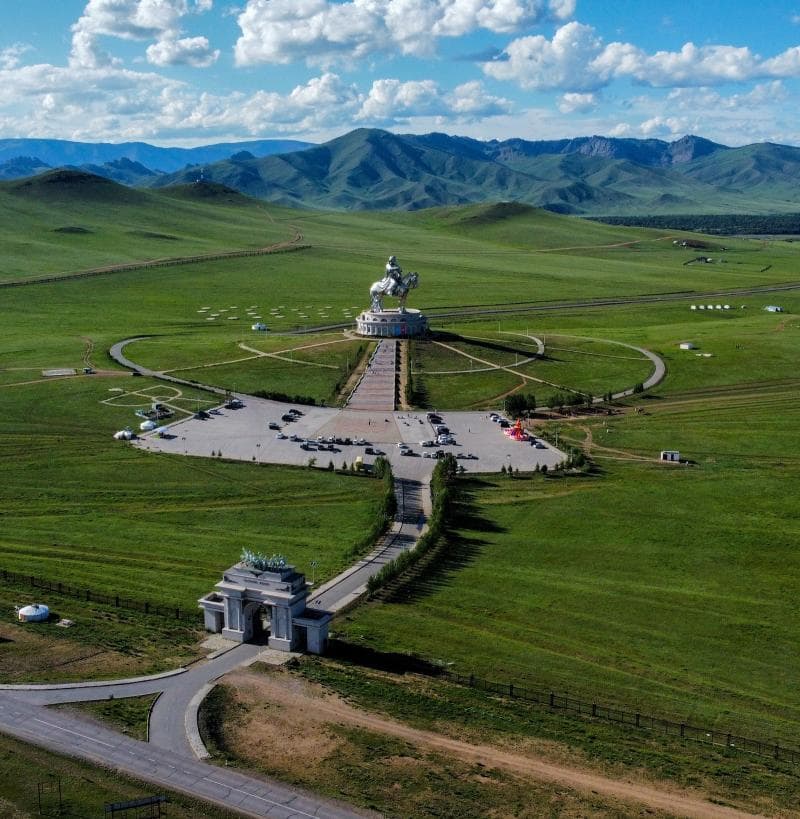
Explore the Royal Yurt at the Genghis Khan Statue Complex in Ulaanbaatar, Mongolia. Discover the rich history, cultural significance, and symbolic details of this traditional nomadic dwelling.
Overview
Nestled within the monumental Genghis Khan Statue Complex in Ulaanbaatar, Mongolia, the Royal Yurt offers a profound journey into the heart of nomadic Mongolian heritage. This meticulously recreated traditional dwelling, known locally as a 'ger', serves as a captivating window into the lifestyle and culture of the Mongol Empire during the time of Genghis Khan. It's not merely a structure but a living exhibit, providing visitors with a tangible connection to the past, allowing them to imagine the daily life and grandeur of a bygone era. As part of a complex celebrating Mongolia's most revered leader, the Royal Yurt embodies the ingenuity and rich traditions that shaped the largest contiguous land empire in history.
History & Cultural Background
The history of the ger, or yurt as it's often known in the West, spans thousands of years, rooted deeply in the nomadic cultures of Central Asia. The term 'ger' itself simply means 'home' in Mongolian, underscoring its central role in the lives of the people. These portable, round, felt-covered dwellings were ingeniously designed to withstand Mongolia's extreme climate and facilitate the mobile lifestyle of herders.
During the vast Mongol Empire, royal gers were not just shelters; they were magnificent mobile palaces. Historical accounts from the 13th century describe these enormous gers, sometimes mounted on carts so large they required dozens of oxen to move them across the steppe. These opulent dwellings served as administrative centers and homes for khans and their courts, symbolizing power, mobility, and the nomadic spirit that characterized the empire. The Royal Yurt within the Genghis Khan Statue Complex pays homage to this grand tradition, offering a glimpse into the sophisticated living arrangements of Mongolian royalty.
What Makes It Special
What makes the Royal Yurt truly special is its ability to transport visitors back in time. Unlike modern stationary structures, the ger's design is a testament to sustainable and adaptable architecture. Its circular shape, wooden lattice walls, and layers of felt insulation were perfectly adapted to deflect strong winds and maintain comfortable temperatures, whether in scorching summers or freezing winters.
This particular Royal Yurt, as a recreated historical exhibit, showcases the intricate details and craftsmanship that would have been present in a high-status ger during Genghis Khan's era. It offers a tangible example of the practical yet culturally rich environment in which decisions of imperial consequence were made and nomadic life flourished. It stands as a powerful symbol of Mongolian national identity and the enduring legacy of Genghis Khan.
Stories, Fun Facts & Local Details
Beyond its physical structure, the ger is imbued with deep symbolism. Mongolians view the ger as a microcosm of the universe, with its structure reflecting the sky, the earth, and the interconnectedness of all things. Upon entering a ger, tradition dictates stepping in with the right foot first and moving clockwise, following the path of the sun. The interior layout is highly symbolic: the door typically faces south, the northern side opposite the door is considered the most sacred 'place of honor' where altars or important family possessions are kept, the west side is traditionally for men, and the east for women.
The colors used in ger decoration also carry meaning; orange often represents the sun or fire, and blue symbolizes the eternal blue sky, a sacred element in Mongolian culture. Imagine the sheer spectacle of a royal ger, pulled by a team of twenty-two oxen, serving as a mobile palace for the likes of Möngke Khan's wife, as described by 13th-century explorers. These details underscore the profound cultural and historical significance of what may appear to be a simple tent.
Visitor Perspective
Visiting the Royal Yurt offers a unique opportunity to immerse oneself in Mongolian history and culture. Inside, travelers can explore the thoughtfully arranged space, observing the traditional furnishings and artifacts that emulate those used by royalty. It provides a tactile and visual experience that complements the grand scale of the Genghis Khan Equestrian Statue itself.
As you step inside, the silence and the intricate details invite contemplation on the ingenuity of nomadic life and the vastness of the Mongol Empire. It's a chance to connect with the traditions that have shaped Mongolia for centuries, understanding not just how people lived, but why these traditions continue to resonate today. The Royal Yurt at the Genghis Khan Statue Complex is an essential stop for anyone seeking a deeper understanding of Mongolia's rich past and vibrant cultural heritage.
Coordinates: 107.52975, 47.8080556
View on Google Maps💬 How Travelers Describe This Place
Based on community votes
Beautiful
873Interesting
477Unique
422Photogenic
157Must See
53
Traveler Stories
Discover memorable experiences shared by travelers who have visited this place.
No traveler stories yet.
Be the first traveler to share what made this place memorable.

Tour
By
Spot
Discover amazing places around the world. Your journey starts here.
Explore
© 2026 TourBySpot. All rights reserved.