Gelora Bung Karno Sports Complex
Jakarta, Indonesia
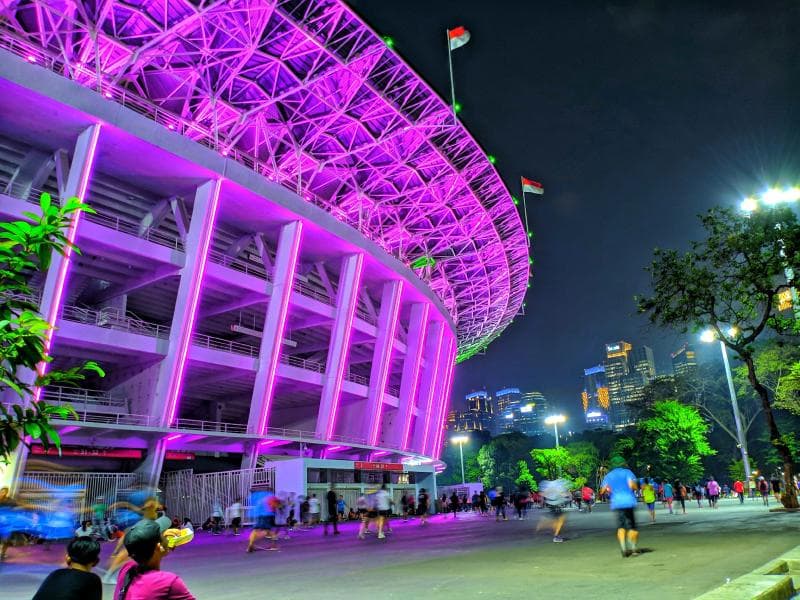
Discover Gelora Bung Karno Sports Complex in Jakarta, Indonesia. Explore its rich history, iconic architecture, and vibrant atmosphere as a hub for sports, culture, and entertainment.
Overview
The Gelora Bung Karno Sports Complex, often affectionately known as GBK, stands as a monumental landmark in Jakarta, Indonesia. More than just a collection of athletic venues, it is a sprawling, multi-purpose complex that serves as a vibrant hub for sports, culture, and community life. Covering an impressive 279 hectares, it is the largest sports complex in Indonesia. At its heart lies the iconic Stadion Utama Gelora Bung Karno, or the Gelora Bung Karno Main Stadium, a grand structure that has witnessed countless historic moments. The complex also encompasses a secondary stadium, modern indoor gymnasiums like the renowned Istora, football fields, an aquatic stadium, tennis stadiums (both indoor and outdoor), and facilities for sports such as hockey, baseball, and archery. This grand estate, named after Indonesia's first President, Sukarno, was originally conceived to host the 1962 Asian Games, a testament to the nation's aspirations on the global stage.
History & Cultural Background
The story of Gelora Bung Karno begins with a vision. In 1958, after Jakarta was chosen to host the 1962 Asian Games, President Sukarno initiated the monumental project to construct a world-class sports complex. Construction officially commenced on February 8, 1960, and was completed in a remarkably short period, with the main stadium opening its doors on July 21, 1962, just in time for the games. This ambitious undertaking was partially financed by a substantial loan from the Soviet Union, highlighting Indonesia's geopolitical ties during the Cold War era. President Sukarno himself, an architect and civil engineering graduate, was deeply involved, even proposing the design for the main stadium's roof. For a period between 1969 and 2001, during the regime of President Soeharto, the complex and its main stadium were renamed Stadion Utama Senayan, removing references to the ousted predecessor. However, the original name, honoring the nation's founding father, was eventually restored by President Abdurrahman Wahid in 2001. The complex's profound historical and cultural significance is formally recognized; it has been designated a cultural heritage site by the Governor of DKI Jakarta since 1993.
What Makes It Special
What truly sets Gelora Bung Karno apart is its blend of historical grandeur and modern innovation. The main stadium, designed by Indonesian architect Friedrich Silaban, was revolutionary for its time. Its distinctive cantilever roof, known locally as 'temu gelang' (joined ring), was one of the world's first circular roof football stadiums and ingeniously eliminated the need for view-obstructing columns, offering spectators unobstructed views. Initially, with a capacity of 110,000, it was among the largest stadiums globally. Extensive renovations for the 2018 Asian Games transformed it into a state-of-the-art facility, reducing its capacity to 77,193 single seats to meet international safety and comfort standards. These upgrades included advanced LED lighting systems, making it one of the brightest stadiums in the world with 3,500 lux. Beyond sports, GBK has evolved into a dynamic public lifestyle hub, hosting a diverse array of events from international concerts and political rallies to religious gatherings and cultural festivals, making it a cultural focal point in Jakarta.
Stories, Fun Facts & Local Details
Gelora Bung Karno is a treasure trove of stories and local charm. Imagine the roar of a crowd of 150,000 people, a record attendance achieved not once, but twice – first during a 1975 Deep Purple concert and again during a legendary 1985 football match between local teams Persib and PSMS Medan. Another gem within the complex is Istora Gelora Bung Karno, often called the 'palace of sports' and a veritable temple for badminton enthusiasts. It is renowned as the 'pulsating center of Indonesian badminton', where passionate crowds can generate noise levels exceeding 115 decibels, giving the home team an unparalleled advantage. The expansive complex itself is an ecological haven; 84% of its 279 hectares are open green spaces, home to rare tree species and 22 types of birds, offering an unexpected slice of nature in the bustling city. It is a place where joggers find their morning rhythm, families enjoy picnics, and friends gather for outdoor workouts, especially vibrant on weekends. For a truly immersive experience, attending a local football match or a grand concert is highly recommended to feel the electric atmosphere.
Visitor Perspective
For the curious traveler, visiting the Gelora Bung Karno Sports Complex offers a multifaceted experience. Its central location in Jakarta makes it easily accessible via various public transportation options, including the KAI Commuter, MRT Jakarta, and Transjakarta. The complex is designed to cater to more than just event-goers; it functions as a sprawling urban park where you can enjoy a leisurely stroll, go for a jog on well-maintained tracks, or even rent a bicycle. Beyond the main stadium, explore the other facilities like the aquatic stadium or the tennis courts. The complex frequently hosts cultural events and festivals, providing a unique opportunity to immerse yourself in Indonesia's rich heritage and diverse artistic expressions. There are also museums within the complex that chronicle Indonesia's sporting history. When planning a visit, especially for a major event, be sure to check the schedule in advance and consider arriving early to navigate Jakarta's notorious traffic. It's also worth noting that the complex operates on a cashless system for tickets and concessions, so having an e-wallet or contactless card is advisable. The area surrounding GBK, including the Senayan district, boasts upscale shopping malls, charming cafes, and cultural spots, making it a comprehensive destination for exploration.
Coordinates: 106.8025111, -6.2185778
View on Google Maps💬 How Travelers Describe This Place
Based on community votes
Beautiful
953Unique
658Photogenic
585Interesting
69Must See
22
Traveler Stories
Discover memorable experiences shared by travelers who have visited this place.
No traveler stories yet.
Be the first traveler to share what made this place memorable.
Things to see at Gelora Bung Karno Sports Complex



Tour
By
Spot
Discover amazing places around the world. Your journey starts here.
Explore
© 2026 TourBySpot. All rights reserved.