Garuda Wisnu Kencana Cultural Park
Bali, Indonesia
Explore Garuda Wisnu Kencana Cultural Park in Bali, Indonesia. Witness the colossal Vishnu and Garuda statue, enjoy cultural performances, and discover Balinese mythology. A must-visit cultural landmark.
Overview
Perched majestically on the Bukit Peninsula in Ungasan, Badung, Bali, Indonesia, Garuda Wisnu Kencana Cultural Park (GWK) is a sprawling testament to Balinese art, culture, and profound Hindu mythology. Easily accessible, it lies approximately 10 to 15 minutes by car from Ngurah Rai International Airport, making it a prominent landmark visible even from afar.
This expansive park, spanning around 60 hectares and situated 263 meters (863 ft) above sea level, is more than just a tourist attraction; it's a vital cultural hub. The centerpiece is the awe-inspiring Garuda Wisnu Kencana statue, depicting the Hindu god Vishnu riding his mythical bird companion, Garuda. The park passionately showcases Bali's rich heritage and intricate art forms through its monumental architecture and vibrant daily cultural performances, establishing itself as a significant cultural development center on the island.
History & Cultural Background
The ambitious vision for Garuda Wisnu Kencana was conceived in 1989 by renowned Balinese sculptor I Nyoman Nuarta, alongside then-Tourism Minister Joop Ave. The inspiration for this colossal monument draws deeply from Hindu mythology, specifically the tale of Garuda's noble quest for Amrita, the elixir of life. In this ancient narrative, Garuda agrees to be ridden by Lord Vishnu in exchange for the right to use the elixir to free his enslaved mother, a powerful story symbolizing selfless devotion and liberation.
Construction commenced in 1997, but the project faced significant delays due to the Asian financial crisis. It wasn't until 2013 that the endeavor gained new momentum, revitalized and financed by PT Alam Sutera Realty Tbk. After nearly three decades of development and overcoming numerous challenges, the completed statue was officially inaugurated on September 22, 2018, by Indonesian President Joko Widodo. Despite initial controversies regarding its massive scale potentially disrupting the island's spiritual balance and its commercial nature, proponents argued that the park serves as an educational center for Balinese cosmology, with Vishnu's gaze benevolently watching over Bali.
What Makes It Special
The primary draw of GWK Cultural Park is undeniably the colossal Garuda Wisnu Kencana statue itself, one of the tallest in the world. Standing an impressive 121 to 122 meters (397 to 400 ft) tall, including its 46-meter pedestal, it significantly surpasses the height of New York's Statue of Liberty. Crafted from copper and brass sheeting over a stainless steel frame and concrete core, weighing 4000 tonnes and composed of 754 modules, this engineering marvel is designed to withstand storms and earthquakes, with an anticipated lifespan of 100 years.
Beyond the statue, the park offers other unique features. The vast Lotus Pond, a 4,000-square-meter open-air event space, is framed by towering limestone pillars that were once part of an active quarry. This area can host up to 7,500 people, making it ideal for large-scale events. Unique pathways, often referred to as 'quarry corridors,' weave through vertical limestone cliffs, creating an unexpected and visually striking canyon-like environment. From its elevated position, the park also provides breathtaking panoramic views of the airport, the Indian Ocean, and much of southern Bali, making it a favorite spot for photographers.
Stories, Fun Facts & Local Details
The symbolism embedded within the GWK statue is central to its appeal. Lord Vishnu is revered as the protector of the Universe and its equilibrium, while his faithful mount, Garuda, represents loyalty, selfless devotion, and is notably the national emblem of Indonesia, symbolizing freedom. The statue depicts Vishnu in a meditative state, with partially closed eyes, signifying his watchful gaze over the world below. Sculptor Nyoman Nuarta reportedly spent over a year perfecting Vishnu's face alone, highlighting the meticulous craftsmanship involved.
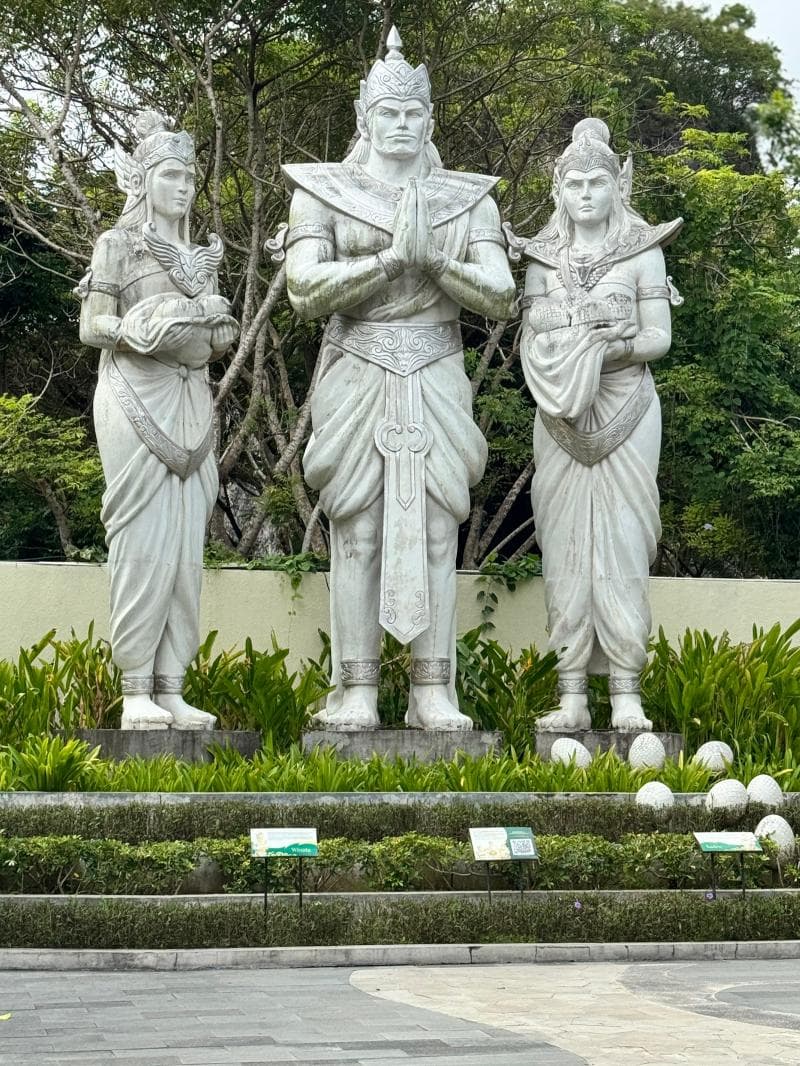
The construction journey of the statue itself is a fascinating tale; its massive components were fabricated in Nuarta's workshop in Bandung, West Java, and then transported over 1,000 kilometers by truck to Bali for assembly. The entire park site was once an active limestone mine, with the quarry's dramatic remnants now integrated into the park's unique landscape. Visitors might also notice 'dvarapalas,' traditional Balinese guardian figures, positioned throughout the park, serving to ward off evil spirits, a common sight in Balinese temples.
Visitor Perspective
A visit to Garuda Wisnu Kencana Cultural Park is an immersive experience that goes far beyond merely viewing a statue. Travelers often discover that it is a massive cultural park, requiring ample time—typically 2 to 4 hours—to explore its various attractions, performances, and scenic spots. While the sheer scale of the statue and its intricate detailing are universally impressive, the park also offers a rich blend of spiritual enlightenment and grand spectacle.
The park features thoughtfully laid-out paths, some with stairs and descents, creating a 'light little hike' experience, though a complimentary shuttle service is available for convenience. Daily cultural performances, including the iconic Kecak, Barong, and Legong dances, offer authentic glimpses into Balinese storytelling and artistic expression, all included with admission. Many visitors appreciate the park's role in preserving and presenting Balinese culture, despite occasional perceptions of commercialization. For the best experience, including comfortable temperatures and optimal lighting for photography, visiting in the morning or late afternoon is highly recommended.
Coordinates: 115.166882, -8.813951
View on Google Maps💬 How Travelers Describe This Place
Based on community votes
Must See
886Beautiful
564Unique
201Interesting
121Photogenic
87
Traveler Stories
Discover memorable experiences shared by travelers who have visited this place.
No traveler stories yet.
Be the first traveler to share what made this place memorable.
Things to see at Garuda Wisnu Kencana Cultural Park



Tour
By
Spot
Discover amazing places around the world. Your journey starts here.
Explore
© 2026 TourBySpot. All rights reserved.