Fisherman’s Bastion
Budapest, Hungary
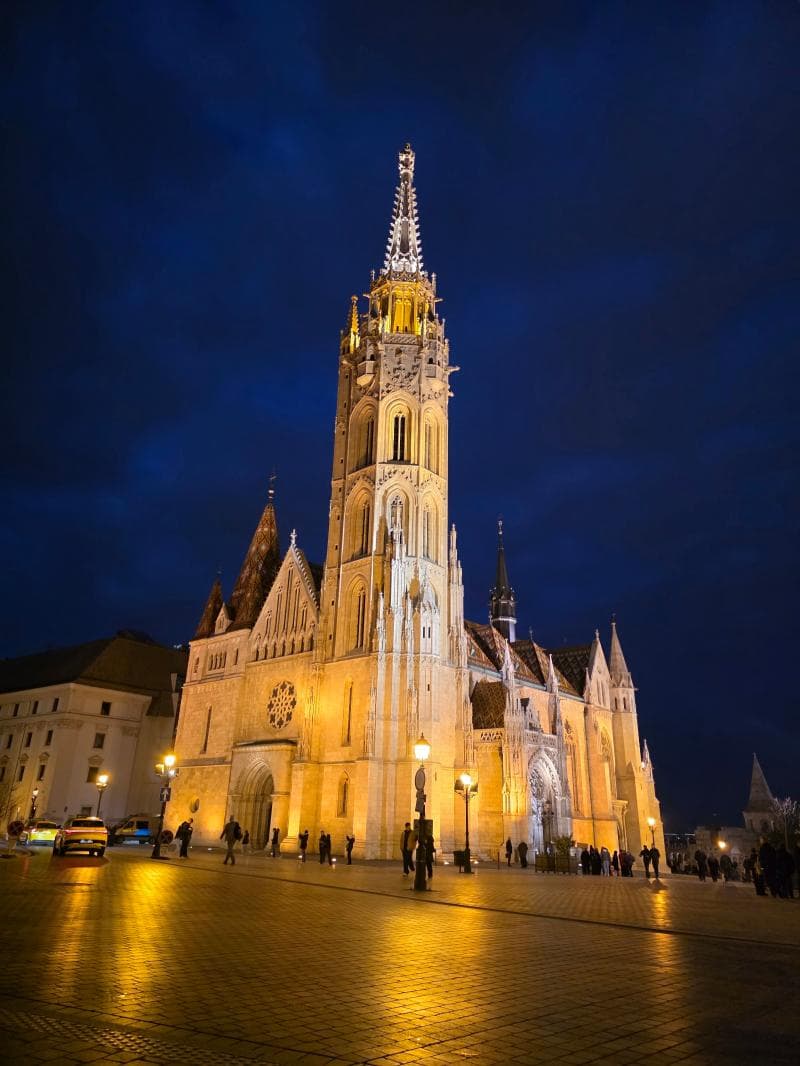
Explore Fisherman's Bastion in Budapest, Hungary, a fairytale neo-Romanesque lookout offering panoramic views of the Danube and Parliament.
Overview
Perched majestically on Budapest's Castle Hill, the Fisherman's Bastion, known locally as Halászbástya, is an architectural marvel that seems plucked from a fairytale. This neo-Romanesque and neo-Gothic lookout terrace, with its pristine white stone and seven conical towers, offers one of the most iconic and breathtaking panoramic views of the Hungarian capital. It gazes out over the Danube River, the Pest side of the city, including the majestic Parliament Building, Margaret Island, and Gellért Hill. More than just a viewing platform, it stands as a symbolic monument, a testament to Hungary's rich history and cultural identity. It is an integral part of the Buda Castle District, which has been designated a UNESCO World Heritage Site since 1987.
History & Cultural Background
Despite its medieval appearance, the Fisherman's Bastion is a relatively modern creation. It was constructed between 1895 and 1902 as part of an extensive urban development project to celebrate the 1000th anniversary of the Hungarian state. Architect Frigyes Schulek, renowned for his restoration work on the adjacent Matthias Church, designed the Bastion not as a defensive fortification, but as an ornamental terrace to enhance the beauty of the church and provide a stunning public viewpoint. The name 'Fisherman's Bastion' is believed to derive from the guild of fishermen who, during the Middle Ages, were responsible for defending this particular stretch of the city's walls along the Danube. They lived in the 'Fishtown' or 'Watertown' below the castle walls.
Historically, the site housed medieval castle walls, which deteriorated over centuries. Schulek's vision transformed this military area into a peaceful promenade, harmoniously blending with the restored Matthias Church. The structure suffered significant damage during World War II but was meticulously restored, reaffirming its status as a cherished Budapest landmark.
What Makes It Special
What truly sets Fisherman's Bastion apart is its captivating blend of symbolic design and unparalleled vistas. The most striking feature is its seven towers, which symbolize the seven Magyar chieftains who led their tribes to settle in the Carpathian Basin in 895, laying the foundation for modern Hungary. This national symbolism is deeply woven into its very structure. The intricate arches, turrets, and balustrades create a dreamlike atmosphere, making it a photographer's paradise.
The panoramic views from the Bastion are arguably the best in Budapest, offering an uninterrupted spectacle of the city's key landmarks across the Danube. Visitors can take in the grand scale of the Hungarian Parliament Building, the historic Chain Bridge, Margaret Island, and the Pest side's cityscape, often reaching as far as St. Stephen's Basilica. Its placement directly behind Matthias Church also creates a picturesque ensemble, with the Bastion framing the church's colourful tiled roof and Gothic spires beautifully.
Stories, Fun Facts & Local Details
One fascinating aspect of the Fisherman's Bastion is its purely aesthetic purpose; it was never intended as a military stronghold in its current form, unlike the medieval walls it replaced. It was conceived as a decorative backdrop and viewing platform, making its formidable appearance something of a delightful illusion.
Between the Bastion and Matthias Church, an impressive equestrian statue of Stephen I, Hungary's first king, stands proudly. Erected in 1906, it commemorates the king who established Christianity in Hungary and solidified the nation. An interesting historical tidbit involves the construction itself: when the Bastion was built, it unfortunately destabilized the foundations of a nearby 13th-century Dominican Church, which subsequently had to be demolished.
For those interested in unique architectural details, Frigyes Schulek's redesign of the access stairs to the Bastion is noteworthy. He transformed narrow, unsuitable Jesuit stairs into a grander, wider entrance, even incorporating an original Romanesque lion relief excavated during the building process.
Visitor Perspective
Visiting Fisherman's Bastion is an experience that transports you to another era while offering contemporary delights. The lower terraces are generally free to access, providing ample opportunities to enjoy the spectacular views and explore the architecture. There is a fee for accessing the upper turrets and terraces during peak hours, usually between 9 am and 7 pm or 8 pm, though these areas are often free outside these hours and during the low season (October to March).
Many travelers find the early morning or late afternoon to be the best times to visit. Sunrise casts a golden glow over the Pest side, offering incredible photographic opportunities with fewer crowds. Likewise, the evening brings the magic of the city lights illuminating the Danube and its iconic buildings. The Bastion is open 24/7, allowing for flexible visits at any time of day or night. It's easily accessible by public transport, with buses stopping nearby in the Buda Castle District. A stroll through the Bastion's walkways, combined with a visit to the Matthias Church and other nearby historical sites, forms a memorable part of any Budapest itinerary.
Coordinates: 19.034444, 47.502778
View on Google Maps💬 How Travelers Describe This Place
Based on community votes
Interesting
539Beautiful
424Photogenic
251Unique
234Must See
30
Traveler Stories
Discover memorable experiences shared by travelers who have visited this place.
No traveler stories yet.
Be the first traveler to share what made this place memorable.
Things to see at Fisherman’s Bastion



Tour
By
Spot
Discover amazing places around the world. Your journey starts here.
Explore
© 2026 TourBySpot. All rights reserved.