St. Stephen Statue
Budapest, Hungary
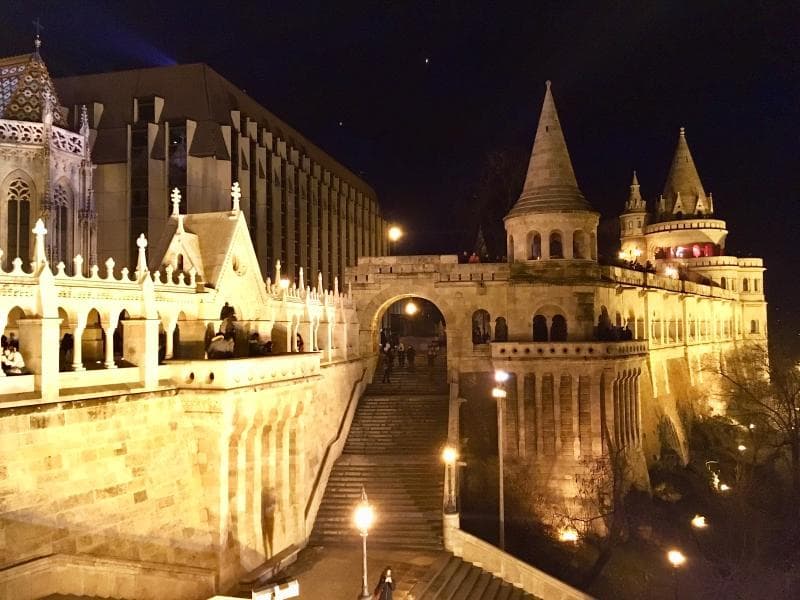
Discover the historic St. Stephen Statue at Fisherman's Bastion in Budapest, Hungary, honoring the nation's first king and his Christian legacy.
Overview
Perched majestically on Budapest's Castle Hill, the Statue of St. Stephen stands as a profound tribute to Hungary's founding monarch. This impressive equestrian bronze, sculpted by Alajos Stróbl, is strategically positioned between the iconic Fisherman's Bastion and the ornate Matthias Church, forming a central part of the Buda Castle District's breathtaking ensemble. It’s not merely a statue; it’s a powerful symbol of the nation's origins and its enduring Christian heritage. From this vantage point, visitors are treated to unparalleled panoramic views of the Danube River, the Pest side of the city, and the majestic Parliament Building, making it a focal point for history, culture, and scenic beauty.
History & Cultural Background
The story of the St. Stephen Statue is deeply interwoven with the history of the Fisherman's Bastion itself and the millennial celebrations of Hungary. The Fisherman's Bastion, or Halászbástya, was constructed between 1895 and 1902 by architect Frigyes Schulek. Its neo-Romanesque and neo-Gothic design, characterized by seven distinctive towers, was intended to commemorate the 1000th anniversary of the Hungarian state and symbolize the seven Magyar tribes who settled the Carpathian Basin in 895 AD. Unlike a traditional fortification, the Bastion was conceived as a decorative lookout terrace, complementing the Matthias Church and offering spectacular views.
Amidst these grand millennial projects, the desire to honor Hungary's first king, Stephen I, took shape. Born Vajk around 975, Stephen ascended to power as Grand Prince before being crowned the first King of Hungary around 1000 or 1001 AD, reigning until his death in 1038. His reign marked a pivotal transformation for Hungary, as he led the country's conversion to Christianity, established the foundations of the Hungarian state, and built numerous churches and monasteries. His efforts earned him canonization in 1083, solidifying his status as a patron saint and revered national figure.
The creation of a worthy statue for St. Stephen was a long-cherished ambition, with discussions beginning as early as 1863. It was Alajos Stróbl who eventually brought this vision to life, with his equestrian statue finally inaugurated in 1906, positioned purposefully in the square between Schulek's newly completed Fisherman's Bastion and the restored Matthias Church.
What Makes It Special
The Statue of St. Stephen is remarkable for both its artistic execution and its profound symbolism. Alajos Stróbl's bronze equestrian figure captures King Stephen in a moment of regal authority, adorned with the Holy Crown of Hungary, holding the double cross, and covered by a flowing coronation cloak. The statue rests upon an imposing neo-Romanesque limestone pedestal, also designed by Frigyes Schulek, which is richly decorated with lions and columns. Encircling the base are intricate bronze reliefs, crafted by Stróbl himself, that vividly depict significant moments from St. Stephen's reign: his coronation, the promulgation of laws, the spread of the Christian faith through church-building, and even the city of Vienna paying homage.
This magnificent artwork is more than just a historical depiction; it is a celebration of Hungarian nationhood and Christian identity. Its placement within the open embrace of the Fisherman's Bastion and directly in front of the Matthias Church creates a harmonious architectural and historical tableau. The statue serves as a constant reminder of the king who laid the spiritual and political groundwork for modern Hungary, making it an intensely meaningful site for both locals and visitors alike.
Stories, Fun Facts & Local Details
The journey to realize the St. Stephen Statue was a lengthy one, taking almost four decades from its initial conception in 1863 until its grand unveiling in 1906. Interestingly, historical accounts mention that the German Emperor Wilhelm II once commented on Budapest's lack of significant public statues, which reportedly prompted Emperor Franz Joseph to personally fund several artworks, though St. Stephen's statue was already underway due to a sustained national push. Today, St. Stephen's legacy is celebrated annually on August 20th, a national holiday known as State Foundation Day, commemorating his reign and the establishment of the Hungarian state.
The Fisherman's Bastion itself holds a charming, though unproven, tale regarding its name: legend suggests this section of the city walls was once defended by a guild of fishermen from the nearby 'Fish Town' along the Danube. The seven conical towers of the Bastion, so prominent in photographs, are not merely aesthetic; they powerfully symbolize the seven Magyar chieftains who led their tribes to Hungary in the 9th century, a foundational moment in Hungarian history.
Visitor Perspective
Approaching the Statue of St. Stephen and the Fisherman's Bastion is an experience that transports you through centuries of history. The site offers some of Budapest's most iconic photographic opportunities, with the statue framed by the Bastion's fairytale turrets and the colorful roof of Matthias Church. Many travelers find the early morning hours ideal for a visit, as the soft light enhances the area's beauty and fewer crowds allow for more serene contemplation. Conversely, an evening visit is equally enchanting, with the city lights twinkling below and the illuminated monuments creating a magical atmosphere.
The Statue of St. Stephen is easily accessible within the Buda Castle District, placing it within a short walk of other significant landmarks. Exploring the statue and its surroundings offers not only a visual feast but also a deeper connection to Hungary's rich past, making it an essential stop for any curious traveler in Budapest.
Coordinates: 19.0344, 47.5027
View on Google Maps💬 How Travelers Describe This Place
Based on community votes
Interesting
961Must See
733Photogenic
695Beautiful
404Unique
336
Traveler Stories
Discover memorable experiences shared by travelers who have visited this place.
No traveler stories yet.
Be the first traveler to share what made this place memorable.

Tour
By
Spot
Discover amazing places around the world. Your journey starts here.
Explore
© 2026 TourBySpot. All rights reserved.