Seven Towers
Budapest, Hungary
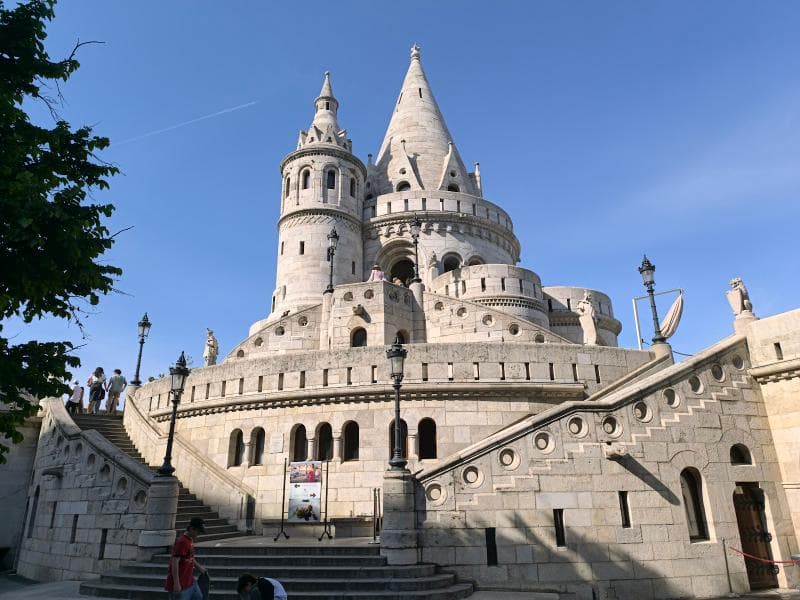
Explore Budapest's fairytale Fisherman's Bastion and its Seven Towers, offering panoramic views and rich history in the Buda Castle District, Hungary.
Overview
Perched majestically atop Castle Hill in Budapest, Hungary, the Fisherman’s Bastion (Halászbástya) is a stunning architectural masterpiece that transports visitors into a fairytale realm. This iconic landmark, with its seven distinctive turrets, is not a defensive fortress in the traditional sense, but rather a decorative viewing terrace designed to offer unparalleled panoramic views of the city. As a significant part of the Buda Castle District, it has been recognized as a UNESCO World Heritage Site since 1987.
Often referred to informally as the 'Seven Towers', the Bastion's turrets hold deep symbolic meaning, representing the seven Magyar tribes that founded Hungary in 895 AD. Its Neo-Romanesque and Neo-Gothic design, characterized by intricate stone carvings, arcades, and climbing stairways, provides a breathtaking backdrop to the adjacent Matthias Church and the sweeping vistas of the Danube River, the Hungarian Parliament Building, and the Pest side of Budapest.
History & Cultural Background
The current structure of the Fisherman's Bastion was constructed between 1895 and 1902, as part of Budapest's ambitious millennium celebrations marking the 1000th anniversary of the Hungarian state. Designed by the renowned architect Frigyes Schulek, who also oversaw the restoration of the Matthias Church, the Bastion was conceived to complement the church and enhance the overall beauty of the Castle District.
While its appearance is decidedly medieval, giving the impression of an ancient fortification, the Fisherman's Bastion was never intended for military defense. It was built on the site of earlier castle walls, some dating back to the 13th century, which had been protected by the guild of local fishermen during the Middle Ages. This historical association with the fishermen, who lived below the castle walls in a district known as 'Fishtown' or 'Watertown,' is widely believed to be the origin of its evocative name.
The seven towers are perhaps the most culturally resonant feature, each symbolizing one of the tribal chieftains who led the Magyar people into the Carpathian Basin. This powerful imagery connects the architectural marvel directly to Hungary's foundational history and national identity.
What Makes It Special
The primary allure of the Fisherman's Bastion lies in its dual nature: a stunning architectural achievement and an unparalleled panoramic viewpoint. Its romantic, almost fairytale-like appearance, with turrets, parapets, and archways, is instantly captivating. The Bastion's strategic location on Castle Hill offers a spectacular 360-degree vista. From its terraces, visitors can gaze across the sparkling Danube to the magnificent Hungarian Parliament Building, Chain Bridge, Margaret Island, and the sprawling Pest cityscape, creating postcard-perfect views day and night.
Architect Frigyes Schulek meticulously designed the Bastion, not just as a monument, but as an aesthetic counterpart to the Matthias Church, embracing it with its T-shaped arrangement. The intricate details, from the varied patterns on its column heads—each unique in design—to the overall Neo-Romanesque style, speak to a masterful blend of historical inspiration and artistic vision.
Stories, Fun Facts & Local Details
Beyond its grand facade, the Fisherman's Bastion is rich with intriguing details. For instance, during its construction, archaeologists unearthed various historical finds, including tombstones and a medieval chapel, parts of which were incorporated into the new design. A lighthearted modern anecdote involves one of the Bastion's statues, which gained internet fame for its uncanny resemblance to actor Woody Harrelson, sparking humorous theories of time travel.
Near the Bastion stands a majestic equestrian statue of Saint Stephen I, Hungary's first Christian king, erected in 1906. The statue's pedestal, also designed by Schulek, features scenes illustrating the king's life, including a subtle self-portrait of the architect kneeling and offering a church model. The Bastion was significantly damaged during World War II but was diligently restored, highlighting its importance as a symbol of Budapest's resilience.
Visitor Perspective
Visiting the Fisherman's Bastion offers a truly immersive experience. While the lower terraces are generally free to access, providing splendid views, there is a fee to enter the upper turrets and terraces for even more expansive vistas. Many travelers find that the early morning hours, especially around sunrise, or late afternoon offer the best photographic opportunities and fewer crowds, allowing for a more serene appreciation of the architecture and panorama.
The Bastion is easily accessible within the Buda Castle District, reachable by bus, funicular, or a pleasant walk. Its proximity to other key attractions, such as the Matthias Church, Buda Castle, and the Hospital in the Rock Museum, makes it an ideal starting point for exploring the historical heart of Budapest. Whether you're admiring the detailed stone carvings up close or gazing out at the breathtaking cityscape, the Fisherman's Bastion promises an unforgettable journey through Hungarian history and beauty.
Coordinates: 19.0344, 47.5027
View on Google Maps💬 How Travelers Describe This Place
Based on community votes
Must See
873Photogenic
521Unique
477Beautiful
422Interesting
157
Traveler Stories
Discover memorable experiences shared by travelers who have visited this place.
No traveler stories yet.
Be the first traveler to share what made this place memorable.

Tour
By
Spot
Discover amazing places around the world. Your journey starts here.
Explore
© 2026 TourBySpot. All rights reserved.