Lower Terrace
Budapest, Hungary
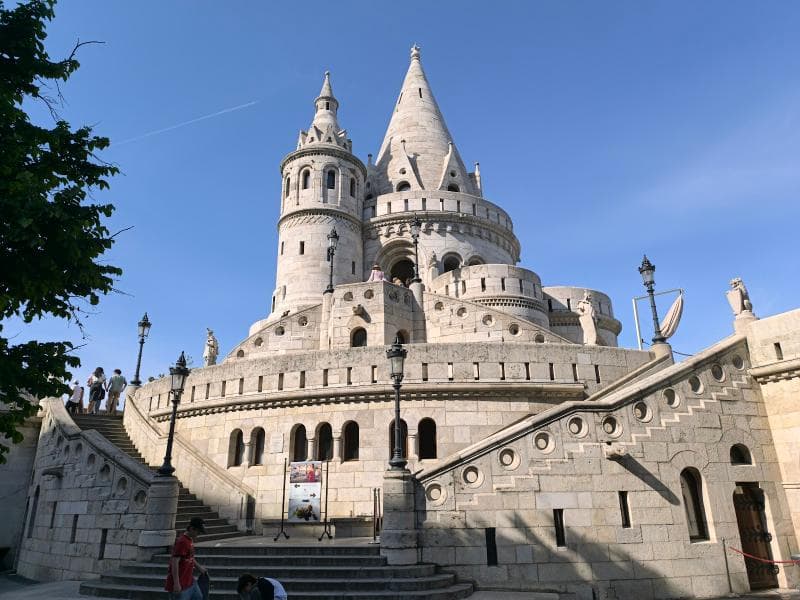
Explore the enchanting Lower Terrace of Fisherman’s Bastion in Budapest, Hungary, a Neo-Romanesque marvel with free, 24/7 panoramic views of the Danube and Parliament.
Overview
Nestled within the historic Buda Castle District of Budapest, Hungary, the Lower Terrace of Fisherman’s Bastion offers a captivating blend of architectural beauty and unparalleled panoramic views. This magnificent Neo-Romanesque and Neo-Gothic structure, known locally as Halászbástya, is not a defensive fortress but an ornate viewing terrace designed for public enjoyment. It stands proudly alongside the venerable Matthias Church, forming an iconic landmark that has earned its place as a UNESCO World Heritage site. The Lower Terrace, in particular, is freely accessible to all, inviting visitors to wander through its charming arcades and gaze upon the sweeping vistas of the Danube River, the majestic Parliament Building, Margaret Island, and the Pest side of the city.
History & Cultural Background
The Fisherman’s Bastion, including its Lower Terrace, was constructed between 1895 and 1902, during a period of significant national pride and architectural revival in Hungary. Designed by the renowned architect Frigyes Schulek, the bastion was conceived to celebrate the 1000th anniversary of the Hungarian state's foundation and to complement the grandeur of the recently restored Matthias Church. Its unique style, blending Neo-Romanesque and Neo-Gothic elements, was inspired by early medieval Hungarian architecture, specifically recalling the era of the first Hungarian king. The seven prominent towers of the bastion symbolize the seven Magyar chieftains who led their tribes to settle in the Carpathian Basin in 895, laying the foundations for present-day Hungary. The name 'Fisherman's Bastion' is a tribute to the medieval guild of fishermen who, for centuries, were responsible for defending this particular stretch of the city walls. They lived in the 'Water Town' (Viziváros) below the castle hill and protected the area during wartime.
What Makes It Special
What truly sets the Lower Terrace apart is its role as a grand public promenade offering breathtaking views without restriction. Unlike some sections of the Upper Bastion, the Lower Terrace is open 24/7 and completely free to explore, making it an accessible window into Budapest's beauty. Its intricate design, featuring whitewashed stone, decorative turrets, and a series of arches, creates a fairytale-like atmosphere that captivates every visitor. The arches, in particular, frame postcard-perfect scenes of the cityscape, offering countless photographic opportunities. The terrace's strategic location on Castle Hill ensures a commanding perspective of the Danube, the iconic Parliament Building with its Gothic spires, the various bridges connecting Buda and Pest, and the bustling Pest embankment.
Stories, Fun Facts & Local Details
Beyond its visual appeal, the Fisherman's Bastion is steeped in local lore and meaningful symbolism. The story of the fishermen's guild defending the medieval walls imbues the site with a sense of historical guardianship, honoring the ordinary citizens who contributed to the city's protection. In the southern courtyard, near the Matthias Church, stands a powerful equestrian statue of St. Stephen, Hungary's first Christian king. This monument, designed by Alajos Strobl and erected in 1906, further grounds the bastion in Hungarian history, commemorating the king who established order and transformed a tribal confederation into a Christian kingdom. The bastion is also affectionately regarded by many Hungarians as a perfect romantic spot, with some even jesting that it's where every first kiss in Budapest should happen. Schulek's design also ingeniously integrated the bastion with the Matthias Church, ensuring that its terraces and arches beautifully complement and frame the church's exquisite architecture.
Visitor Perspective
Visiting the Lower Terrace of Fisherman's Bastion is an essential Budapest experience. The fact that it is open around the clock, every day of the year, means you can tailor your visit to your preferences. Many travelers recommend visiting during the early morning hours to witness a breathtaking sunrise over the city or in the late evening when the city lights twinkle and the crowds thin out, offering a more serene and magical experience. The views are equally stunning at any time of day, providing a dynamic backdrop to the city's rhythm. Accessing Fisherman's Bastion is convenient, with several bus routes (like bus 16) and a funicular leading up to the Castle District. While the upper towers may occasionally require a ticket during peak hours, the entire lower level and its charming walkways remain freely accessible, allowing everyone to soak in the magnificent panoramas and the unique atmosphere of this historical gem in Budapest.
Coordinates: 19.0344, 47.5027
View on Google Maps💬 How Travelers Describe This Place
Based on community votes
Interesting
799Must See
639Beautiful
526Unique
181Photogenic
30
Traveler Stories
Discover memorable experiences shared by travelers who have visited this place.
No traveler stories yet.
Be the first traveler to share what made this place memorable.

Tour
By
Spot
Discover amazing places around the world. Your journey starts here.
Explore
© 2026 TourBySpot. All rights reserved.