Eiserner Steg
Frankfurt, Germany
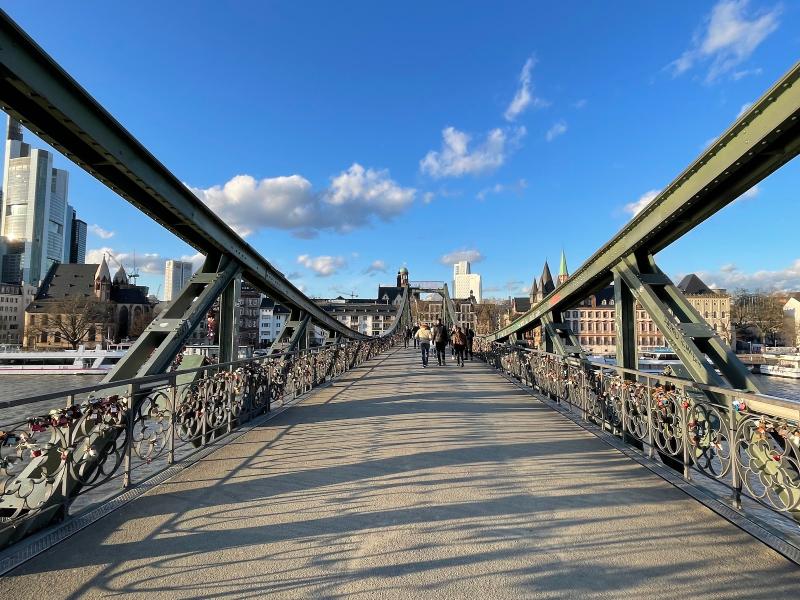
Discover Frankfurt's Eiserner Steg, an iconic iron footbridge connecting the Altstadt and Sachsenhausen. Enjoy skyline views and love locks.
Overview
The Eiserner Steg, or Iron Footbridge, stands as a beloved and iconic pedestrian bridge spanning the Main River in Frankfurt, Germany. This elegant steel structure serves as a crucial link between Frankfurt's historic Altstadt (Old Town) on the north bank and the vibrant Sachsenhausen district on the south. More than just a crossing, it is a prominent landmark, offering breathtaking panoramic views of the city's contrasting skyline – from the modern skyscrapers often dubbed 'Mainhattan' to the historic spires of the cathedral and charming Museum Embankment. Approximately 10,000 people traverse this picturesque bridge daily, making it a bustling artery of city life and a popular spot for both residents and visitors alike.
History & Cultural Background
The story of the Eiserner Steg dates back to 1868, when the first wrought-iron bridge was constructed following designs by Johann Peter Wilhelm Schmick, and officially inaugurated in 1869. It was one of the earliest iron bridges in Germany and, notably, was initially built and operated by a private company, with pedestrians needing to pay a small toll to cross. In 1886, the bridge came under municipal ownership, making crossings free of charge. Due to increasing traffic and the canalization of the Main, the original structure was replaced in 1911-1912 by a broader, reinforced steel cantilever bridge, which was also raised higher. However, a pivotal moment in its history occurred in the final days of World War II, on March 25, 1945, when the German Wehrmacht blew up the bridge to impede the Allied advance. Demonstrating Frankfurt's remarkable resilience, the Eiserner Steg was one of the first structures in the devastated city to be rebuilt, reopening in 1946 using original plans. Further significant renovations took place in 1993, which included raising the bridge again by 40 cm and installing lifts for improved accessibility for wheelchairs and strollers.
What Makes It Special
The Eiserner Steg is distinguished by its neo-Gothic architectural style, characterized by riveted steel trusses and two bridge piers, giving it a unique visual appeal. Its position provides an unparalleled vantage point for appreciating Frankfurt's diverse urban landscape. From its deck, one can gaze upon the towering skyscrapers of the financial district on one side and the historical charm of the Altstadt and the cultural richness of the Museum Embankment in Sachsenhausen on the other. This juxtaposition of old and new, commercial and cultural, makes the bridge a dynamic viewing platform. Furthermore, the bridge itself has become an open-air gallery for 'love locks' – a modern tradition where couples attach padlocks to its framework as a symbol of their enduring affection, transforming parts of the bridge into a colorful and romantic spectacle.
Stories, Fun Facts & Local Details
One of the most intriguing features of the Eiserner Steg is a Greek inscription prominently displayed on its structure. This quote, 'ΠΛΕΩΝ ΕΠΙ ΟΙΝΟΠΑ ΠΟΝΤΟΝ ΕΠ ΑΛΛΟΘΡΟΟΥΣ ΑΝΘΡΩΠΟΥΣ', translates to 'while sailing over the wine-dark sea to men of strange speech,' and is taken from Homer's Odyssey. This choice of inscription is believed to symbolize humanity's universal desire to cross waters and connect with people of different languages and backgrounds, reflecting Frankfurt's own diverse demographic. The love lock tradition, while relatively modern, has deeply integrated itself into the bridge's identity, earning it nicknames like 'Padlock Bridge' or 'Frankfurt Love Bridge,' reminiscent of similar bridges in other romantic cities. The bridge has also been a muse for artists, inspiring painters like Max Beckmann and Ernst Ludwig Kirchner, who captured its distinct silhouette in their works. Locals fondly refer to the journey across the Main as going 'hibdebach' to 'dribdebach' – from one side of the stream to the other – a quaint expression underscoring the bridge's role in daily life.
Visitor Perspective
Walking across the Eiserner Steg is a quintessential Frankfurt experience. It is a completely pedestrian bridge, offering a leisurely stroll and ample opportunities for photography. The bridge is accessible 24/7, year-round, and free to cross, providing flexibility for visitors to incorporate it into their itinerary at any time. Many recommend visiting during sunset, or 'blue hour,' when the city lights begin to shimmer on the Main River, creating a truly magical atmosphere and offering stunning photographic opportunities of the illuminated skyline. For those seeking a quieter experience, early mornings on weekdays are ideal to avoid the crowds. From the bridge, visitors can easily access key attractions such as the Römerberg square, the Historical Museum, and the array of museums along the Museum Embankment in Sachsenhausen, which is also known for its traditional apple wine taverns.
Coordinates: 8.682167, 50.108056
View on Google Maps💬 How Travelers Describe This Place
Based on community votes
Photogenic
879Must See
723Unique
482Interesting
396Beautiful
274
Traveler Stories
Discover memorable experiences shared by travelers who have visited this place.
No traveler stories yet.
Be the first traveler to share what made this place memorable.
Things to see at Eiserner Steg





Tour
By
Spot
Discover amazing places around the world. Your journey starts here.
Explore
© 2026 TourBySpot. All rights reserved.