Skyline Viewpoints
Frankfurt, Germany
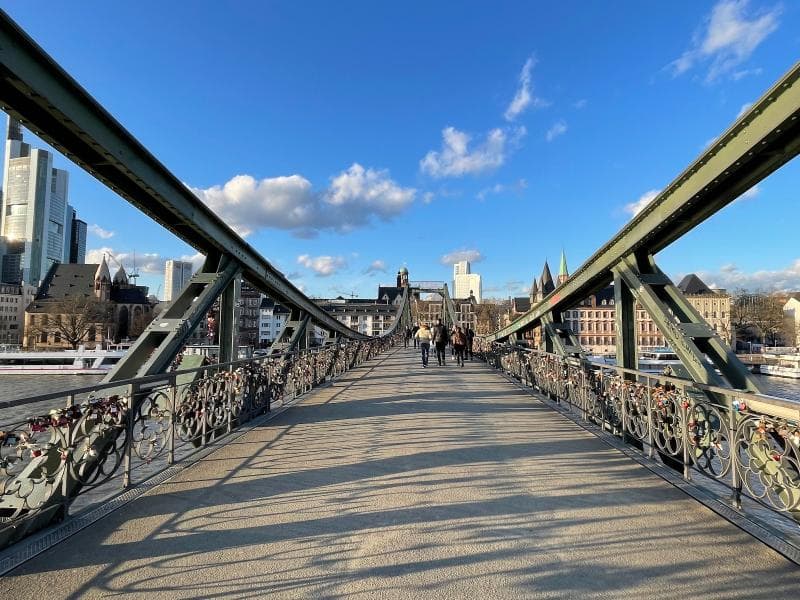
Discover Frankfurt's iconic Eiserner Steg. Enjoy panoramic skyline views and historic charm from this famous pedestrian bridge in Germany.
Overview
The Eiserner Steg, or Iron Footbridge, stands as an iconic pedestrian bridge spanning the Main River in Frankfurt, Germany. It gracefully connects the bustling historic Old Town on the north bank with the vibrant Sachsenhausen district on the south, serving as a crucial artery for daily commuters and curious travelers alike. More than just a crossing, the Eiserner Steg offers some of the most spectacular panoramic vistas of Frankfurt's renowned skyline, affectionately dubbed 'Mainhattan' due to its impressive cluster of skyscrapers.
From its central position over the river, visitors are treated to a dual perspective: the towering modern architecture of the financial district on one side, and the charming, historic buildings of the Old Town, including the Museum Embankment (Museumsufer), on the other. This visual juxtaposition of old and new makes it a prime location for photography, especially as dusk settles and the city lights begin to shimmer on the river's surface.
History & Cultural Background
The story of the Eiserner Steg dates back to 1868 when the first wrought-iron bridge was constructed. This initial structure was a testament to civic initiative, funded by local citizens who sought to alleviate the growing traffic on the city's sole existing bridge over the Main. Its neo-Gothic design quickly made it a distinctive landmark. Over time, as Frankfurt grew, the original bridge was replaced by a slightly larger steel cantilever bridge in 1911-1912, maintaining its elegant aesthetic.
A significant chapter in its history occurred during the final days of World War II when the bridge was deliberately blown up by the Wehrmacht in 1945 to impede Allied forces. However, symbolizing Frankfurt's indomitable spirit and determination to rebuild, the Eiserner Steg was quickly reconstructed in 1946 using its original plans. Further renovations in 1993 modernized the structure, notably adding elevators to ensure accessibility for all, including those with wheelchairs or strollers.
What Makes It Special
Beyond its functional role, the Eiserner Steg is imbued with unique charm and character. It is widely recognized as Frankfurt's 'love lock bridge,' a tradition embraced by countless couples who affix personalized padlocks to its railings as a symbol of their enduring affection, often casting the key into the Main River below. This modern custom transforms the bridge into a living, evolving art installation, radiating romance and personal stories.
Another distinctive feature is the ancient Greek inscription prominently displayed on the bridge. This phrase, borrowed from Homer's Odyssey, translates roughly to 'Sailing across the wine-dark sea to people of another language.' This poetic line is thought to reflect Frankfurt's rich history as a trade hub and a city that embraces diversity, symbolizing journeys and encounters with new cultures.
Stories, Fun Facts & Local Details
The Eiserner Steg has not only served as a critical crossing point but also as a source of artistic inspiration. Renowned Expressionist painters Max Beckmann and Ernst Ludwig Kirchner were among those moved by its striking silhouette, featuring the bridge in some of their works. For many locals, the bridge represents a seamless connection between 'hibb de Bach' (this side of the river, referring to the Old Town) and 'dribb de Bach' (the other side, Sachsenhausen), a colloquialism that highlights its role in daily life.
It's fascinating to recall that, in its earliest days, crossing the bridge required a small toll, a detail that seems quaint in comparison to its current status as a freely accessible public space. The bridge was taken over by the city in 1886, making its crossing free ever since. Today, around 10,000 pedestrians cross the Eiserner Steg daily, making it one of the busiest pedestrian thoroughfares in the city.
Visitor Perspective
For visitors, the Eiserner Steg is a must-see attraction that offers a multifaceted experience. It is easily accessible, located in the heart of Frankfurt and within a short stroll of major landmarks like Römerberg Square and the Museum Embankment. Public transport options, such as the Dom/Römer metro station, are conveniently close.
A leisurely walk across the 170-meter bridge typically takes about 30 to 60 minutes, allowing ample time to soak in the views, observe the myriad 'love locks,' and capture memorable photographs. While the bridge is open 24/7, a visit during weekdays or the early morning/late evening hours might offer a more serene experience, as it can get quite crowded, especially on weekends. From the Eiserner Steg, you can easily venture into Sachsenhausen to explore its traditional apple wine taverns or delve into the cultural treasures along the Museum Embankment.
Coordinates: 8.68214, 50.10805
View on Google Maps💬 How Travelers Describe This Place
Based on community votes
Photogenic
989Must See
791Interesting
613Beautiful
514Unique
207
Traveler Stories
Discover memorable experiences shared by travelers who have visited this place.
No traveler stories yet.
Be the first traveler to share what made this place memorable.

Tour
By
Spot
Discover amazing places around the world. Your journey starts here.
Explore
© 2026 TourBySpot. All rights reserved.