Edinburgh Castle
Edinburgh, United Kingdom
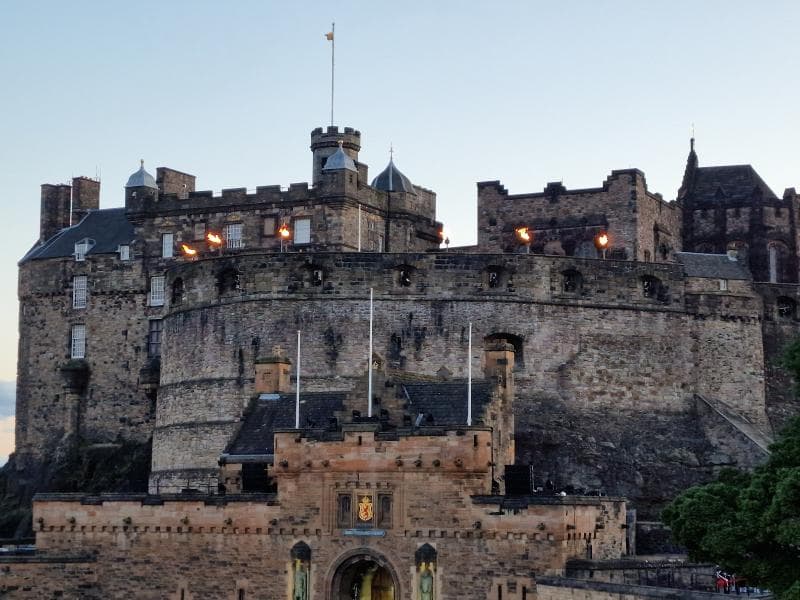
Explore Edinburgh Castle, a historic fortress in Edinburgh, United Kingdom. Discover centuries of Scottish history, royal tales, and iconic landmarks.
Overview
Perched dramatically atop an ancient volcanic crag known as Castle Rock, Edinburgh Castle stands as an enduring symbol of Scotland's rich history and resilience in Edinburgh, United Kingdom. This iconic fortress, visible from many vantage points across the city, has dominated the skyline for centuries, serving as a royal residence, a military stronghold, and a key strategic site. Today, it is one of Scotland's most significant and visited historic attractions, drawing over a million visitors annually and offering a captivating journey through the nation's past.
History & Cultural Background
The story of Edinburgh Castle begins long before its stone walls took shape. The Castle Rock itself is the remnant of an extinct volcano, formed some 350 million years ago, with evidence of human activity dating back at least to the Iron Age, around the 2nd century AD. The Celtic Votadini tribe built a hill fort here around 600 CE. The first known Scottish king to reside at the castle was Malcolm III Canmore in the 11th century. His wife, Queen Margaret, who was later canonised, died at the castle in 1093. St. Margaret's Chapel, built between 1130 and 1140 by her son King David I, remains the oldest surviving building in Edinburgh and within the castle grounds.
Throughout the Middle Ages, Edinburgh Castle was a principal royal castle and a focal point in the Wars of Scottish Independence. It endured numerous sieges and captures between 1296 and 1341, solidifying its reputation as one of the most besieged places in Great Britain, with 26 recorded sieges in its 1,100-year history. While its residential role diminished after the 15th century, particularly after 1603 when the Scottish and English crowns united, it became an increasingly vital military garrison. Many of the present structures date from after the 'Lang Siege' of 1573, when much of the medieval defences were destroyed. The castle continued to serve as a military base through the Jacobite Rebellions and the Napoleonic Wars, housing prisoners of war and maintaining a constant military presence, a role it partially retains today.
What Makes It Special
Edinburgh Castle's unique position on a volcanic rock and its turbulent history are just the beginning of what makes it special. It houses the Honours of Scotland, the oldest Crown Jewels in Britain, consisting of a crown, sceptre, and sword of state, which are a powerful symbol of Scottish sovereignty. Alongside these, you'll find the legendary Stone of Destiny (also known as the Stone of Scone), the ancient coronation seat of Scottish monarchs, returned to Scotland in 1996.
Other highlights include the massive 15th-century siege cannon, Mons Meg, a gift to King James II, and the atmospheric Great Hall, completed in 1511 for James IV, which once hosted grand banquets and state events. The tradition of the One O'Clock Gun, fired daily (except Sundays) from the battlements since 1861, adds a distinctive auditory experience to the city. Beyond these physical treasures, the castle's very fabric whispers tales of kings, queens, battles, and everyday life within its formidable walls, offering panoramic views of Edinburgh that are simply breathtaking.
Stories, Fun Facts & Local Details
The castle grounds are steeped in fascinating stories and local lore. One of the most haunting tales concerns the Lost Piper Boy. Legend has it that when tunnels were discovered beneath the Royal Mile, a young piper was sent to explore, playing his bagpipes so his progress could be tracked. When the music suddenly stopped, he was never seen again, though some claim his ghostly pipes can still be heard. Another spectral resident is the Headless Drummer, whose appearance is said to herald an attack on the castle.
A more somber note is struck by the nearby Witches' Well on the Castle Esplanade, a memorial to the hundreds of people, mostly women, accused of witchcraft and executed in Edinburgh, many of whom were tortured at the castle before being burned at the stake. The castle was also a refuge for Mary, Queen of Scots, who gave birth to her son, James VI (who would later unite the crowns of Scotland and England), within its walls in 1566. Prisoners of war, including those from the American War of Independence and the Napoleonic Wars, were held in the castle dungeons, leaving their mark with carvings on the walls.
Visitor Perspective
To fully appreciate Edinburgh Castle's majesty and delve into its layered history, visitors should allocate at least two hours for their visit, though many find themselves captivated for longer. It is highly recommended to book tickets online in advance to secure the best price and guarantee entry, as the castle is a popular attraction and tickets often sell out, especially during peak seasons. The castle is open daily, typically from 9:30 AM.
For those requiring assistance, the castle offers an access guide, including information on a mobility vehicle to Crown Square and free entry for accompanying carers. However, be prepared for uneven cobbled surfaces and some steep inclines typical of an ancient fortress. Large luggage and rucksacks are not permitted inside the castle for security reasons. Regardless of accessibility needs, the castle provides an immersive experience, inviting you to walk through centuries of Scottish history and enjoy unparalleled views of the city.
Coordinates: -3.20083, 55.94861
View on Google Maps💬 How Travelers Describe This Place
Based on community votes
Must See
787Interesting
748Beautiful
85Unique
73Photogenic
35
Traveler Stories
Discover memorable experiences shared by travelers who have visited this place.
No traveler stories yet.
Be the first traveler to share what made this place memorable.
Things to see at Edinburgh Castle



Tour
By
Spot
Discover amazing places around the world. Your journey starts here.
Explore
© 2026 TourBySpot. All rights reserved.