Stone Of Destiny
Edinburgh, United Kingdom
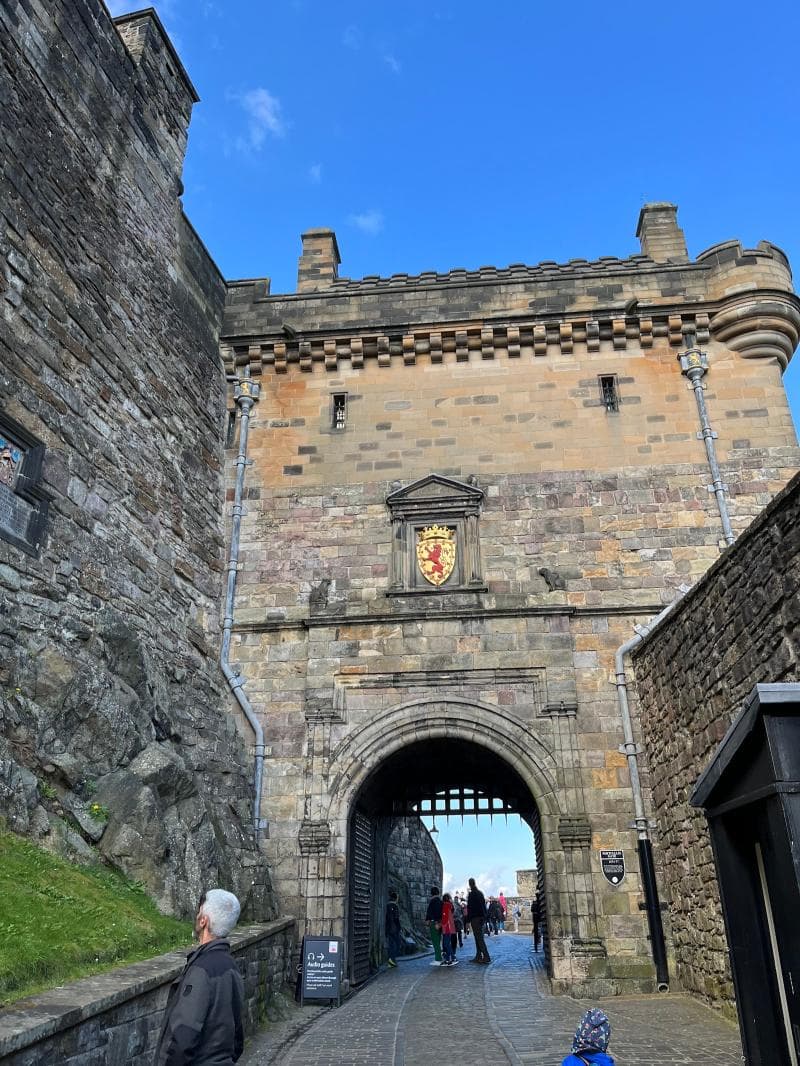
Discover the legendary Stone of Destiny's history and cultural significance. Once at Edinburgh Castle, now at Perth Museum, United Kingdom.
Overview
The Stone of Destiny, often referred to as the Stone of Scone, is an unassuming oblong block of red sandstone, yet it holds immense symbolic power as an ancient emblem of Scottish monarchy and a pivotal artifact in the coronation of British sovereigns. For many years, it was a centerpiece attraction at Edinburgh Castle, drawing visitors from across the globe to witness a tangible piece of history. However, its story is one of movement and significance, recently taking a new turn. As of March 2024, the Stone has returned to its historic homeland in Perthshire, now proudly displayed at the newly opened Perth Museum, making it available for public viewing there for the first time in 700 years.
Despite its recent relocation, its legacy within Edinburgh Castle, where it resided from 1996 until early 2024, remains a significant chapter in its long and storied existence.
History & Cultural Background
The Stone's origins are steeped in legend, with some tales tracing it back to biblical times as Jacob's Pillow, traveling through Egypt, Sicily, Spain, and Ireland before reaching Scotland. Historically, it became the traditional coronation stone for Scottish monarchs, initially used in the inauguration ceremonies of the Scots kings of Dalriada, and later at Scone Abbey near Perth from around 840 AD. Its first documented use for a coronation was for Alexander III in 1249.
A pivotal moment in its history occurred in 1296 when King Edward I of England, known as 'Hammer of the Scots,' seized the Stone as war loot following his victories over the Scots. He transported it to Westminster Abbey in London, where it was incorporated into a specially constructed Coronation Chair. For the next seven centuries, every English, and later British, monarch was crowned sitting upon this chair, with the Stone beneath, symbolizing English dominance. During World War II, it was hidden to protect it from potential damage.
Its dramatic journey continued on Christmas Day 1950 when a group of Scottish students famously 'repatriated' the Stone in a daring heist from Westminster Abbey. After a widespread search, it reappeared in Arbroath Abbey and was subsequently returned to Westminster. In 1996, a significant milestone occurred when the Stone was officially returned to Scotland, marking a moment of historical importance with the opening of the Scottish Parliament. It was then housed in the Crown Room of Edinburgh Castle, alongside the Honours of Scotland, where it remained for nearly three decades.
In 2023, the Stone left Scotland once more, temporarily returning to Westminster Abbey for the coronation of King Charles III, maintaining its ancient role in the monarchical tradition. Following this ceremony, it was returned to Scotland and, in March 2024, moved to its new permanent home at Perth Museum.
What Makes It Special
The Stone of Destiny is far more than just a block of sandstone; it is a profound symbol of Scottish national identity and a unifying element in the United Kingdom's monarchy. Its plain appearance belies a rich tapestry of myths, legends, and historical events that have shaped nations. Geologically, it is a red sandstone, likely quarried near Scone, which lends credence to its Scottish origins despite ancient claims of more exotic provenances. Its continued use in coronations, right up to the present day, underscores its enduring significance as a 'king-making stone.'
Its history of capture, theft, and eventual official return to Scotland makes it a powerful emblem of resilience and sovereignty. It embodies centuries of struggle and cultural pride, resonating deeply with the Scottish people.
Stories, Fun Facts & Local Details
One of the most captivating stories surrounding the Stone is the audacious Christmas Day heist of 1950, when four Scottish university students liberated it from Westminster Abbey. The event, which saw the Stone accidentally break into two pieces during its removal, ignited public debate and captured the imagination of many. Another intriguing aspect is the persistent legend that Edward I may have been tricked, and that the Stone he took to Westminster was a fake, with the true Stone remaining hidden in Scotland.
The Stone is also known by its Gaelic name, 'Lia Fàil,' meaning 'the speaking stone' or 'Stone of Destiny,' with ancient legends suggesting it would cry out to confirm the rightful king. Weighing around 152 kilograms, it is a substantial, yet movable, artifact. Its journey from Scone to Westminster, and then its eventual official return to Scotland in 1996, and now its re-establishment in Perthshire, reflects a continuous narrative of national identity and historical reclamation.
Visitor Perspective
For decades, visitors to Edinburgh Castle could find the Stone of Destiny displayed reverently within the Crown Room, alongside Scotland's magnificent Crown Jewels. It was an impactful experience to see this ancient artifact in such a historic setting, connecting directly to centuries of Scottish and British royal history.
However, as of March 2024, the Stone's home is the new Perth Museum in Perth, Scotland. Visitors eager to witness this iconic piece of history will now need to journey to Perthshire, its ancestral region. The Perth Museum offers a dedicated, immersive experience to tell the complex and mysterious story of the Stone of Destiny. It is available to view for free, and while online pre-booking is no longer required for individuals, time slots can be booked directly on-site. For groups, advance booking is recommended. This new location allows the Stone to be a focal point in a museum specifically designed to highlight Perth and Kinross's central role in Scotland's story, offering a fresh and deeply contextualized perspective on this legendary object.
Coordinates: -3.2003, 55.9487
View on Google Maps💬 How Travelers Describe This Place
Based on community votes
Interesting
965Must See
862Photogenic
629Beautiful
443Unique
184
Traveler Stories
Discover memorable experiences shared by travelers who have visited this place.
No traveler stories yet.
Be the first traveler to share what made this place memorable.

Tour
By
Spot
Discover amazing places around the world. Your journey starts here.
Explore
© 2026 TourBySpot. All rights reserved.