Great Hall
Edinburgh, United Kingdom
Discover the Great Hall, a magnificent 16th-century royal chamber within Edinburgh Castle, Edinburgh, United Kingdom. Explore its rich history, stunning hammer-beam roof, and royal transformations.
Overview
Perched majestically atop Castle Rock, within the ancient walls of Edinburgh Castle, lies the Great Hall – a timeless testament to Scotland's rich royal and military past. This grand chamber, completed in the early 16th century, was once the vibrant heart of royal power, a stage for lavish banquets, state ceremonies, and significant gatherings. Today, it stands as a meticulously restored monument, inviting visitors to step back in time and imagine the echoes of kings, queens, and courtly life. Its enduring presence within one of Scotland's most iconic landmarks makes it a must-see for anyone exploring the historical layers of Edinburgh.
As you enter, the sheer scale and architectural splendour immediately captivate, with its famed hammer-beam roof soaring above. The hall's formidable walls, now adorned with historical weaponry, speak of centuries of transformation, from a royal banqueting hall to a soldiers' barracks and a military hospital. Its story is intrinsically linked with the castle's own tumultuous history, offering a microcosm of Scotland's journey through periods of grandeur, conflict, and eventual restoration.
History & Cultural Background
The Great Hall was originally constructed between 1509 and 1511 for King James IV. Its creation marked a period of architectural ambition, with the hall designed to host grand state occasions, feasts, and royal events. Sadly, King James IV had little time to fully enjoy his magnificent new addition to the castle. He was tragically killed at the Battle of Flodden in 1513, fighting the forces of his brother-in-law, King Henry VIII of England, just a few years after the hall's completion.
Throughout the centuries, the hall witnessed considerable changes reflecting the shifting fortunes of Scotland. While it hosted formal state occasions, such as during King Charles I's coronation visit in 1633, its regal purpose was often interrupted. A significant shift occurred in 1650 when Oliver Cromwell's army captured the castle, leading to the Great Hall's crude conversion into a military barracks. This transformation was further solidified in 1737, when it was more permanently fitted out to accommodate over 300 men across three floors. From 1800 to 1887, the building served a different role entirely, functioning as the military hospital for the castle garrison.
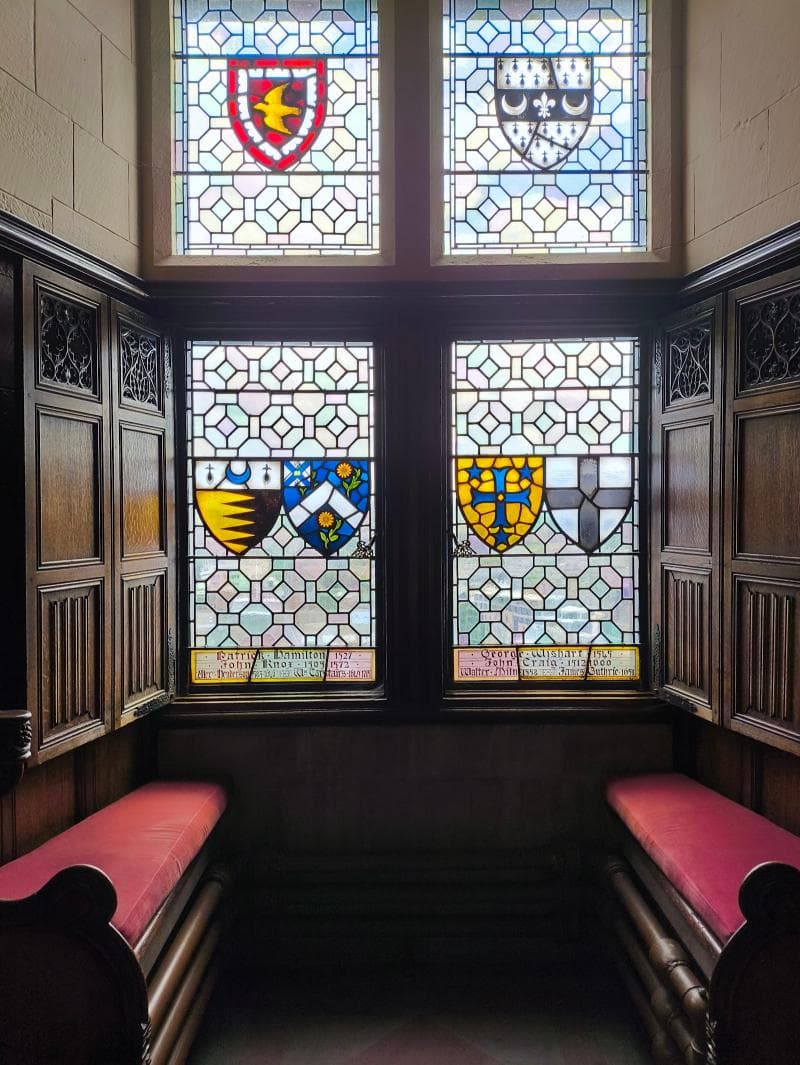
Its return to its medieval glory came with a major restoration between 1887 and 1891, meticulously undertaken by architect Hippolyte Jean Blanc. While much of the interior elements visible today, like the paved floor, panelled walls, and stained-glass windows, date from this Victorian restoration, the truly original and iconic hammer-beam roof largely survived these changes.
What Makes It Special
Without doubt, the most striking feature of the Great Hall is its magnificent hammer-beam roof. This masterpiece of medieval craftsmanship is one of only two late medieval roofs of its kind remaining in Scotland. Adorned with intricate carvings, including the royal cipher and remarkable Italianate Renaissance imagery, it stands as one of the earliest examples of Italian-inspired architecture built in the British Isles. Gazing up at its soaring oak beams, one can appreciate the artistry and engineering that went into its construction over 500 years ago.
Beyond its architectural grandeur, the Great Hall's specialness lies in its enduring connection to Scottish royalty and history. It's a space that has witnessed centuries of power, politics, and the daily lives of those who resided within the castle walls. The current displays of historic weapons and armour, including formidable pole arms like the Lochaber axe, evoke its military past and the castle's role as a formidable stronghold.
Stories, Fun Facts & Local Details
The Great Hall holds some fascinating secrets and anecdotes. Imagine the lavish feasts that once filled this hall, though James IV's enjoyment was tragically short-lived. A particularly intriguing detail is the small 'spy hole' located high above the fireplace. Legend suggests that King James VI (later James I of England) would use this hidden vantage point to secretly eavesdrop on conversations taking place below, perhaps gaining valuable insights into courtly intrigues or simply satisfying his curiosity.
Today, the Great Hall continues to be a vibrant space, used for important state occasions and government functions, particularly since World War II. This demonstrates its continued significance as a venue of national importance, blending its ancient heritage with contemporary purpose. It serves as a living record, not just of war and peace, but also of the craftsmanship and enduring majesty of Scotland's past.
Visitor Perspective
Visiting the Great Hall offers a powerful immersive experience into Scotland's past. As you walk across the historic paved floors and beneath the ancient hammer-beam roof, it's easy to picture the scenes of royal revelry and solemn statecraft that once unfolded here. The sense of history is palpable, creating a profound connection to the figures who once walked these very same steps.
The display of historical artifacts, particularly the diverse collection of weapons and armour, adds another layer to the narrative, reminding visitors of the castle's martial history. Guests can admire the intricate details of the roof and the stained-glass windows, some of which depict Scottish monarchs. Stepping into this space, located in the heart of Crown Square, truly allows you to feel the pulse of Edinburgh Castle's storied past and appreciate its architectural and historical significance firsthand.
Coordinates: -3.200833, 55.948611
View on Google Maps💬 How Travelers Describe This Place
Based on community votes
Must See
569Unique
476Interesting
465Photogenic
276Beautiful
128
Traveler Stories
Discover memorable experiences shared by travelers who have visited this place.
No traveler stories yet.
Be the first traveler to share what made this place memorable.

Tour
By
Spot
Discover amazing places around the world. Your journey starts here.
Explore
© 2026 TourBySpot. All rights reserved.