Copernicus Science Centre
Warsaw, Poland
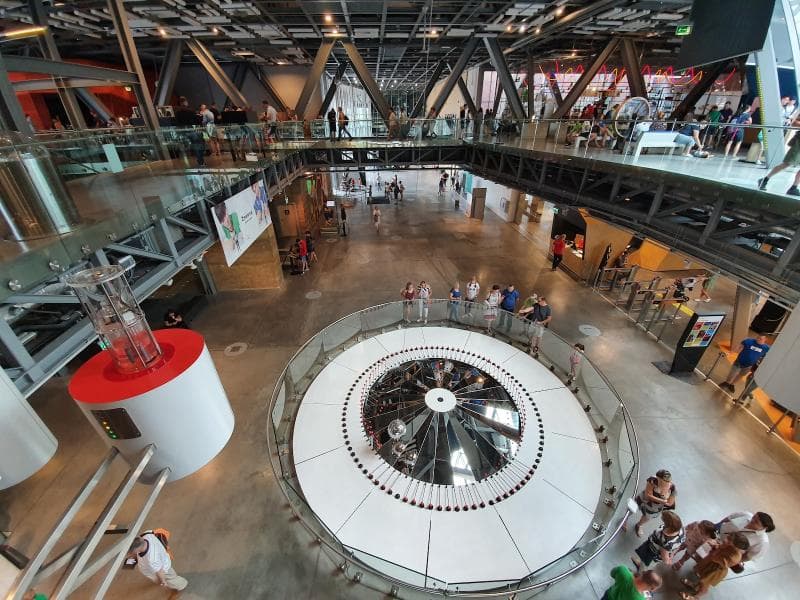
Explore the Copernicus Science Centre in Warsaw, Poland – Europe's leading interactive science museum with over 450 hands-on exhibits, a planetarium, and a rooftop garden. Ignite your curiosity!
Overview
The Copernicus Science Centre, known locally as Centrum Nauki Kopernik, is an innovative and highly interactive science museum situated on the picturesque bank of the Vistula River in Warsaw, Poland. It stands as the largest institution of its kind in Poland and is recognized as one of the most advanced science centers across Europe. More than just a traditional museum, it is a dynamic space designed to inspire visitors of all ages to observe, experiment, ask questions, and seek answers through hands-on engagement with scientific principles. With over 450 interactive exhibits spread across a vast 15,000 square meters, alongside a state-of-the-art planetarium and a seasonal rooftop garden, the Centre encourages active learning and curiosity.
Since its opening, the Copernicus Science Centre has become a cornerstone of Warsaw's cultural and educational landscape, drawing millions of visitors who come to explore various scientific disciplines. Its mission is to help people understand the world around them and to foster an appreciation for science's role in shaping a better future.
History & Cultural Background
The concept for a major interactive science center in Warsaw emerged in the late 1990s, aiming to modernize Poland's cultural infrastructure. Established in June 2005, the Copernicus Science Centre officially opened its doors to the public on November 5, 2010. The striking contemporary building, designed by young Polish architects from RAr-2 in collaboration with Estudio Barozzi Veiga, integrates seamlessly into the riverside cultural precinct. The Centre is named in honor of Nicolaus Copernicus, the renowned Polish Renaissance astronomer whose heliocentric model revolutionized our understanding of the cosmos.
This dedication to Copernicus underscores Poland's pride in its scientific heritage and its commitment to fostering a spirit of inquiry and discovery. The project received significant support from the City of Warsaw and the Polish Ministry of Science and Higher Education, quickly becoming one of the most visited cultural institutions in the country. The Planetarium, known as 'The Heavens of Copernicus,' opened shortly after the main exhibition in 2011, further expanding the Centre's offerings.
What Makes It Special
The Copernicus Science Centre distinguishes itself through its profound emphasis on interactive, hands-on learning. Instead of glass-encased displays, visitors encounter experimental stations where they are encouraged to touch, manipulate, and activate exhibits to discover scientific laws for themselves. The permanent exhibition features over 400 interactive displays across six thematic zones, covering diverse fields like physics, biology, chemistry, computer science, environmental sciences, and even human perception.
Key attractions include the 'Experimental Zone,' 'Buzzz!' for younger children, and 'The Future is Today' exhibition, which delves into contemporary challenges and showcases cutting-edge robotics and AI. The Planetarium offers immersive shows on a spherical screen, transporting audiences to the far reaches of the cosmos or exploring the depths of volcanoes. Furthermore, the free rooftop garden, accessible from May through October, provides panoramic views of Warsaw's skyline, the Vistula River, and the National Stadium, doubling as an outdoor science park during warmer months.
Stories, Fun Facts & Local Details
One of the most remarkable initiatives associated with the Copernicus Science Centre is the annual Science Picnic (Piknik Naukowy), organized in collaboration with Polish Radio since 2008. This event has grown into Europe's largest outdoor science popularization event, inspiring similar initiatives globally and fostering a broad community of science communicators. The Centre also offers 'Lates,' adults-only evening sessions where visitors aged 18 and above can explore the exhibits in a more relaxed atmosphere.
The Centre's design ethos promotes curiosity over rigid instruction, encouraging visitors to embrace experimentation without fear of 'making a mistake.' This philosophy is supported by 'Explainers' – staff members in red t-shirts – who are available to answer questions and provide context, enhancing the learning experience. The architecture itself is a detail of note; the building sits on the Vistula riverbank, near the 'Centrum Nauki Kopernik' metro station, which is literally named after the Centre, making it highly accessible.
Visitor Perspective
Visitors typically recommend allocating at least three to five hours to fully experience the Copernicus Science Centre, especially if including a Planetarium show or exploring the rooftop garden and Discovery Park. It is particularly appealing for families with children aged 5 to 15, though adults without children also find plenty to engage with. Due to its popularity, purchasing tickets online in advance is highly advisable, particularly for weekends and school holidays. The Centre is fully barrier-free, with step-free access, accessible toilets, and elevators, and even offers 'Quiet Hours' for sensory-sensitive individuals. Photography is generally allowed, capturing the vibrant atmosphere of discovery.
Coordinates: 21.0285, 52.2418
View on Google Maps💬 How Travelers Describe This Place
Based on community votes
Unique
972Interesting
787Must See
726Beautiful
720Photogenic
85
Traveler Stories
Discover memorable experiences shared by travelers who have visited this place.
No traveler stories yet.
Be the first traveler to share what made this place memorable.
Things to see at Copernicus Science Centre



Tour
By
Spot
Discover amazing places around the world. Your journey starts here.
Explore
© 2026 TourBySpot. All rights reserved.