Robotics Exhibits
Warsaw, Poland
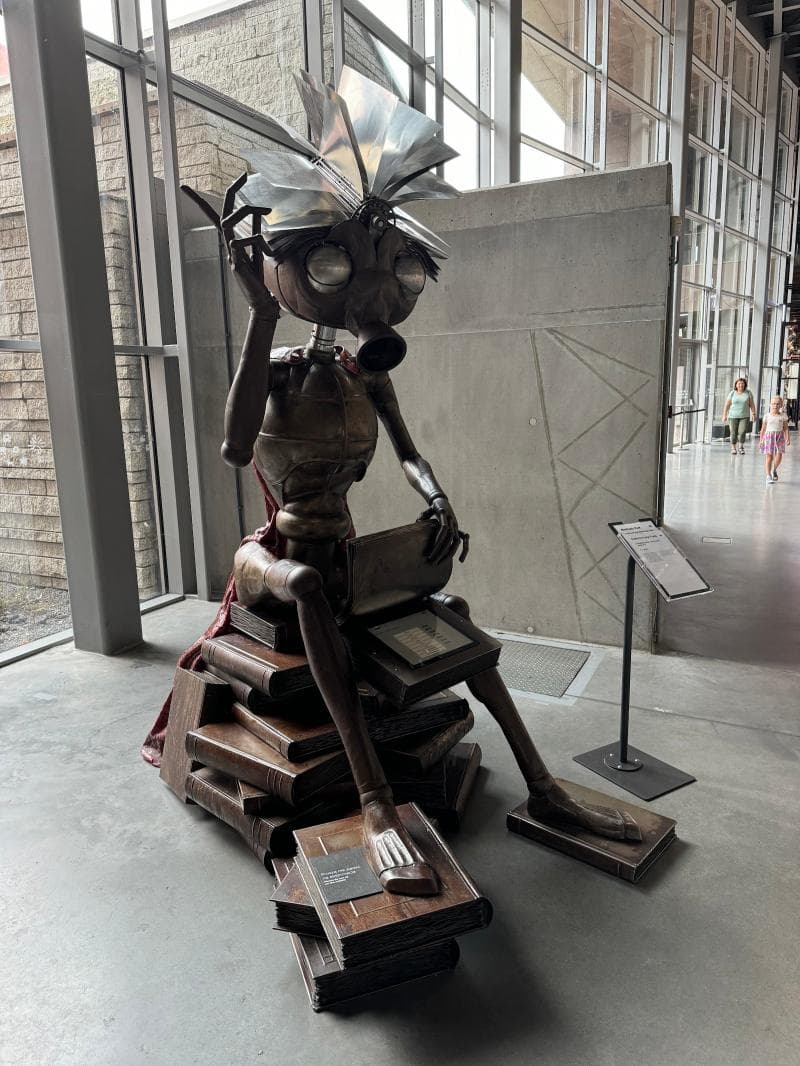
Explore the Robotics Exhibits at the Copernicus Science Centre in Warsaw, Poland. Discover interactive humanoids, robotic theatre, and advanced AI.
Overview
The Copernicus Science Centre in Warsaw, Poland, is not merely a museum but a vibrant hub of interactive discovery, inviting visitors of all ages to engage directly with scientific principles. Situated on the picturesque bank of the Vistula River, this expansive institution spans 15,000 square meters and houses over 450 hands-on exhibits. It stands as Poland's largest science center and one of Europe's most advanced, encouraging active participation rather than passive observation. Among its most captivating areas are the Robotics Exhibits, where the fascinating world of artificial intelligence and automated mechanics comes to life through a diverse 'robotic family' and unique performances.
These exhibits offer a unique opportunity to interact with advanced machines, from conversational humanoids to performing robot actors, exploring the capabilities and implications of modern robotics. The center's philosophy eschews the traditional 'do not touch' approach, instead fostering an environment where curiosity is sparked through direct engagement with technology.
History & Cultural Background
The Copernicus Science Centre first opened its doors on November 5, 2010, with a clear mission to present science and research in an accessible and engaging manner, aiming to ignite curiosity and inspiration in its visitors. Named in honor of Nicolaus Copernicus, the renowned Polish astronomer whose groundbreaking work challenged existing perceptions of the universe, the center embodies a spirit of discovery and intellectual courage. This cultural dedication to scientific advancement is deeply woven into the fabric of the robotics exhibits.
The concept of robots themselves draws inspiration from historical visionaries like Leonardo da Vinci and Nikola Tesla, reflecting humanity's long-standing fascination with creating intelligent machines. The center's own robotic lineage began early; Robothespian, one of its oldest humanoid robots, arrived the same year the center opened. This integration of historical context with cutting-edge technology highlights the continuous evolution of robotics, from early sketches to sophisticated AI-driven beings.
What Makes It Special
The Robotics Exhibits at the Copernicus Science Centre are distinguished by their extraordinary interactivity and the diversity of their 'robotic family.' Visitors are not just observers but active participants in understanding the latest technological achievements.
- Interactive Robots: The exhibits feature several unique robots designed to engage and provoke thought.
- Robothespian: As the center's oldest humanoid, Robothespian, serial number 0001 from Engineered Arts, still greets visitors with precise movements, expressive LCD-screen eyes, and the ability to convey emotions.
- Robot Kopernik: This impressive humanoid, bearing the face of Nicolaus Copernicus, stands 190 cm tall and utilizes a full GPT-3 language model with 175 billion parameters, allowing for intelligent and extensive conversations on virtually any topic. It exemplifies the current frontier of AI in human interaction.
- Ameca: An advanced humanoid robot, Ameca, created by British company Engineered Arts, captivates with its remarkably realistic facial expressions, achieved through 61 actuators (27 in its face). It can hold intelligent conversations, offering a glimpse into the future of human-robot communication.
- Babyclon: A highly realistic robotic infant, Babyclon is specifically designed to elicit the 'uncanny valley' effect, prompting visitors to reflect on their emotional responses to human-like robots and challenging their perceptions of artificial life.
- Robotic Theatre: A truly unique attraction, the Robotic Theatre is the only one of its kind in Poland. Here, RoboThespian actors perform captivating plays, including adaptations of stories by science fiction master Stanisław Lem. These humanoids move with compressed air, speak multiple languages, and are capable of expressing a wide range of emotions, offering an artistic dimension to robotics.
- 'The Future Is Today' Exhibition: Many of these advanced robots are part of this thought-provoking exhibition, which delves into the challenges and opportunities presented by artificial intelligence, exploring its ethical implications and impact on society and the environment.
Stories, Fun Facts & Local Details
Beyond the impressive technology, the Robotics Exhibits are rich with engaging stories and intriguing facts. For instance, the original Robothespian is not just any robot; it carries the unique serial number '0001' from its manufacturer, Engineered Arts, marking it as a pioneer in humanoid design. The Robot Kopernik's conversational prowess comes from a GPT-3 model with a staggering 175 billion parameters, far surpassing many commonly known AI models, showcasing a true leap in artificial intelligence capabilities.
The Robotic Theatre's performers, also built by Engineered Arts, demonstrate how engineering and art can converge, bringing narratives to life in a way impossible for human actors. Their performances, often adapting works by local literary giants like Stanisław Lem, add a distinctly Polish cultural touch to the robotic experience. This blend of cutting-edge technology with thoughtful narrative challenges visitors to consider the deeper cultural and philosophical questions surrounding robotics. The center even organized the Science Picnic, Europe's largest outdoor science popularization event, highlighting its commitment to making science engaging for everyone.
Visitor Perspective
A visit to the Robotics Exhibits offers more than just a glance at machines; it's an invitation to a hands-on journey of discovery. The interactive nature of the displays ensures that learning is an active process, appealing to curious minds of all ages. Children and adults alike find themselves pushing buttons, engaging in conversations with AI, and observing robot performances, fostering a direct connection with scientific concepts.
The experience is designed to be thought-provoking, especially when encountering robots like Babyclon, which can trigger the 'uncanny valley' effect, prompting introspection on human-robot relationships and the future of artificial companionship. The exhibits challenge visitors to observe, experiment, and critically consider the world of technology, leaving them not only entertained but also with a deeper understanding of how robotics shapes our present and future.
Coordinates: 21.028545, 52.241809
View on Google Maps💬 How Travelers Describe This Place
Based on community votes
Must See
853Unique
639Interesting
569Photogenic
128Beautiful
93
Traveler Stories
Discover memorable experiences shared by travelers who have visited this place.
No traveler stories yet.
Be the first traveler to share what made this place memorable.

Tour
By
Spot
Discover amazing places around the world. Your journey starts here.
Explore
© 2026 TourBySpot. All rights reserved.