Interactive Labs
Warsaw, Poland
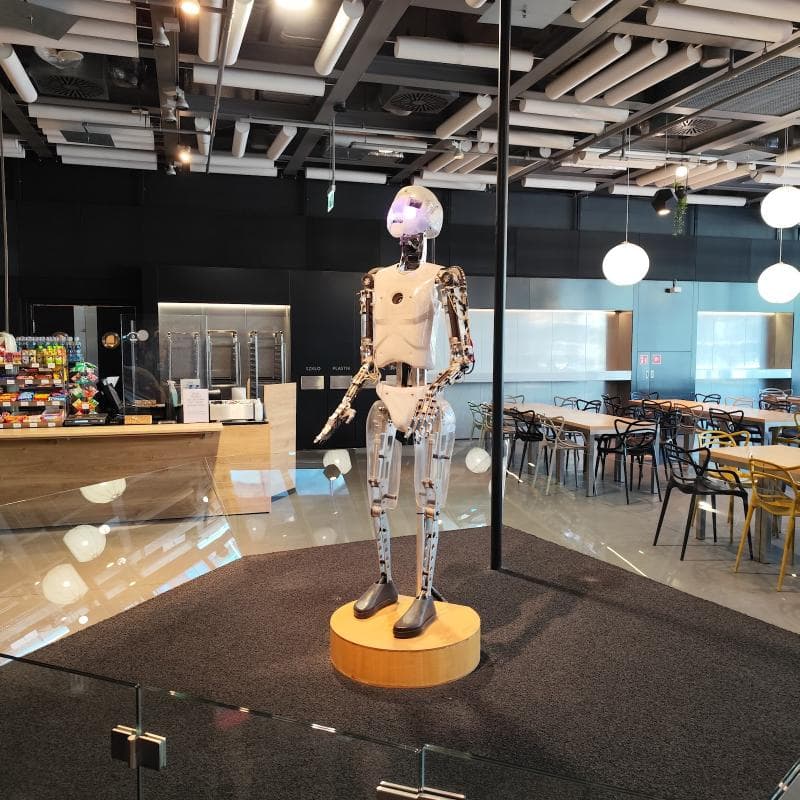
Explore the Interactive Labs at Copernicus Science Centre in Warsaw, Poland. Engage in hands-on chemistry, biology, physics, and robotics experiments.
Overview
Nestled on the banks of the Vistula River in Warsaw, Poland, the Copernicus Science Centre stands as a beacon of interactive learning, inviting visitors of all ages to unravel the mysteries of the universe through hands-on discovery. Beyond its sprawling main exhibition halls, the centre offers a deeper dive into scientific exploration within its specialized 'Interactive Labs' (Laboratoria). These dedicated spaces provide a unique opportunity to engage with scientific principles in a more structured, experimental setting, distinct from the broader, open-ended exhibits found elsewhere in the facility.
The Interactive Labs are equipped with professional scientific apparatus, allowing budding scientists and curious minds alike to conduct actual experiments in fields such as chemistry, biology, physics, and robotics. This approach transforms passive observation into active participation, fostering a profound connection with scientific inquiry.
History & Cultural Background
The Copernicus Science Centre, known locally as Centrum Nauki Kopernik, officially opened its doors on November 5, 2010, though the idea for such an institution dates back to the late 1990s. Its establishment was a significant step in modernizing Poland's cultural and educational infrastructure, driven by a desire to popularize science and encourage critical thinking.
Named after Poland's renowned astronomer Nicolaus Copernicus, the centre embodies his spirit of discovery and inquiry. The interactive laboratories were a key component of the centre's phased development, with the chemistry, biology, and physics laboratories, along with a robotics workshop, launching in late 2011. This rapid expansion underscored the centre's commitment to providing comprehensive and immersive scientific education, making it one of the most advanced science centres in Europe.
What Makes It Special
What truly sets the Interactive Labs apart within the Copernicus Science Centre is their emphasis on direct, in-depth experimentation. Unlike the general exhibition zones where visitors interact with pre-designed displays, the laboratories offer a more authentic scientific experience. Here, under the guidance of skilled educators, individuals can use professional equipment to conduct experiments, analyze data, and draw conclusions, mirroring the work of actual scientists.
The labs' scenarios are dynamic, evolving to present fresh challenges and insights into various phenomena. For instance, the Planet Education Lab delves into pressing topics like climate change, biodiversity, and human well-being, offering activities such as analyzing urine samples or exploring the senses. The Robotics Lab, on the other hand, immerses participants in the world of mechanical ingenuity and programming. This hands-on approach cultivates not only knowledge but also essential scientific skills like observation, critical thinking, and problem-solving.
Stories, Fun Facts & Local Details
One of the delightful aspects of the Interactive Labs is how they transform abstract scientific concepts into tangible experiences. Visitors can delve into intriguing questions, like whether it's truly possible to 'break someone's heart' in the Planet Education Lab, or discover surprising facts, such as how stick insects manage to be not so scary after all.
While the main exhibition caters to all ages, the laboratories are specifically designed for a slightly older audience, typically recommended for those aged nine and above. This ensures that participants can fully grasp the experimental procedures and scientific principles involved. Interestingly, children aged thirteen and older are permitted to enter the labs unsupervised, a testament to the trust placed in their independent learning capabilities. Younger children, however, require adult supervision, maintaining a healthy balance between autonomy and guidance.
Visitor Perspective
For a curious traveler, a visit to the Interactive Labs offers an unparalleled opportunity to transcend the typical museum experience. It is a chance to step into the shoes of a scientist, to grapple with real-world questions, and to feel the thrill of discovery firsthand. While weekdays are often reserved for school groups, individual visitors can immerse themselves in these experimental environments during weekends, public holidays, and school breaks.
Due to the interactive nature and the use of specialized equipment, access to the labs is often limited to smaller groups, typically around sixteen people at a time, ensuring a personalized and effective learning environment. It's advisable to check the centre's daily schedule and arrive early, as entry is usually on a first-come, first-served basis. The Labs provide a unique complement to the broader exhibitions, offering a deeper, more focused engagement that can spark a lifelong passion for science and understanding the world around us.
Coordinates: 21.0265, 52.2419
View on Google Maps💬 How Travelers Describe This Place
Based on community votes
Beautiful
853Interesting
639Photogenic
569Must See
190Unique
93
Traveler Stories
Discover memorable experiences shared by travelers who have visited this place.
No traveler stories yet.
Be the first traveler to share what made this place memorable.

Tour
By
Spot
Discover amazing places around the world. Your journey starts here.
Explore
© 2026 TourBySpot. All rights reserved.