Central Park
New York, United States
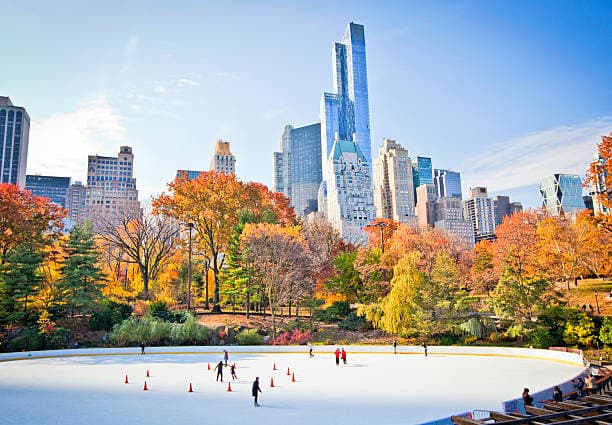
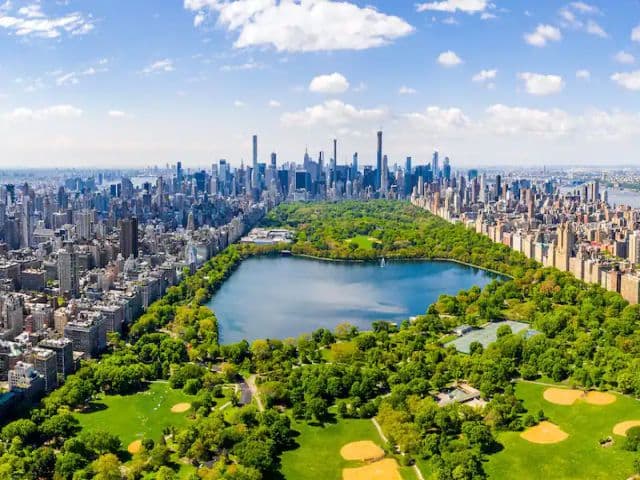
Discover Central Park, New York, United States: a magnificent urban oasis spanning 843 acres with rich history, iconic landmarks, and vibrant culture.
Overview
Central Park, nestled in the heart of Manhattan, New York City, is not just a park; it's a sprawling 843-acre urban oasis, a testament to visionary landscape architecture, and a vibrant cultural hub. It serves as a vital green lung for the city, offering millions of residents and visitors a serene escape from the urban hustle. Encompassing an area larger than the country of Monaco, this iconic park is bounded by 59th Street to the south, 110th Street to the north, Fifth Avenue to the east, and Central Park West (Eighth Avenue) to the west. With an estimated 42 million visitors annually, Central Park stands as the most visited urban park in the United States and one of the world's most famous.
Designed to provide a pastoral retreat, the park features a diverse array of landscapes, including picturesque woodlands, sweeping lawns, tranquil lakes, and meandering streams. It's an intricate tapestry of natural beauty and meticulously crafted design, providing endless opportunities for exploration and recreation.
History & Cultural Background
The creation of Central Park was a monumental undertaking, born from the mid-19th century realization that New York City, experiencing rapid population growth and increasing urbanization, needed a large public green space. In 1853, the state legislature approved the purchase of over 750 acres of land. This area was far from ideal; it was rocky, swampy, and home to small farms and settlements, including the predominantly African-American community of Seneca Village, whose residents were displaced through eminent domain to make way for the park.
A design competition was held, and in 1858, the 'Greensward Plan' by landscape architect Frederick Law Olmsted and architect Calvert Vaux was selected. Their vision was to create a democratic space, accessible to people of all backgrounds, offering an experience of the countryside within the city. Construction began in 1857 and involved moving millions of cubic feet of soil and rock, planting over 270,000 trees and shrubs, and building innovative features like sunken transverse roads to separate pedestrian and vehicular traffic. By 1876, most of the park was completed, becoming the first artificially landscaped public park in the United States and a masterpiece of landscape architecture.
What Makes It Special
Central Park's enduring allure lies in its masterful blend of natural beauty and innovative design. It was the first park in the US to be artificially landscaped, setting a precedent for urban park development nationwide. Olmsted and Vaux meticulously transformed uneven terrain into a harmonious space, making it appear as untouched nature despite being entirely man-made. The park boasts nearly 50 fountains, monuments, and sculptures, alongside 36 unique bridges and arches. Its design ingeniously separates various types of traffic, allowing visitors to immerse themselves in nature without interruption.
Beyond its aesthetic appeal, Central Park is a hub of recreation and culture, featuring everything from baseball fields and tennis courts to ice skating rinks and performance spaces like the Delacorte Theater. It hosts countless cultural events, concerts, and public celebrations, making it a vibrant community gathering place. Its thoughtful design and careful management by the Central Park Conservancy since 1998 ensure its preservation and continued relevance.
Stories, Fun Facts & Local Details
- Central Park is home to over 18,000 trees, which collectively absorb over 48 pounds of carbon dioxide annually, converting it into oxygen and helping to cool the city.
- The park's 843 acres are larger than the entire country of Monaco and nearly three times the size of Vatican City.
- You can adopt a park bench in Central Park through a program started by the Central Park Conservancy. For a donation, a custom plaque with a message of your choosing is installed. Around 7,000 of the park's 10,000 benches have been adopted.
- Many glacial landforms are visible throughout the park, including Umpire Rock, which is said to have formed 450 million years ago.
- The park features several famous landmarks, including Bethesda Terrace and Fountain, Bow Bridge, and Belvedere Castle, a 'beautiful view' in Italian, offering stunning vistas. Strawberry Fields, a quiet tribute to John Lennon, is another poignant spot.
- The Arsenal, an 1848 building predating the park's creation, still stands today and was incorporated into the Greensward Plan for museum space.
Visitor Perspective
Exploring Central Park offers a uniquely New York experience. Whether you seek quiet contemplation or energetic activity, the park caters to all. You can spend hours wandering its 58 miles of winding pathways, discovering hidden gems, or simply relaxing on the Great Lawn or Sheep Meadow. Popular activities include boating on the lakes, ice skating in winter, visiting the Central Park Zoo, or catching a performance at the Delacorte Theater.
For first-time visitors, walking tours or self-guided routes are excellent ways to see key attractions like Bethesda Terrace, Bow Bridge, and Belvedere Castle. The park is open daily from 6:00 a.m. to 1:00 a.m. The best times to visit are often spring or fall for pleasant weather and to avoid the largest crowds. While walking through, remember that Central Park is managed by the Central Park Conservancy, a non-profit organization dedicated to its care and preservation, working in partnership with the NYC Department of Parks and Recreation.
Coordinates: -73.9655834, 40.7825547
View on Google Maps💬 How Travelers Describe This Place
Based on community votes
Unique
623Photogenic
545Interesting
343Beautiful
302Must See
88
Traveler Stories
Discover memorable experiences shared by travelers who have visited this place.
No traveler stories yet.
Be the first traveler to share what made this place memorable.
Things to see at Central Park



Tour
By
Spot
Discover amazing places around the world. Your journey starts here.
Explore
© 2026 TourBySpot. All rights reserved.