The Mall and Literary Walk
New York, United States
Discover The Mall and Literary Walk in Central Park, New York, United States. Explore its history, iconic elm canopy, and statues of literary legends.
Overview
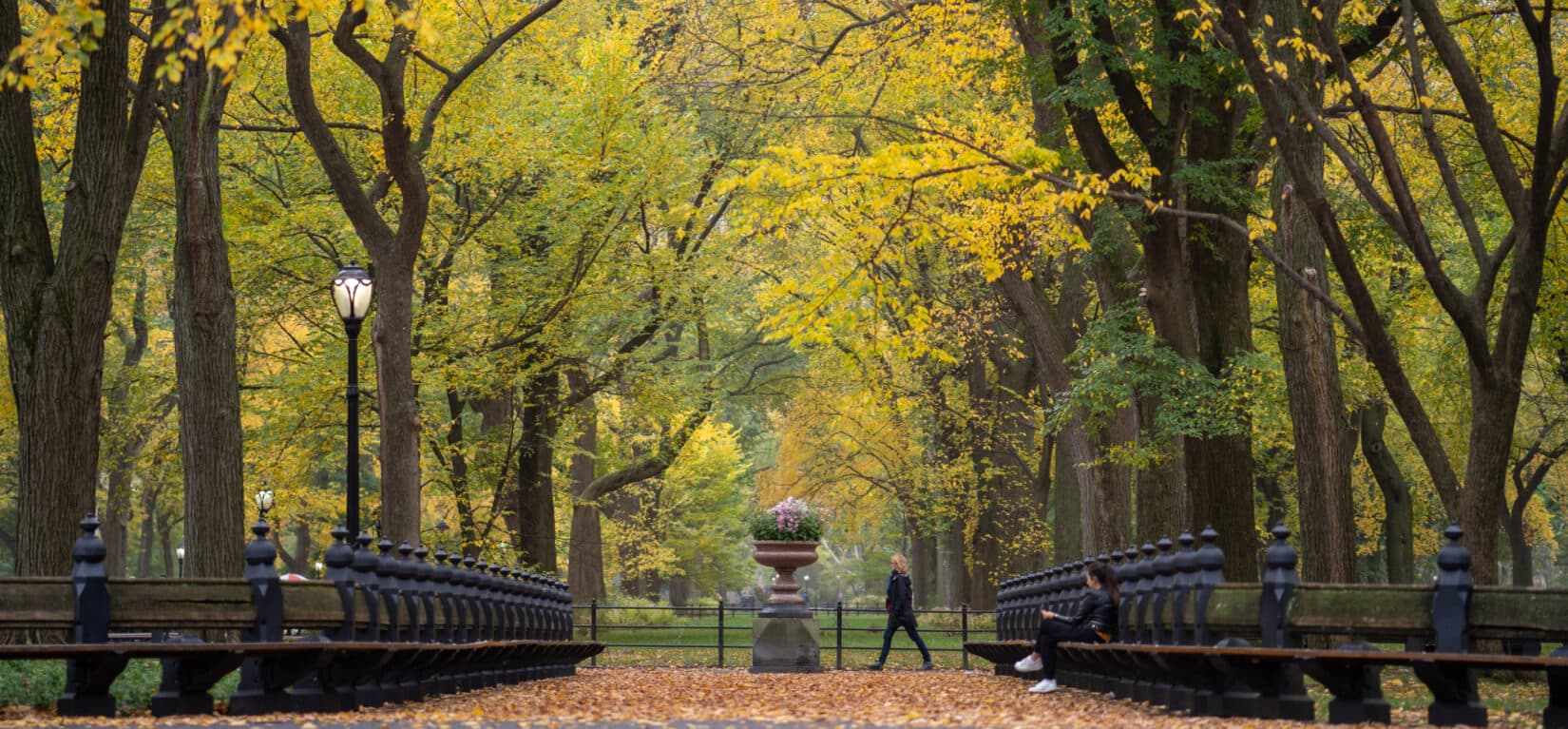
The Mall and Literary Walk, nestled within the sprawling landscape of Central Park in New York, United States, stands as a distinctive and beloved promenade. Unlike many of the Park's winding paths, The Mall is a broad, straight esplanade, stretching over 1,500 feet from approximately 66th Street to 72nd Street, culminating at the grand Bethesda Terrace. Its most striking feature is the majestic canopy formed by a double-row of American elm trees, creating an almost cathedral-like ceiling overhead. This iconic pathway serves as a central artery for leisurely strolls, people-watching, and cultural appreciation. The southern section, famously known as Literary Walk, is adorned with statues commemorating celebrated literary figures, alongside other significant monuments.
History & Cultural Background
The Mall's origins trace back to the foundational 'Greensward Plan' of 1858, conceived by Central Park's visionary designers, Frederick Law Olmsted and Calvert Vaux. They envisioned this space as an 'open-air hall of reception' and a 'grand promenade,' drawing inspiration from the formal allées of prominent European parks like Versailles. It was intentionally designed as one of the very few straight paths within the otherwise naturalistic park, providing a formal element amidst the curvilinear landscapes. Historically, The Mall was a vibrant social hub where New Yorkers from various social strata, particularly the elite in their 'Sunday best,' would gather to see and be seen. Carriages would drop off passengers at the southern end, allowing them to stroll the promenade before being picked up near Bethesda Terrace. Early efforts to plant large American elms faced challenges, but subsequent plantings in the early 20th century established the magnificent arboreal tunnel visitors experience today.
What Makes It Special
The Mall's unique architectural quality, primarily defined by its living canopy of American elm trees, truly sets it apart. These elms, carefully maintained by the Central Park Conservancy, constitute one of the largest and last remaining collections of American elms globally, a testament to ongoing conservation efforts against Dutch elm disease. As visitors proceed along The Mall, they encounter the renowned Literary Walk, a collection of statues dedicated predominantly to writers. These include William Shakespeare, Robert Burns, Sir Walter Scott, and Fitz-Greene Halleck, each honoring their significant contributions to literature. Christopher Columbus also stands among them, often noted as the 'odd man out' given his non-literary background. In a notable addition in 2020, the Women's Rights Pioneers Monument, featuring Sojourner Truth, Susan B. Anthony, and Elizabeth Cady Stanton, became the first new monument in the Park in over 50 years to honor non-fictional women. At the northern end lies the Naumburg Bandshell, an elegant neo-classical structure that continues to host free outdoor classical music concerts, preserving a long-standing tradition of public musical enjoyment.
Stories, Fun Facts & Local Details
The creation of Literary Walk was not without debate; Central Park's designers, Olmsted and Vaux, initially opposed peppering the park's naturalistic design with statuary. However, public pressure to memorialize cultural heroes eventually led to its establishment. The statue of Fitz-Greene Halleck, an American poet known for his satirical and romantic verse, was notably the first monument to an American writer placed in the Park, with President Rutherford B. Hayes attending its unveiling in 1877. The enduring presence of the American elms speaks to a continuous battle against environmental threats, where the Central Park Conservancy's arborists diligently monitor and treat the trees to preserve this cherished urban forest. Beyond its historical significance, The Mall remains a vibrant contemporary space, frequently hosting street performers, artists sketching portraits, and musicians, adding to the dynamic tapestry of daily park life. The paving stones at the southern end of Literary Walk even commemorate specific trees endowed throughout the park, a subtle yet touching detail for those who look closely.
Visitor Perspective
For any traveler exploring New York City, a journey along The Mall and Literary Walk is an essential experience that offers a profound connection to the city's past and present. It's a place to slow down, breathe, and immerse oneself in the elegant blend of nature and culture. Visitors can leisurely wander beneath the towering elms, feeling the embrace of the 'living cathedral,' just as New Yorkers have done for over a century. The statues along Literary Walk invite contemplation and reflection on the giants of literature and the pioneers of social change. Whether you are observing the diverse crowd, enjoying a spontaneous musical performance near the Bandshell, or simply finding a bench to absorb the atmosphere, The Mall provides a unique vantage point into the heart of Central Park. It embodies the democratic ideal of the Park, offering a shared, beautiful public space for everyone to enjoy, connecting the park's southern entrances with the iconic Bethesda Terrace to the north.
Coordinates: -73.9683, 40.7851
View on Google Maps💬 How Travelers Describe This Place
Based on community votes
Must See
569Unique
476Interesting
465Photogenic
276Beautiful
128
Traveler Stories
Discover memorable experiences shared by travelers who have visited this place.
No traveler stories yet.
Be the first traveler to share what made this place memorable.

Tour
By
Spot
Discover amazing places around the world. Your journey starts here.
Explore
© 2026 TourBySpot. All rights reserved.