Cathédrale Saint-Nicolas De Nice
Nice, France
Discover the Cathédrale Saint-Nicolas de Nice, France, the largest Eastern Orthodox cathedral in Western Europe. Explore its stunning Russian architecture, rich history, and cultural significance.
Overview
Nestled in the heart of Nice, France, the Cathédrale Saint-Nicolas de Nice stands as a breathtaking testament to Russian Orthodox architecture and a remarkable cultural landmark. Its vibrant onion domes and distinctive silhouette offer a striking contrast to the Mediterranean city's typical Belle Époque aesthetic, immediately transporting visitors to a different world. Recognized as a national monument of France, this cathedral is not only an active place of worship but also holds the distinction of being the largest Eastern Orthodox cathedral in Western Europe.
Completed in 1912, its elaborate design and rich history reflect the significant presence of Russian nobility and visitors who flocked to the French Riviera in the late 19th and early 20th centuries. The cathedral's exterior, with its colorful mosaic patterns and intricate details, is a visual spectacle, while its interior houses a treasure trove of religious art, including exquisite icons and frescoes, offering a profound glimpse into Orthodox tradition and artistry.
History & Cultural Background
The story of Cathédrale Saint-Nicolas is deeply intertwined with the historical ties between Russia and the French Riviera. In the mid-19th century, Russian aristocrats and imperial family members began frequenting Nice for its pleasant climate, establishing a considerable Russian community.
A pivotal event leading to the cathedral's construction was the tragic death of Tsarevich Nicholas Alexandrovich, the heir to the Russian throne, who succumbed to meningitis in Nice in 1865. His father, Tsar Alexander II, purchased the land where his son died and had a commemorative chapel built.
As the Russian community in Nice continued to grow, the existing smaller Russian church became insufficient. Tsar Nicholas II, keen to honor his late uncle and serve the spiritual needs of his countrymen, funded the construction of a grand new cathedral. Designed by architect Mikhail Preobrazhensky, a professor at the Imperial Academy of Fine Arts in Saint Petersburg, construction began in 1903 and concluded with its consecration in December 1912.
What Makes It Special
The Cathédrale Saint-Nicolas is truly special due to its exceptional Neo-Russian architectural style, which is rarely seen outside of Russia. Its distinctive design features six gilded onion domes, often adorned with crosses, that gleam under the Mediterranean sun. The facade is a harmonious blend of red brick and colorful ceramics, accented with intricate mosaic work, evoking the splendor of Moscow's cathedrals.
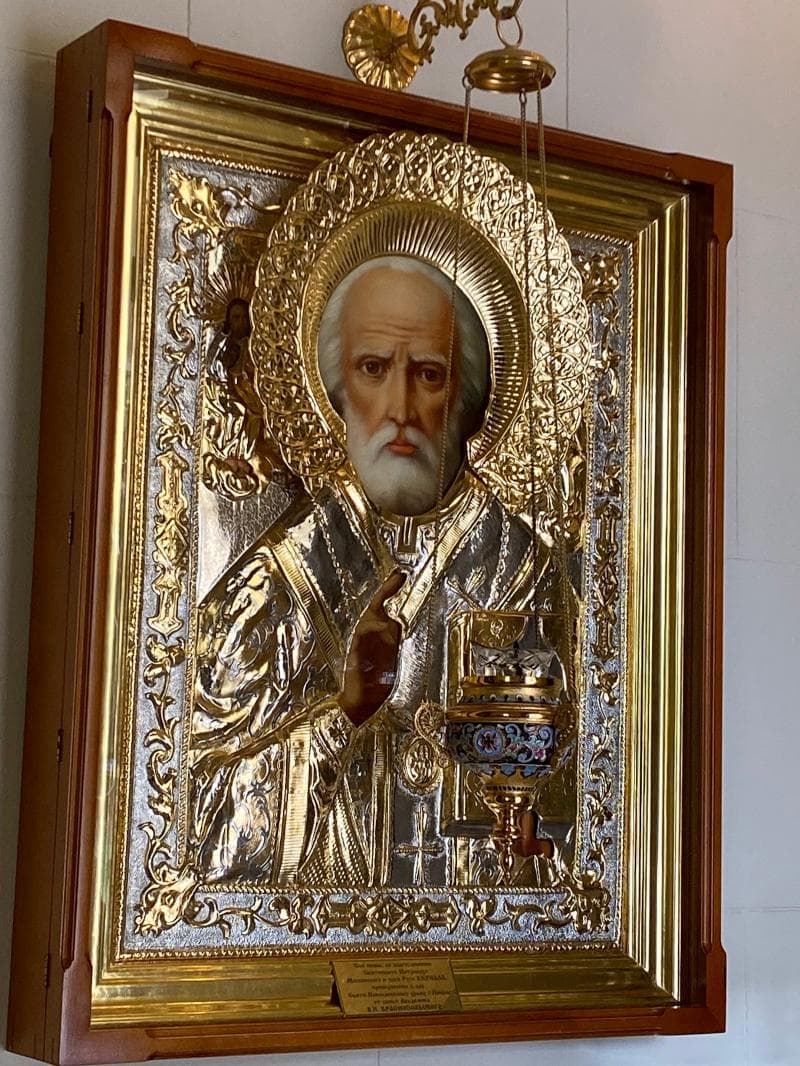
Inside, the cathedral's opulence continues with an abundance of religious iconography. Visitors encounter a rich iconostasis, a magnificently carved wooden screen separating the nave from the sanctuary, which was crafted in Russia. The walls are adorned with beautiful frescoes, paintings, and gilded detailing, creating an atmosphere of deep reverence and artistic grandeur. The use of a Greek cross plan with five domes representing Jesus and the four evangelists further exemplifies its unique character.
Its status as a French national monument underscores its cultural and historical importance, highlighting a unique piece of Russian heritage embedded within the landscape of the French Riviera.
Stories, Fun Facts & Local Details
One compelling story connected to the cathedral is the enduring legal battle over its ownership following the Russian Revolution. For decades, the cathedral was managed by a local association. However, after a protracted dispute, a French court ultimately ruled in 2011 that the cathedral was the property of the Russian Federation, a decision that cemented its direct link to Russia.
A fascinating detail is that the cathedral stands on the very grounds where Tsarevich Nicholas Alexandrovich passed away. The smaller chapel, known as the Chapel of the Tsarevich, still exists nearby, providing a tangible link to the tragic event that inspired the larger cathedral's creation.
Another local insight is how the cathedral's presence became a symbolic 'piece of Moscow' in Nice, offering a spiritual and cultural anchor for the significant Russian community and distinguishing Nice as a cosmopolitan hub that welcomed diverse influences.
Visitor Perspective
Visiting Cathédrale Saint-Nicolas de Nice offers a truly immersive cultural experience. It is an active parish church, and visitors are generally welcome outside of service times. The peaceful gardens surrounding the cathedral provide a serene setting for reflection and offer excellent vantage points to admire its striking exterior.
Inside, the absence of traditional seating and the intense gilded decor create an atmosphere unlike many Western European churches. Modest attire is required for entry, and while photography inside is typically not permitted, the visual memories of its intricate icons and frescoes are sure to last. An on-site museum in the crypt often provides further context about the Russian presence in Nice and the cathedral's history, enriching the visitor's understanding of this extraordinary landmark.
Coordinates: 7.25393, 43.70382
View on Google Maps💬 How Travelers Describe This Place
Based on community votes
Beautiful
950Must See
858Unique
287Interesting
231Photogenic
86
Traveler Stories
Discover memorable experiences shared by travelers who have visited this place.
No traveler stories yet.
Be the first traveler to share what made this place memorable.
Things to see at Cathédrale Saint-Nicolas De Nice



Tour
By
Spot
Discover amazing places around the world. Your journey starts here.
Explore
© 2026 TourBySpot. All rights reserved.