Bryggen
Bergen, Norway
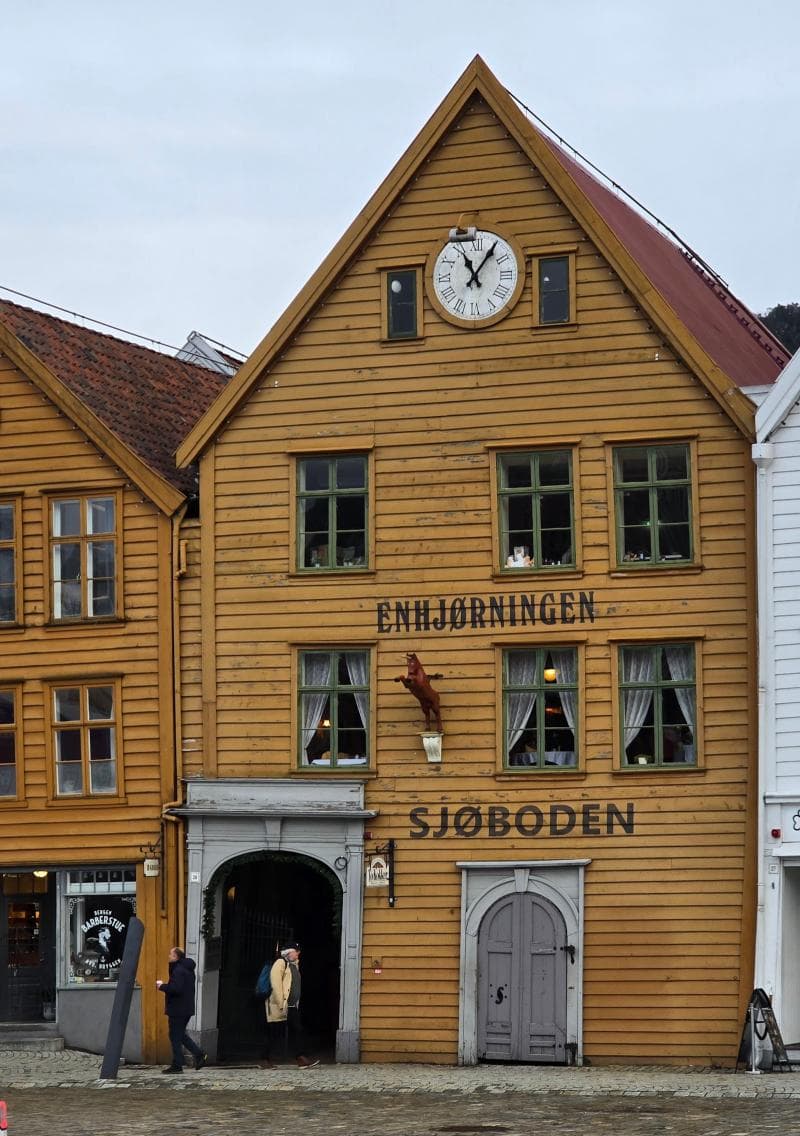
Explore Bryggen in Bergen, Norway, a UNESCO World Heritage Site. Discover its Hanseatic history, unique wooden architecture, and charming alleyways.
Overview
Bryggen, a captivating historic wharf in Bergen, Norway, stands as a vibrant testament to the city's rich past and enduring charm. This picturesque row of colorful wooden buildings, nestled along the eastern side of the Vågen harbor, is recognized globally as a UNESCO World Heritage Site, inscribed in 1979. Bryggen is not merely a collection of beautiful facades; it is Bergen's oldest district, with roots stretching back over a thousand years, originally founded as a bustling trade center for stockfish from northern Norway.
History & Cultural Background
The story of Bryggen is inextricably linked with the powerful Hanseatic League. Around 1350 to 1360, the German Hanseatic League established one of its four main trading offices here, profoundly influencing Bergen's commerce for nearly 400 years. During this period, the area was known as 'Tyskebryggen', meaning 'the German wharf', a name officially changed to Bryggen after World War II in 1945. The Hanseatic merchants, often young men from 14 to 20 years old, traded goods like stockfish for grains, salt, and other European commodities.
Despite its long history, Bryggen has faced numerous devastating fires, particularly in 1702 and 1955, which reduced much of the wooden settlement to ashes. However, each time, the resilient people of Bergen rebuilt the wharf on its 12th-century foundations, carefully preserving its traditional architectural style and medieval layout. This remarkable commitment to historical accuracy is a key reason for its UNESCO designation, as it exemplifies a unique northern 'fondaco' – a medieval trading post – unparalleled in the world.
What Makes It Special
Bryggen's exceptional status as a UNESCO World Heritage Site is due to its unparalleled preservation of a medieval urban structure that served as a central hub for the Hanseatic League. The narrow wooden buildings, with their distinct gabled roofs and charmingly crooked appearances, offer an authentic glimpse into centuries past. Walking through its tight alleyways and covered passages feels like stepping back in time, revealing the intricate social organization and daily life of Hanseatic merchants. It is a living reminder of one of Northern Europe's oldest and most significant trading ports.
Stories, Fun Facts & Local Details
Beyond its iconic appearance, Bryggen holds many intriguing stories. It's said that navigating the streets of Bryggen during the Hanseatic period could be as perilous as Chicago in the 1930s. Look closely at some of the buildings, and you might spot decorative carvings such as a king's head with three faces or a unicorn, remnants of their original medieval names. Remarkably, much of Bryggen is built upon layers of organic waste and wooden frames, a clever method of land reclamation used to expand the city into the Vågen Bay over centuries. Nearby, you'll find St. Mary's Church, Norway's oldest building, and Øvregaten, recognized as Norway's first street. Archaeological excavations following the 1955 fire unearthed numerous medieval runic inscriptions, providing invaluable insights into daily life, which are now displayed at the Bryggens Museum.
Visitor Perspective
A visit to Bryggen is an immersive journey. Tourists often begin by admiring the famous colorful facades along the waterfront, a perfect spot for photographs. However, the true magic lies in exploring the labyrinthine network of narrow passages and hidden courtyards tucked behind these iconic fronts. Here, you'll discover a vibrant community of local artists' studios, craft shops selling jewelry and textiles, and cozy cafes, transforming the historic space into a hub of contemporary culture. For a deeper understanding, the Hanseatic Museum and Schøtstuene offers insights into the lives of the Hanseatic merchants, while the Bryggens Museum showcases archaeological finds from medieval Bergen. Bryggen is freely accessible, inviting travelers to wander at their leisure, though visiting during off-peak hours is encouraged to enhance the experience and support conservation efforts.
Coordinates: 5.32306, 60.39722
View on Google Maps💬 How Travelers Describe This Place
Based on community votes
Unique
996Photogenic
673Beautiful
585Interesting
143Must See
69
Traveler Stories
Discover memorable experiences shared by travelers who have visited this place.
No traveler stories yet.
Be the first traveler to share what made this place memorable.
Things to see at Bryggen



Tour
By
Spot
Discover amazing places around the world. Your journey starts here.
Explore
© 2026 TourBySpot. All rights reserved.