Broadway / Theater District
New York, United States
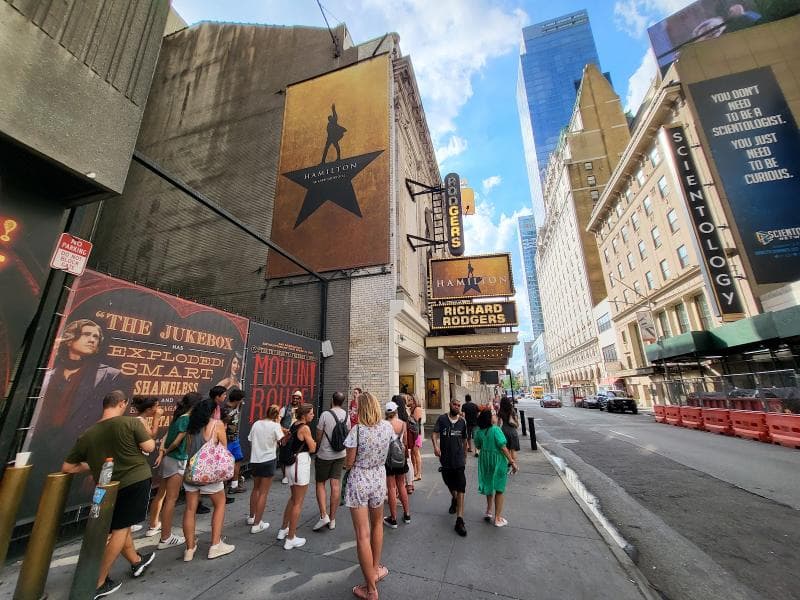

Explore New York City's iconic Broadway / Theater District, a dazzling hub of world-class performances, rich history, and vibrant culture in the United States.
Overview
The Broadway / Theater District, nestled in the vibrant heart of Midtown Manhattan, New York, United States, stands as a global epicenter for live theatrical performance. It is an electrifying area where bright lights and artistic dreams converge, captivating millions of visitors annually. This iconic district is home to most of the Broadway theaters, which are professional venues defined by having 500 or more seats, being located in and around Times Square, and being recognized by The Broadway League. More than 40 active theaters contribute to this pulsating cultural landscape, presenting world-class musicals and plays.
History & Cultural Background
The story of Broadway begins long before its theatrical fame, as an ancient Indigenous trail known as the Wickquasgeck Trail. When Dutch settlers arrived in the 1600s, they named it Heere Straat, or 'Gentleman's Street,' and it was later renamed 'Broadway' by the English for its unusual width. Unlike the rest of Manhattan's grid, Broadway cuts diagonally across the island, creating unique intersections like Times Square. The theater scene itself did not originate in Midtown; early New York theater was centered in Lower Manhattan around the mid-18th century, with the first recorded instance of a theater company in New York City dating back to 1750 on Nassau Street.
As New York City grew and real estate prices rose in the 19th century, theaters gradually moved northward, settling around Union Square by the 1870s, which became a main theater district. By the late 1800s, the theatrical hub shifted further uptown to 42nd Street, into what was then known as Longacre Square. A pivotal moment arrived in 1904 when The New York Times moved its headquarters there, leading to the area's renaming as Times Square. It was in the late 1890s that Broadway earned its famous nickname, 'The Great White Way,' due to being one of the first streets in America to be illuminated by electric white lightbulbs. These bright lights, alongside magnificent theater growth, became synonymous with New York's vibrant nightlife. While the district faced a period of decline by the 1970s, it underwent significant revitalization in the 1990s, transforming into the brightly lit tourist hub seen today.
What Makes It Special
Broadway holds a preeminent and influential position in global theater arts, setting the standard for commercial stage entertainment in the English-speaking world alongside London's West End. Its unique creative energy, combined with extraordinary talents, captivating stage designs, and impressive music, creates an unforgettable experience. Beyond being an artistic platform, Broadway Theatre is a vital economic center, attracting millions of tourists who contribute significantly to the local economy through accommodation, dining, and shopping. It serves as a cultural platform that addresses societal issues, explores human experiences, and celebrates diversity through its diverse productions. Broadway's productions, with their stage design, acting quality, and musical richness, shape the direction of world theater.
Stories, Fun Facts & Local Details
A fascinating detail about the Broadway Theater District is that despite its name, only a handful of the 41 active Broadway theaters are actually located directly on Broadway Street itself, such as the Broadway Theatre, Palace Theatre, and Winter Garden Theatre. The majority are situated on the cross streets extending from 41st to 53rd Streets between Sixth and Ninth Avenues. The district also houses Shubert Alley, a private pedestrian passage connecting West 44th and 45th Streets, which has long been an informal meeting point for actors and industry figures. The term 'Broadway theatre' specifically refers to venues with 500 or more seats, while 'Off-Broadway' denotes smaller venues (100-499 seats) found throughout New York City, and 'Off-Off-Broadway' refers to very small venues with fewer than 100 seats, often avant-garde or non-traditional.
Visitor Perspective
Experiencing Broadway is a quintessential New York City adventure. Before attending a show, visitors can immerse themselves in the vibrant atmosphere of Times Square, which anchors the southern edge of the Theater District. The district itself is largely wheelchair-accessible, though the historic nature of many theater buildings means specific accommodations vary; it's advisable to contact box offices directly for accessibility inquiries. Arriving at the theater at least 20 minutes before curtain is recommended, as lobbies can be crowded. While there's no strict dress code, visitors will see a mix of formal and casual attire. Beyond the shows, the Theater District and its surroundings offer a wealth of attractions, including the Museum of Broadway, Madame Tussauds, and TKTS Times Square for discounted same-day tickets. Planning ahead ensures a memorable visit to this truly unique cultural landmark.
Coordinates: -73.985, 40.759
View on Google Maps💬 How Travelers Describe This Place
Based on community votes
Must See
995Unique
839Beautiful
388Interesting
289Photogenic
141
Traveler Stories
Discover memorable experiences shared by travelers who have visited this place.
No traveler stories yet.
Be the first traveler to share what made this place memorable.
Things to see at Broadway / Theater District



Tour
By
Spot
Discover amazing places around the world. Your journey starts here.
Explore
© 2026 TourBySpot. All rights reserved.