Richard Rodgers Theatre
New York, United States
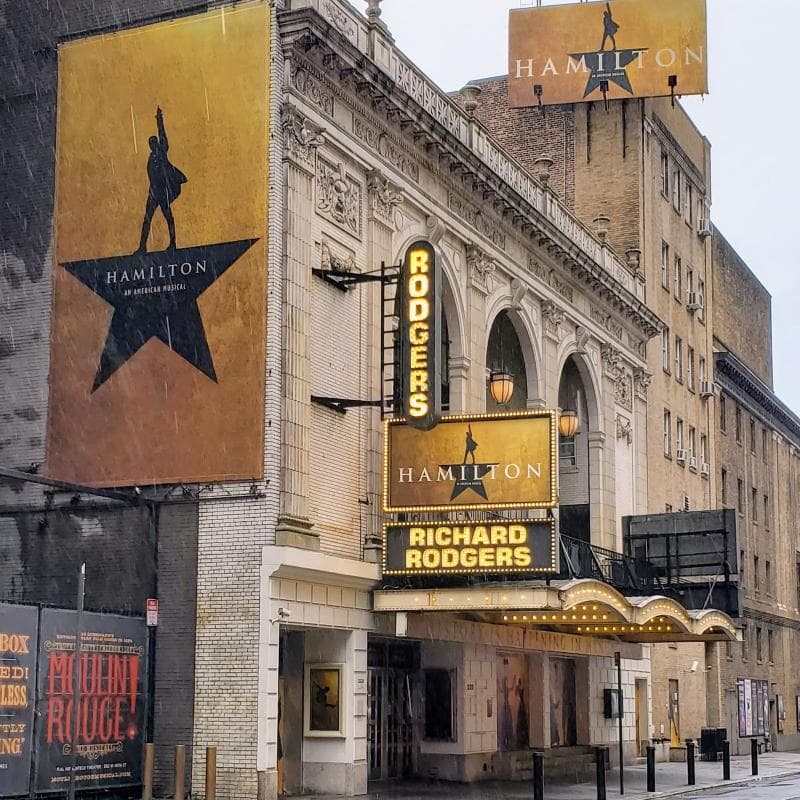

Discover the Richard Rodgers Theatre in New York, United States, a historic Broadway venue renowned for hosting 11 Tony-winning productions.
Overview
Nestled in the vibrant heart of the Broadway / Theater District in New York City, the Richard Rodgers Theatre stands as a beacon of theatrical history and artistic achievement. Located at 226 West 46th Street, this iconic venue has been a cornerstone of American theater since its opening on February 7, 1925. Originally known as Chanin's 46th Street Theatre, it was later renamed the 46th Street Theatre before receiving its current esteemed title in 1990, in honor of the legendary American composer Richard Rodgers. Operated by the Nederlander Organization, the theater boasts an approximate seating capacity of 1,400 patrons, across two levels, offering an intimate yet grand setting for world-class productions. It holds a distinguished record, having hosted more Tony Award-winning Best Plays and Best Musicals—a remarkable eleven in total—than any other Broadway theater.
History & Cultural Background
The Richard Rodgers Theatre was the brainchild of Irwin Chanin, a developer who was new to the Broadway industry at the time. Constructed in 1925, it was Chanin's first theater, designed by the prolific theater architect Herbert J. Krapp in an ornate neo-Renaissance style. Krapp's design was notably elaborate, featuring a glazed white brick and terracotta facade that evoked a Renaissance loggia, adorned with theatrical masks and Corinthian columns. This opulence extended to the interior, characterized by its Adamesque style, complete with foliate motifs, grotesque heads, and carved borders, all designed to embody a sense of grandeur. The building's facade and auditorium interior were recognized for their historical and architectural significance, designated as New York City landmarks on November 17, 1987.
Ownership and management of the theater saw several transitions over the decades. After Chanin, the Shubert brothers leased and then purchased the building in the early 1930s, renaming it the 46th Street Theatre. Following various owners, the Nederlander Organization acquired the venue in 1981, undertaking a significant refurbishment. Their commitment to preserving its legacy led to its renaming in 1990 to honor Richard Rodgers, a composer whose contributions to Broadway through works like 'Oklahoma!' and 'The King and I' profoundly shaped American musical theater. Further renovations in 2006 incorporated 'The Richard Rodgers Gallery,' a dedicated space showcasing the composer's storied career.
What Makes It Special
Beyond its architectural beauty, the Richard Rodgers Theatre is special for its unparalleled theatrical legacy. It proudly holds the record for the most Tony Award-winning Best Plays and Best Musicals presented under its roof, a testament to its role as a premier stage for groundbreaking productions. From the classic 'Guys and Dolls' to the revolutionary 'Hamilton,' the theater has consistently hosted shows that have defined and redefined Broadway.
Another distinguishing feature is its pioneering 'democratic' seating plan. Architect Herbert J. Krapp, under Irwin Chanin's vision, designed the theater so that all patrons, regardless of their ticket's price point, entered through the same main entrance. This was a significant departure from earlier Broadway theaters, where separate entrances often reinforced social distinctions. Furthermore, Krapp introduced stadium-style seating, with a steeply raked orchestra section, ensuring excellent sightlines and acoustics for every audience member, enhancing the collective theater experience.
Stories, Fun Facts & Local Details
The Richard Rodgers Theatre is a treasure trove of fascinating stories. Irwin Chanin's personal experience of having to use side entrances for cheaper seats as a young man inspired his 'democratic' entrance policy, aiming to make every theatergoer feel equally valued. This thoughtful design detail underscores the theater's commitment to inclusivity long before the term became widespread.
The theater has been home to an impressive list of long-running and acclaimed productions. 'Guys and Dolls' ran for over 1,200 performances, and 'How to Succeed in Business Without Really Trying' saw an astounding 1,417 performances. Gwen Verdon, a Broadway legend, achieved remarkable success here, winning three consecutive Tony Awards for her performances in 'Damn Yankees,' 'New Girl in Town,' and 'Redhead' in the 1950s. The theater also staged 'Do I Hear a Waltz?' which was the only collaboration between Richard Rodgers and Stephen Sondheim. More recently, 'Hamilton' debuted here in 2015 and has since captivated audiences worldwide, even breaking the Broadway record for the highest-grossing week of any show in late 2018. The theater's current resident, 'Hamilton,' continues its historic run, cementing the venue's reputation as a 'house of hits.'
Visitor Perspective
Visiting the Richard Rodgers Theatre offers a chance to step into a living piece of Broadway history. Its prime location in the Theater District, just a short stroll from Times Square, makes it easily accessible. Multiple subway lines, including the N, R, Q to 49th Street and the 1 to 50th Street, serve the area, making commutes convenient for theatergoers.
Inside, patrons are greeted by the meticulously restored interior, where ruby red curtains, dazzling gold accents, intricate ceiling murals, and plush seating evoke the grandeur of Broadway's golden age. The theater's design ensures a superb viewing experience, with many visitors noting that its compact size allows for excellent stage visibility from most seats. For those requiring assistance, the theater is committed to accessibility, offering features like audio descriptions for visually impaired patrons, I-Caption devices for the hearing impaired, and wheelchair-accessible seating. While there isn't a strict dress code, visitors are encouraged to dress comfortably. The theater provides concession stands for refreshments, but outside food and drinks are generally not permitted. Attending a performance at the Richard Rodgers Theatre is more than just seeing a show; it's an immersive cultural experience, connecting visitors to the enduring magic and rich heritage of Broadway.
Coordinates: -73.98675, 40.75903
View on Google Maps💬 How Travelers Describe This Place
Based on community votes
Unique
836Interesting
797Photogenic
286Beautiful
255Must See
86
Traveler Stories
Discover memorable experiences shared by travelers who have visited this place.
No traveler stories yet.
Be the first traveler to share what made this place memorable.

Tour
By
Spot
Discover amazing places around the world. Your journey starts here.
Explore
© 2026 TourBySpot. All rights reserved.