Shubert Theatre
New York, United States
Explore the Shubert Theatre in New York, United States, a historic Broadway landmark known for its Italian Renaissance architecture and legendary productions.
Overview
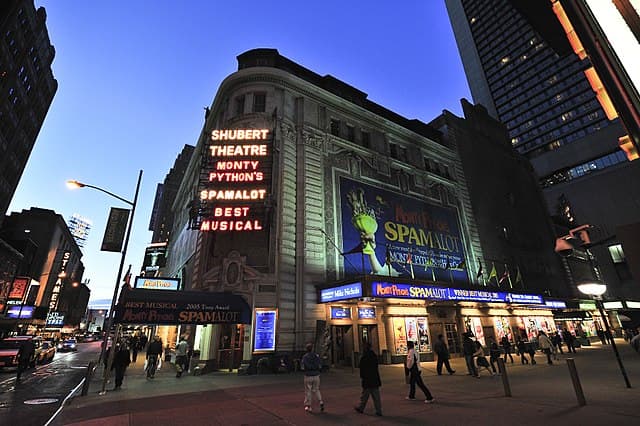
Nestled in the bustling heart of New York City's iconic Broadway Theater District, the Shubert Theatre stands as a venerable landmark at 225 West 44th Street. This architectural gem, opened to the public on October 2, 1913, is operated by The Shubert Organization, America's oldest professional theatre company and largest theatre owner on Broadway. Designed in the elegant Italian Renaissance style, the theatre boasts a capacity of 1,502 seats spread across three levels: the Orchestra, Mezzanine, and Balcony. Its facade and interior were officially designated as New York City landmarks in 1987, underscoring its historical and cultural significance. The Shubert Theatre shares its block, and famously, the private walkway known as Shubert Alley, with its companion venue, the Booth Theatre.
History & Cultural Background
The Shubert Theatre was conceived and brought to life by the visionary Shubert brothers, Lee and J.J., as a profound and lasting tribute to their late brother, Sam S. Shubert. Sam, who tragically passed away in a railroad accident in 1905 at the young age of 26, was memorialized through the construction of five theatres across the United States in his honor. The New York Shubert Theatre officially opened its doors on October 2, 1913, with a distinguished revival of William Shakespeare's 'Hamlet', starring the renowned English actor Sir Johnston Forbes-Robertson. This opening was a significant moment within a broader period of theatrical expansion in Midtown Manhattan, where over forty new theatres were built between 1901 and 1920. The Shubert brothers played a pivotal role in shaping Broadway's landscape, and their organization continues to be a dominant force in American theatre.
What Makes It Special
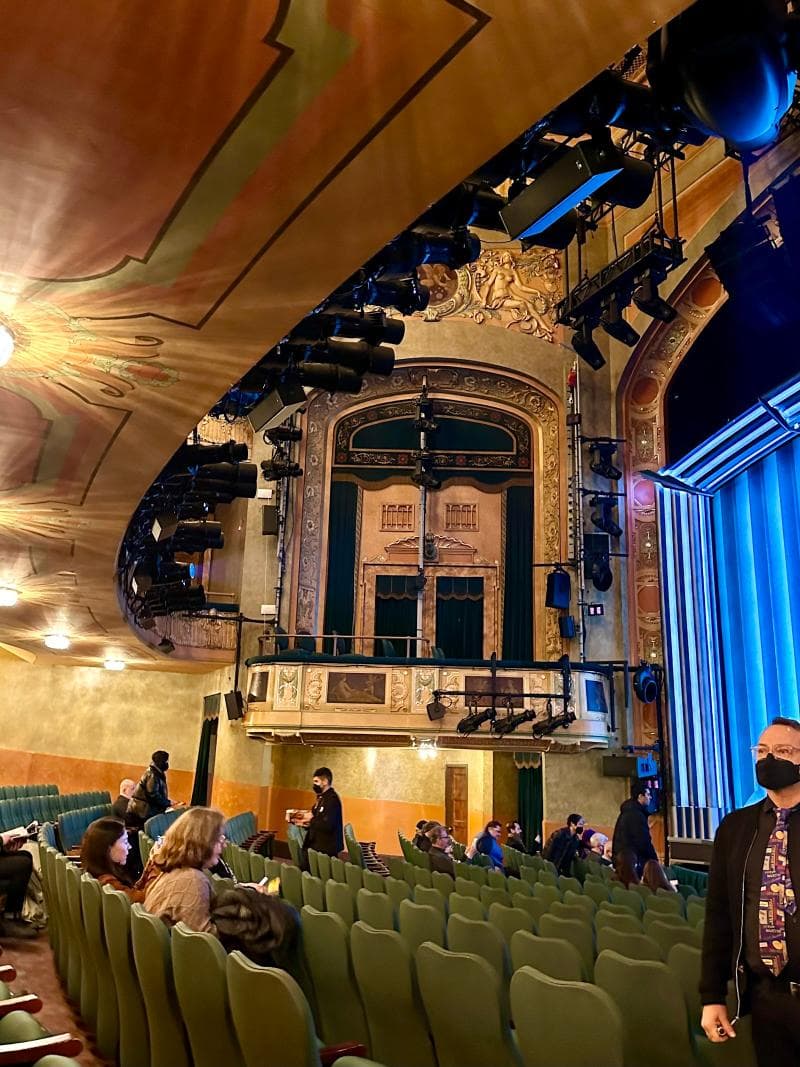
The Shubert Theatre's distinctiveness begins with its exquisite architecture, a masterful creation by Henry Beaumont Herts. The exterior showcases a captivating Italian, or more specifically, Venetian Renaissance style, characterized by a facade crafted from brick and terracotta. A particularly noteworthy feature is its sgraffito decorations in stucco, an intricate technique where layers of colored plaster are carved to reveal elaborate designs. These sgraffito panels are among the few surviving examples of this decorative art form in New York City. The theatre's curved corner, gracefully facing towards Broadway and Shubert Alley, adds to its unique visual appeal. Inside, visitors are greeted by an opulent auditorium adorned with elaborate plasterwork and mythological murals, creating an immersive and grand atmosphere. The Shubert Theatre shares a unified exterior aesthetic and the famous Shubert Alley with the adjacent Booth Theatre, yet maintains its own unique interior design and function. Furthermore, the theatre building holds historical significance beyond its stage, housing the offices of The Shubert Organization above the auditorium.
Stories, Fun Facts & Local Details
Over its long and illustrious history, the Shubert Theatre has been the birthplace of countless Broadway legends and has hosted some of the most enduring productions. Its most iconic run belongs to 'A Chorus Line', which opened in 1975 and played for an astounding 6,137 performances until 1990, setting a new record for the longest-running show in Broadway history at the time and earning a Pulitzer Prize. Another memorable moment in its history was the Broadway debut of a young Barbra Streisand in 'I Can Get It for You Wholesale' in 1962. The theatre has also been home to other acclaimed productions such as a revival of 'Chicago' from 1997 to 2003, 'Spamalot' in 2005, 'Memphis' in 2009, and 'Matilda the Musical' in 2013. Beyond individual shows, the Shubert Theatre has frequently served as a prestigious venue for the annual Tony Awards, celebrating the best of Broadway. It has resiliently weathered numerous challenges, including fires, economic downturns, and evolving public tastes, cementing its status as a survivor and cornerstone of American theatre. The Shubert Alley itself, often considered the symbolic heart of Broadway, is a unique private lane connecting 44th and 45th Streets, and provides a direct, atmospheric approach to the theatre.
Visitor Perspective
For visitors stepping into the Shubert Theatre, the experience begins with its grand entrance and the anticipation of world-class performances. The venue offers 1,502 seats distributed across its Orchestra, Mezzanine (first balcony), and Balcony (second balcony) levels. For optimal viewing, many patrons recommend seats in the center orchestra, particularly rows E to N, or in the center mezzanine for a comprehensive stage perspective. While the balcony is positioned higher and is steeper, it is known for still offering excellent views of the entire stage. The theatre is committed to accessibility, providing assistive listening devices, hand-held captions, and audio description devices for patrons with hearing or visual impairments. Wheelchair seating is available within the Orchestra section, ensuring comfortable access for all guests. However, visitors should note that there are no elevators or escalators within the theatre, and accessible restrooms are conveniently located across the street in the Sardi Building. Snacks and drinks are available for purchase at the bar located in the main lobby, enhancing the overall theatre-going experience.
Coordinates: -73.9872222, 40.7580555
View on Google Maps💬 How Travelers Describe This Place
Based on community votes
Interesting
953Beautiful
695Photogenic
658Must See
396Unique
22
Traveler Stories
Discover memorable experiences shared by travelers who have visited this place.
No traveler stories yet.
Be the first traveler to share what made this place memorable.

Tour
By
Spot
Discover amazing places around the world. Your journey starts here.
Explore
© 2026 TourBySpot. All rights reserved.