The Majestic Theatre
New York, United States
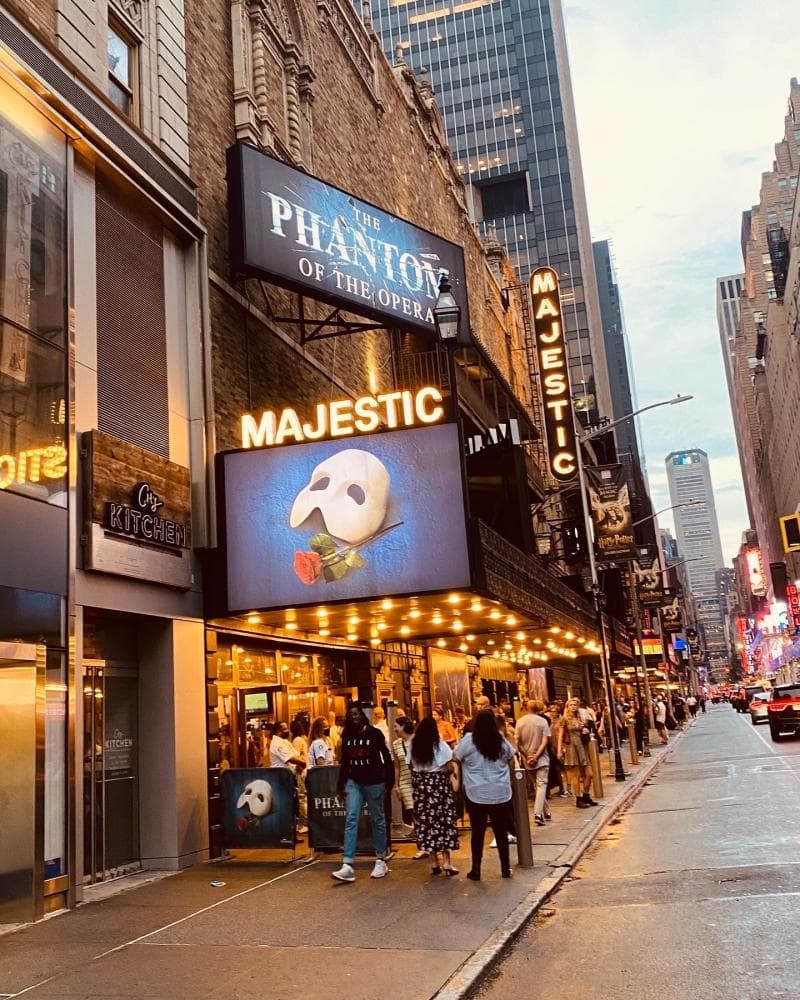
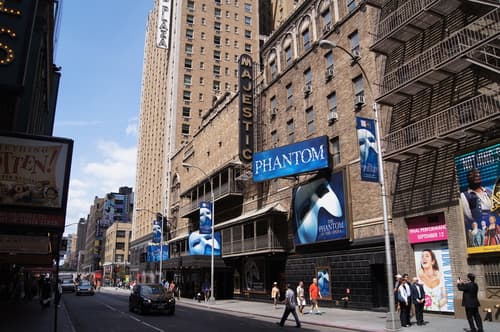
Explore The Majestic Theatre, a historic Broadway landmark in New York City. Discover its Spanish-style architecture, rich history, and famous shows.
Overview
Nestled in the bustling heart of New York City's Broadway Theater District, The Majestic Theatre stands as a grand testament to theatrical history and architectural splendor. Located at 245 West 44th Street, this iconic venue has been a cornerstone of American theater for nearly a century. With a seating capacity of approximately 1,681, it is recognized as one of Broadway's larger houses, primarily built to host major musical productions.
Both the facade and the interior of The Majestic Theatre hold significant historical value, having been designated as New York City landmarks in 1987. Its enduring presence and rich legacy make it a must-visit for any curious traveler exploring the cultural landscape of the Big Apple. The theatre continues to be an active and vibrant part of Broadway, offering a timeless experience to its audiences.
History & Cultural Background
The Majestic Theatre's story began in 1927, conceived by the visionary real estate magnates, the Chanin Brothers, as part of an ambitious three-theater complex. This complex also included the Royale (now Bernard B. Jacobs Theatre) and the Theatre Masque (now the John Golden Theatre), designed with varying sizes to accommodate different types of productions. The Chanins commissioned Herbert J. Krapp, a prolific architect of the Broadway theater district, to design the complex. Krapp envisioned The Majestic in what he termed a 'modern Spanish' style.
The theatre officially opened its doors on March 28, 1927, with 'Rufus LeMaire's Affairs'. In 1930, the Chanin Brothers transferred ownership of all three houses to the Shubert Organization, which has operated The Majestic ever since. Throughout its history, The Majestic has been home to a continuous stream of celebrated productions. Notably, it gained a reputation as a preferred venue for Rodgers and Hammerstein musicals in the 1940s and 1950s, premiering four of their works, including 'Carousel' and the Pulitzer Prize-winning 'South Pacific'. The theatre's interiors and exteriors were officially preserved when they received New York City landmark status in 1987, ensuring its architectural and cultural heritage for future generations.
What Makes It Special
The Majestic Theatre is renowned for its distinctive architectural style and its thoughtful interior design, which set it apart on Broadway. Herbert Krapp's 'modern Spanish' design is evident in its facade, featuring a terracotta base, Spanish brick-wall ornamentation, and arched windows, complemented by a stylized Palladian motif above the entrance. Inside, the auditorium boasts Adam-style detailing, often seen in Shubert houses, with a classic ivory and gold color scheme.
Krapp's innovative approach to theater design is particularly striking in the auditorium's 'stadium seating' configuration. This steep rake of the orchestra level ensures excellent sightlines from virtually every seat, a forward-thinking concept that predated its widespread use in movie theaters. Furthermore, the decision to design the theater with a single large balcony, rather than two smaller ones, was progressive, anticipating modern audience preferences for more desirable seating. These design choices were intended to 'democratize' the seating arrangement, making the theatrical experience more inclusive. Historically, The Majestic was always conceived as a large musical house, a role it has fulfilled magnificently, hosting some of Broadway's most significant and enduring shows.
Stories, Fun Facts & Local Details
One of the most remarkable chapters in The Majestic Theatre's history is its extraordinary run as the home of Andrew Lloyd Webber's 'The Phantom of the Opera'. From its premiere in 1988 until its closing in 2023, 'Phantom' became the longest-running production in Broadway history, with nearly 14,000 performances. This legendary residency transformed The Majestic into a global landmark, deeply intertwined with the musical's iconic imagery, including its famous falling chandelier. Prior to 'Phantom', producers reportedly spent a significant sum refurbishing the theater to accommodate the show's elaborate technical requirements, a decision that proved incredibly successful.
Beyond 'Phantom', The Majestic has hosted an array of other celebrated shows. During the 1930s, it showcased works like George and Ira Gershwin's 'Pardon My English' and productions starring Jimmy Durante. The 1950s and 1960s saw stars like Ethel Merman in 'Happy Hunting' and Robert Preston in 'The Music Man'. Julie Andrews and Richard Burton premiered 'Camelot' here in 1960. The 1970s brought hits like 'The Wiz' and Liza Minnelli in 'The Act'. Today, The Majestic continues its legacy of hosting major productions, with 'Purple Rain' currently playing.
Visitor Perspective
Visiting The Majestic Theatre offers a chance to step into a piece of living Broadway history. Located on West 44th Street, it's easily accessible within the vibrant Theater District, close to Times Square. The area is well-served by public transportation, including several subway lines. While there's no formal dress code, comfortable attire is recommended for performances.
The Shubert Organization provides a range of accessibility services to ensure a welcoming experience for all patrons. These include infrared assistive listening devices for every performance. Hand-held audio description devices and captioning devices are also available for those with visual or hearing impairments. The theatre is partially wheelchair accessible, with no steps directly into the main entrance from the sidewalk and designated wheelchair seating areas without steps in the orchestra section. A wheelchair-accessible restroom is also available. These considerations, combined with the theatre's grand ambiance, make for a memorable cultural experience in New York City.
Coordinates: -73.98806, 40.75833
View on Google Maps💬 How Travelers Describe This Place
Based on community votes
Beautiful
839Photogenic
445Must See
388Unique
289Interesting
141
Traveler Stories
Discover memorable experiences shared by travelers who have visited this place.
No traveler stories yet.
Be the first traveler to share what made this place memorable.

Tour
By
Spot
Discover amazing places around the world. Your journey starts here.
Explore
© 2026 TourBySpot. All rights reserved.